
by Elsie Clark | Nov 20, 2025 | Innovation
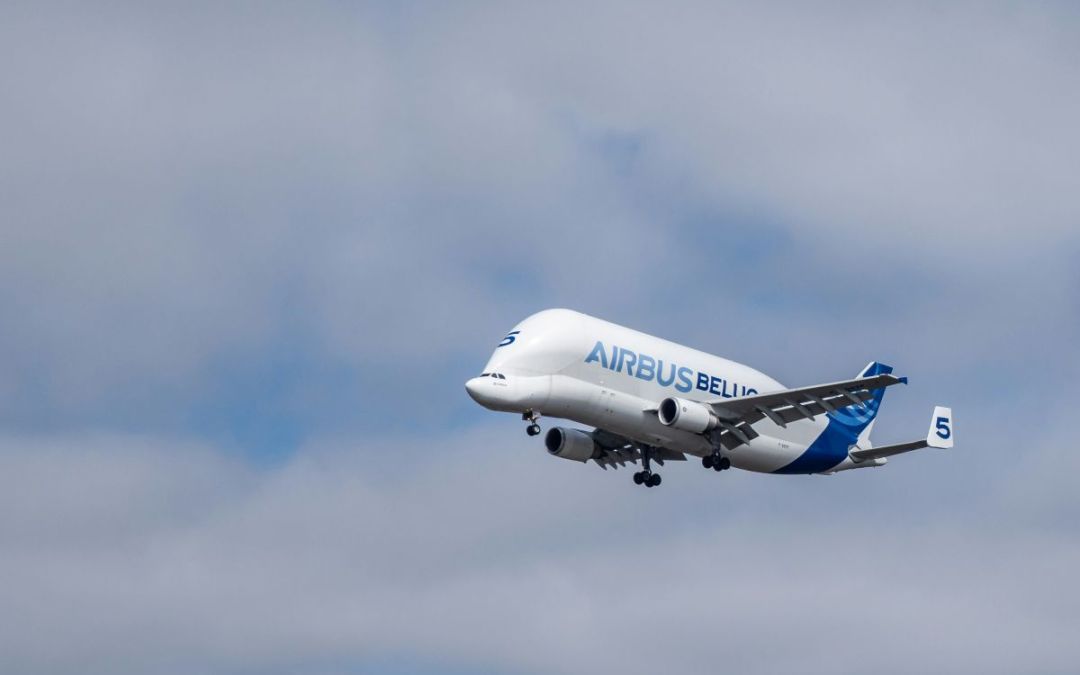
Airbus will open a Tech Hub in Daejeon, South Korea for collaborative research and development.
Three Memoranda of Understanding have been signed to advance the project, which will focus on future energy technologies, advanced lightweight composites, and next-generation space and defence tech. The Hub will be Airbus’s fourth globally, joining others in Japan, the Netherlands, and Singapore. All four aim to leverage local intersections between the private sector, academia, and the government to drive innovation.
Airbus has a long history with its partners in South Korea, dating back to 1974. It is estimated that the company currently employs around 6,000 jobs and contributes US$600 million to the country’s economy.
Mark Bentall, Head of R&T Programme at Airbus, commented:
After five decades of successful industrial partnership with Korea, this step to launch the Airbus Tech Hub in Daejeon is a clear signal of our deepening commitment. The Tech Hub allows Airbus to tap into advanced technologies in Korea, which will help fast-track future aircraft technologies and continue to develop Korea as our trusted, long-term partner.
Exciting projects Airbus hope to advance in Daejeon include space chip antennae with LIG Nex1, as well as electromagnetic interference suppression with EMCoretech. The Tech Hub is also complemented by the Composite Technology Centre (CTC) in Busan, which will work with the Daejeon office to produce composite materials and new processes.
Join us at Aerospace Tech Week 2026, where Dr Sabine Klauke, Airbus’s Chief Technology Officer, will be speaking.
For more like this, see:
by Elsie Clark | Nov 17, 2025 | Avionics, Connectivity, Innovation
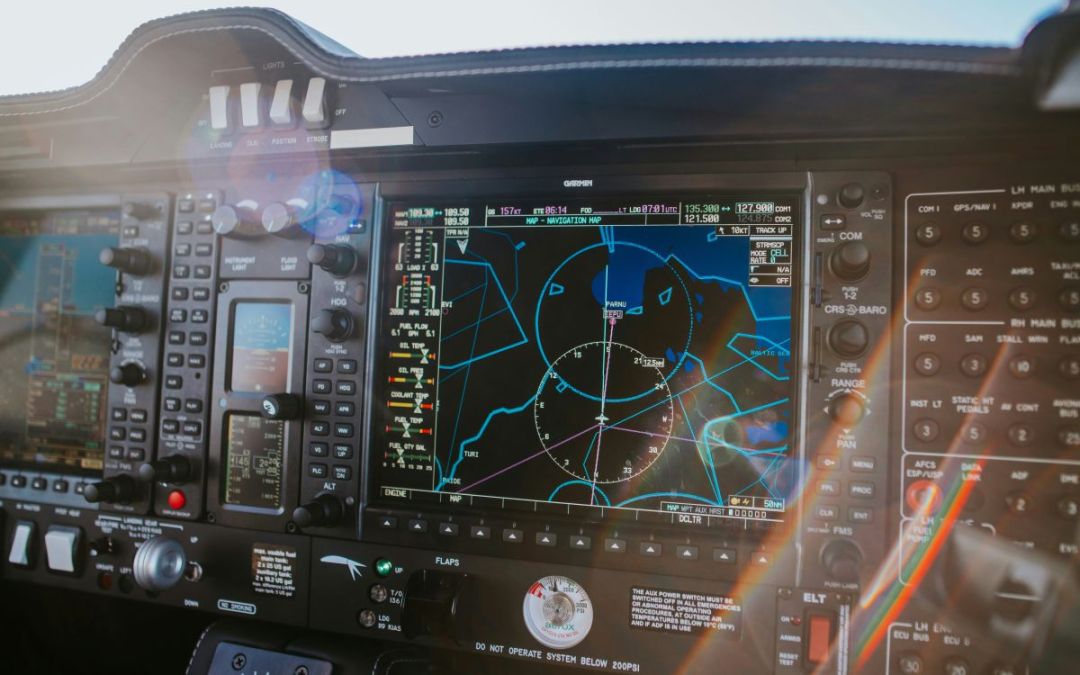
Fokker Services Group has launched a new anti-spoofing solution for the protection of critical avionics systems.
Rather than just detecting GPS spoofing and jamming, the Dutch company says the solution actively defends aircraft systems from attempted attacks. Providing a ‘full-spectrum’ defence, the countermeasures can be integrated with any avionics system and do not require additional pilot training.
Fokker Services CEO Menzo van der Beek said:
Safety is at the heart of everything we do. We assembled a team of experts to develop a solution that directly addresses the hazards posed by GPS disruptions. With very positive test results and expected entry into service scheduled for January 2026 with undisclosed launching operators, we’re confident this solution will bring peace of mind to pilots, crews, and airlines.
The introduction of such a solution comes at a critical time in aerospace. GPS spoofing and jamming incidents have increased significantly in Eastern Europe and the Middle East over the past few years. In one of 2025’s most high-profile incidents, a suspected Russian GPS attack forced pilots carrying the European Commission President Ursula von der Leyen to land her plane with paper maps.
Traffic Collision Avoidance Systems (TCAS), Flight Management Systems (FMS), and the Terrain Avoidance Warning Systems (TAWS) are among the avionics systems that can be targeted during such attacks. Developing robust security and defence systems is critical to maintain the safe positioning and landing of air crew and passengers.
Join us at Aerospace Tech Week 2026 to discuss the future of secure avionics.
For more like this, see:
by Elsie Clark | Nov 12, 2025 | Innovation, Sustainability
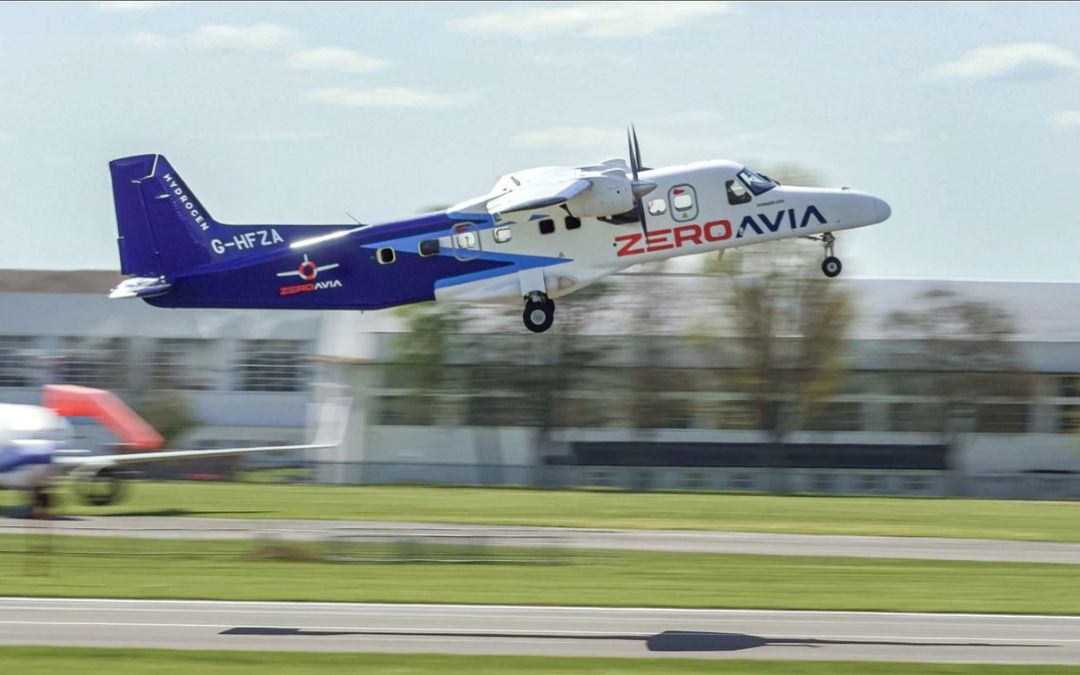
The EU’s Innovation Fund has approved ZeroAvia’s application for €21.4 million (US$24.5 million) in funding to advance their hydrogen-electric engines.
The money will go towards a new project in Norway that will see 15 Cessna Caravan planes with ZeroAvia’s ZA600 hydrogen-electric engine. The funding will also go towards hydrogen infrastructure development across the Scandinavian state, including storage and refuelling capabilities.
ZeroAvia founder and CEO Val Miftakhov said:
The EU Innovation Fund is notoriously competitive with applications needing to pass through rigorous assessment and demonstrate compelling evidence for near-term greenhouse gas reductions.
This project will set a phenomenal example by introducing a scaled network of hydrogen-electric aircraft operations, efficiently delivering vital goods to people and businesses across Norway without the typical associated environmental damage.
The Norwegian project will create the largest-established zero-carbon commercial flight network ever. If successful, the deployment of ZeroAvia engines could reduce carbon emissions on kerosene-powered cargo routes by 95%.
The project’s goal is to test the viability of hydrogen propulsion tech in Norway, findings which will in turn inform development across the EU. Regulatory approval for ZeroAvia’s ZA600 powertrain is currently ongoing with both the UK Civil Aviation Authority, and the Federal Aviation Administration (FAA).
ZeroAvia also seeks to expand their hydrogen tech beyond planes. Earlier this year, the company announced it plans to build a facility for hydrogen-electric train manufacture in Scotland.
Join us at Aerospace Tech Week 2026 to advance the future of hydrogen propulsion in aviation.
For more like this, see:
by Elsie Clark | Nov 12, 2025 | Innovation, Video
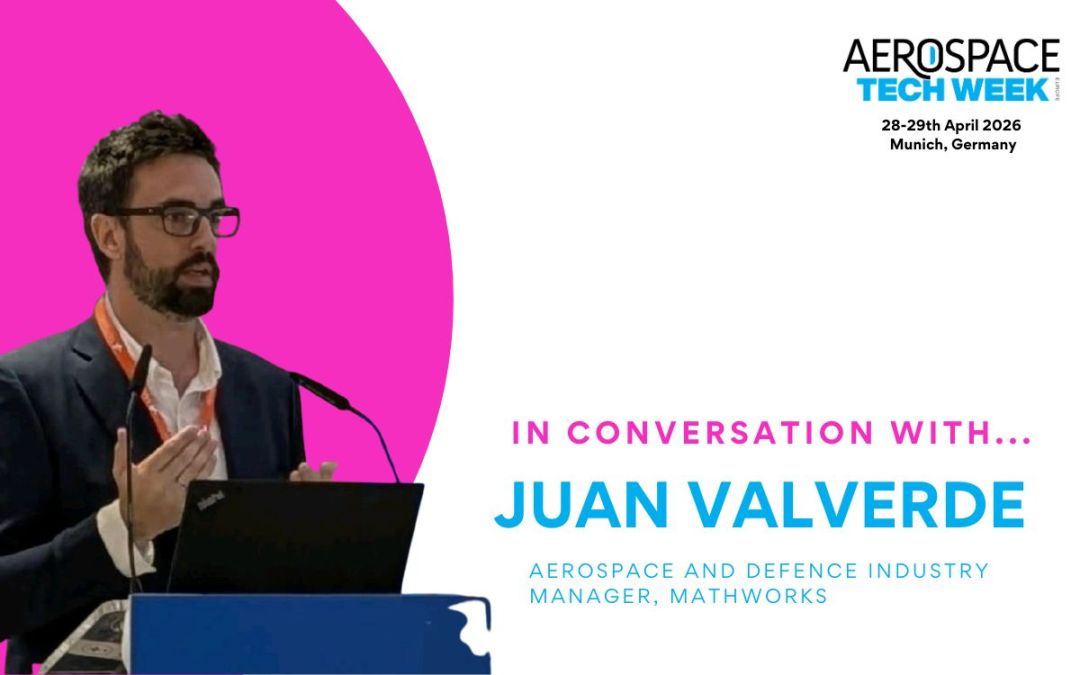
In the race to get new solutions to the market, virtual testing provides critical insights on product development to make aviation as advanced as possible. MathWorks is one company leading the charge in simulation, computing, and engineering platforms that can detect design issues early. At Aerospace Tech Week 2025, Juan Valverde, MathWorks’s Aerospace and Defence Industry Manager, explained where he sees the key challenges and opportunities in virtual testing.
We are in the era of data. Everything is data. How can we convert this into something that’s usable?
Developing high-fidelity models that truly simulate how different systems will perform is no easy task. However, Valverde sees collaboration as essential to driving progress and eliminating potential silos, especially when many companies still rely on paper-based workflows.
When different teams work in isolation, it’s very difficult to identify an error in testing that’s dependent on something that needs to be integrated later. For me, this is a very big gap.
As the industry grows, teams have expanded, sometimes spanning multinational corporations. Valverde wants to see mindset shifts and real investment that will unlock new methodologies to power these bigger projects.
We have many customers working with us and out tools on these challenges. We’d like to continue to understand how we can cover these gaps.
🎥 Watch the interview to hear the full conversation with Juan Valverde.
Questions asked include:
- How have we seen the virtual testing landscape develop in recent years?
- How can new methodologies adapt to the increasingly complex environment we’re seeing?
- How can advanced tech support design and verification processes?
- What are the biggest gaps in aerospace testing right now?
Join us at Aerospace Tech Week 2026 to discuss the future of testing and certification.
For more like this, see:
by Elsie Clark | Oct 29, 2025 | AI & ML, Flight Ops IT, Innovation
Dubai-based carrier Emirates has reported a measurable decrease in unexpected turbulence incidents over the past year thanks to onboard data and analytics.
Changing atmospheric conditions due to climate change are making inflight turbulence more regular and more severe. Notably, scientists at Reading University in the UK found that severe turbulence has increased by 55% between 1979 and 2020 over the North Atlantic. Professor Paul Williams, one of the scientists leading the project, told the BBC earlier this year that turbulent incidents could soon double or treble in length due to changes in temperature and wind patterns.
Turbulence hit the headlines in 2024 after one died and many more were injured on a Singapore Airlines flight from London Heathrow. Additionally, ICAO reported in 2023 that 40% of all inflight injuries were the result of turbulence.
Emirates takes action to mitigate unexpected turbulence
Over the past year, Emirates has been investing in multiple systems that can provide pilots with real-time analytics and help its aircraft avoid severe turbulence. Captain Hassan Alhammadi, Divisional Senior Vice President Flight Operations at Emirates, said:
While we cannot promise turbulence-free flights, these initiatives have contributed to a significant reduction in unexpected severe turbulence incidents over the past year, helping make journeys safer and more comfortable for our customers.
One technology partner is SkyPath, which uses AI and machine learning (ML) to detect and predict turbulence hotspots that traditional weather forecasting might overlook. Alongside this platform, Emirates has deployed Lufthansa Systems’ Lido mPilot application, which provides pilots with high-resolution weather data and real-time alerts.
Emirates is also participating in IATA’s Turbulence Aware programme, sharing data with airlines to help other aircraft adjust flight paths in advance to minimise the impact of turbulence.
Alhammadi added:
Our multi-layer approach with weather prediction and technology partners and active participation in the IATA Turbulence Aware programme also enables us to contribute valuable data and insights to the broader aviation industry as we collectively work to address this growing meteorological challenge.
Join us at Aerospace Tech Week 2026, where our dedicated track will be discussing data-driven flight ops.
For more like this, see:


You must be logged in to post a comment.