
by Elsie Clark | May 28, 2026 | Innovation
Airbus have blamed supply chain difficulties as it delays delivery of Qantas’s first ultra-long-haul A350-1000.
Nicknamed ‘Project Sunrise’, Qantas plans to use the aircraft to run direct flights from Sydney Kingsford Smith to London Heathrow and New York JFK. The Australia-US flight will last 22 hours, and is possible thanks to a 20,000-litre fuel tank.
Airbus had been scheduled to deliver the first of 12 A350-1000s to Qantas at the end of this year. However, the Toulouse-based manufacturer has pushed the date back to April 2027.
A Qantas spokesperson said:
We continue to work closely with Airbus on the delivery and certification process that will enable us to begin operating these history-making ultra long-haul flights.
Supply chain issues have blighted the aviation industry for several years now. In its 2025 end-of-year report, Airbus reported a record backlog of 8,754 commercial aircraft. Engine suppliers Prattt & Whitney were blamed as the principal cause of delays. An increasingly fragmented geopolitical environment has been complicated further by the ongoing closure of the Strait of Hormuz, exacerbating supply chain complications.
Qantas assert that test flights of the A350-1000 will begin within weeks, and that pilot training in the simulator is underway. The inaugural route and schedule for Project Sunrise is also set to release in the coming months.
Join us at Aerospace Tech Week 2026.
For more like this, see:
by Elsie Clark | May 27, 2026 | Innovation, Sustainability
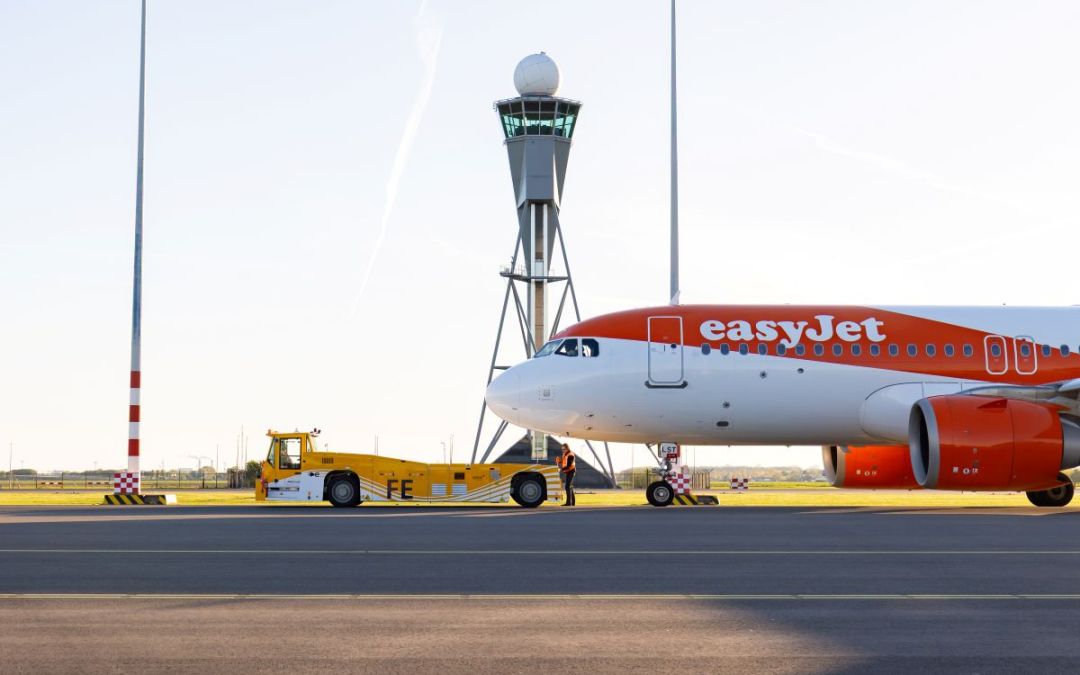
easyJet and Amstedam Schiphol have rolled out an automated TaxiBot system for quieter and more sustainable ground operations.
TaxiBot is a semi-robotic tractor that moves aircraft between gates and the runway. During the process, the aircraft only operates with its Auxiliary Power Unit (APU) rather than the engine, significantly reducing fuel consumption, noise levels, and overall carbon emissions.
Following a successful trial, four easyJet aircraft are being equipped for TaxiBot compatabiity. The airline say the system will save an average of 95 kilograms of fuel and 299 kilograms of CO2 per flight.
David Morgan, Chief Operating Officer at easyJet:
As we continue to modernise our operations, initiatives like this demonstrate how innovation and collaboration across the industry can help reduce aviation’s environmental impact both in the air and on the ground.
TaxiBot is part of the carrier’s programme to reach net-zero carbon emissions by 2050. Amsterdam Schiphol, meanwhile, wants to reach sustainable taxiing operations by 2035. The airport say that widespread deployment of TaxiBot could reduce fuel consumption during taxiing by as much as 65%.
Esmé Valk, Chief People and Transformation Officer at Amsterdam Airport Schiphol, added:
This is how we’re creating a healthier and cleaner workplace, and an ever more sustainable and modern airport that is ready for the future.
Join us at Aerospace Tech Week 2026 to discuss sustainable aviation.
by Elsie Clark | May 26, 2026 | Innovation
Last week, Overwatch AI announced they’d successfully raised $1.5 million in funding, with contributors including the venture arms of United Airlines and Pegasus. Back in March, we spoke to CPTO Nikita Kaeshko at our sister event Aviation Festival Asia, fresh off the company’s win at our Startup Pitch Competition, to hear more about their innovative product.
We are trying to help make decisions for the aircraft crews – cockpit, cabin and OCC staff.
Overwatch have build a decision support system fusing a variety of sources together: company guidelines, aircraft manuals, and live APIs such as flight and runway data. The goal is to create an accessible AI platform that staff can search in plain language. Kaeshko notes that many disruptions are caused by airlines’ internal efficiencies. By making it more intuitive to find critical information, Overwatch are breaking down siloes and improving crew awareness.
We’ve seen some pretty promising indicators with our first deployments. Airlines can make decisions faster: what previously took them half an hour to check they can now get in less than two minutes.
To ensure that every output is verifiable, the AI platform provides sources for any information given. Alongside contributing to the recent investment round, Pegasus have been among the first airlines to test Overwatch’s technology, with some success. Encouraging results across 30,000 flights from Overwatch partners include a 4.6-times increase in compliant decision-making and a 6.6% increase in crew productivity.
Looking ahead, Kaeshko and his business partner, CEO Leo Kotil, hope to scale the solution and improve industry awareness.
Everyone wants to deploy AI solutions, but everyone is scrambling for the data points that they need to evaluate these systems. Our big goal is to build a good foundation and use case portfolio to educate the industry.
🎥 Watch the video to get the full interview with Nikita Kaeshko.
Questions asked include:
- Which industry challenges do Overwatch AI hope to address?
- What success have you seen with early deployments?
- How are you looking to grow next?
Are you an emerging company looking to showcase your solution on the global stage? Apply to be a part of our Startup Village at Aerospace Tech Week 2026.
For more like this, see:
by Elsie Clark | May 21, 2026 | Innovation
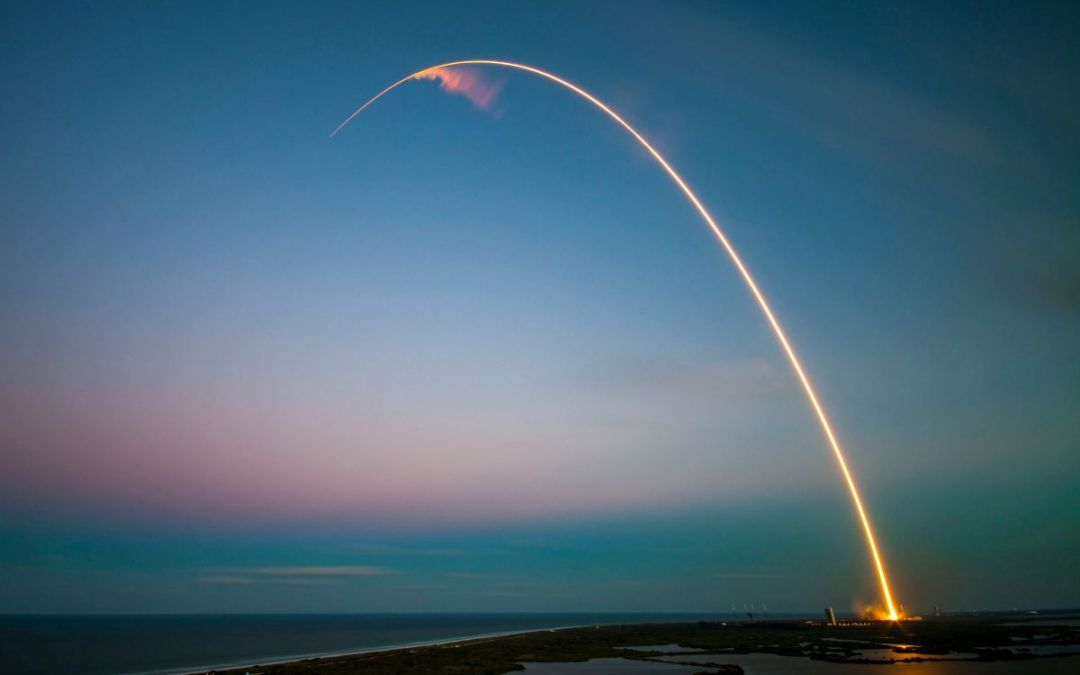
SpaceX CEO Elon Musk has announced the aerospace company’s intention to file a public IPO.
SpaceX values itself at an impressive US$1.25 trillion. Covering space exploration, satellite firm Starlink, and subsidiary xAI, the firm’s activities are innovative and often controversial. The move to go public would turn Musk, already the world’s wealthiest man, into a trillionaire.
Financial records show SpaceX made a loss in the first quarter of 2025, earning US$4.7 billion in sales but operating at a net loss of $4.3 billion. Starlink was the only arm of the business to turn a profit in those three months: its constellation of low-earth orbit satellites had quickly established it as a leading connectivity provider, including through high-value deals with airlines such as United and Qatar Airways.
Nevertheless, investors remain excited about the huge potential surrounding SpaceX. From establishing civilisation on Mars to orbital data centres, the company’s projects sprawl across the spectrum of aerospace technology.
xAI and the social media platform X, formerly known as Twitter, also fall under the SpaceX remit. These ventures have attracted criticism, especially the lack of safeguarding when using the AI chatbot Grok. xAI was cited as a potential risk under SpaceX’s IPO.
SpaceX’s dominance in the industry has concerned competitors. Airbus, Leonardo, and Thales agreed a €10 billion deal last year to combine their aerospace and defence businesses in an effort to create a credible European rival to the Musk-led company.
Join us at Aerospace Tech Week 2026.
For more like this, see:
by Elsie Clark | May 19, 2026 | Innovation, MRO IT
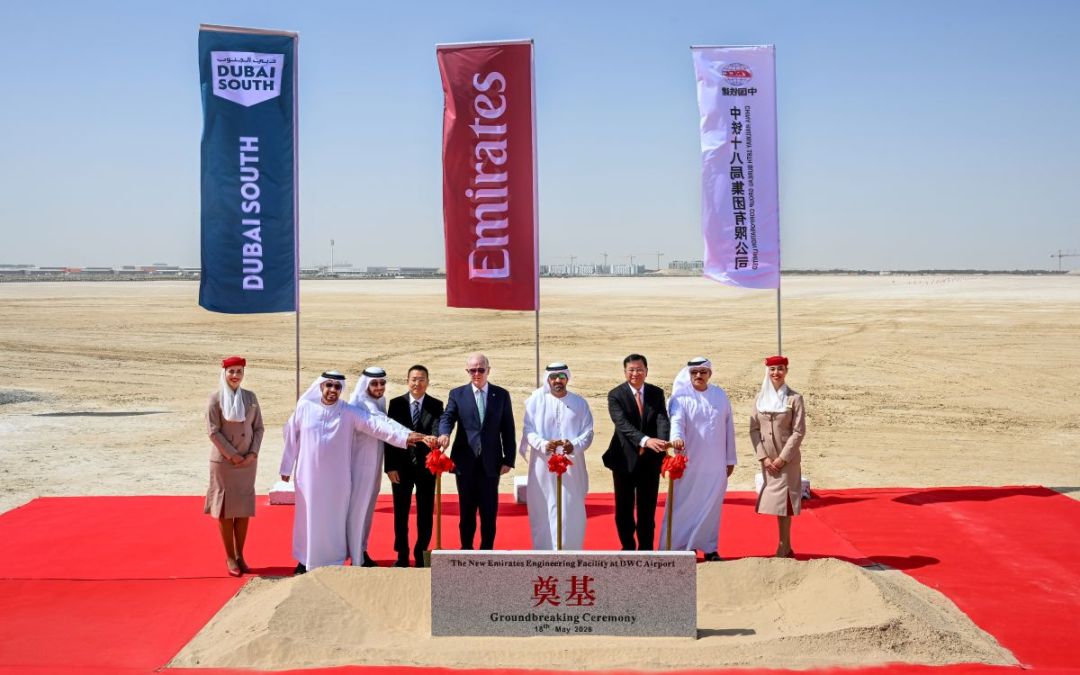
Emirates have begun construction on a high-tech US$5.1 billion MRO facility in Dubai South. Totalling 1.1 million square metres, once complete the building will be one of the world’s largest by volume, as well as the largest steel structure in the Gulf.
China Railway Construction Corporation are leading construction, alongside Artella as project consultants. The ambition is to create an advanced hangar that can simultaneously accommodate 28 wide-body aircraft and two painting hangars.
Ahmed bin Saeed Al Maktoum, Chairman and Chief Executive at Emirates Airline and Group, said:
The new facility strengthens Emirates Engineering’s vertical integration strategy by bringing more skills, infrastructure, parts production, and specialist capabilities under one roof, while positioning the airline to serve as a strategic engineering partner for the future requirements of the regional and global aviation industry.
Alongside the latest MRO tech, the facility will also incorporate sustainability with solar panels across the roof. Construction is scheduled to complete in 2030, with the hangars initially serving as overspill for Emirates Engineering work at Dubai International Airport (DXB).
As supply chain delays continue to impede the delivery of new aircraft, effective maintenance and overhaul have become key priorities for airlines who want to make the most of their existing assets. Emirates continues to target an ambitious growth strategy that will not be possible unless they keep their aircraft in top condition. As a carrier that prides itself on its superior customer service, this MRO investment will reduce turnaround times and delays, ultimately producing a better experience for passengers.
Join us at Aerospace Tech Week 2026.
by Elsie Clark | May 18, 2026 | Flight Ops IT, Innovation
A new microsensor developed by a startup at the University of Surrey can detect ice build-up on an aircraft’s wings in real time.
Surrey Sensors say their 3cm-long sensors will help pilots understand what’s happening to their wings during a flight and ultimately make aviation safer. Dr David Birch, one of the leaders of the project, said:
What’s important is not just detecting ice, but understanding how it is affecting the aircraft’s performance. Combining different sensing approaches will help to make these measurements far more robust – particularly in the harsh conditions where current systems are most vulnerable.
Developed in collaboration with the Canadian Flight Test Centre of Excellence, the sensor could also make aircraft more fuel-efficient by reducing reliance on anti-icing systems. Alistair Chapman, Director of Marketing at Certification Center Canada, added:
Knowing your stall margin in all phases of flight is critical. Combining these technologies will both further address this safety issue and open up new possibilities for a rotary environment. Together, Surrey Sensors Limited and Flight Test Centre of Excellence are poised to set new standards in aerospace safety, efficiency and environmental sustainability through innovative airflow sensing technologies.
Even incremental layers of ice on plane wings can significantly disrupt aircraft aerodynamics. When ice builds up, airflow is reduced, cutting lift, increasing drag, and making take-off more dangerous.
While climate change is mostly associated with rising heat, it increases the frequency of extreme weather of all kinds – including freezing temperatures, hail, and snowstorms. As these events will only become more regular, it is essential that the aviation industry develop better systems for monitoring ice on aircraft to ensure safety on all flights.
Join us at Aerospace Tech Week 2026 to discuss the future of safe, efficient flight ops.
For more like this, see:




You must be logged in to post a comment.