
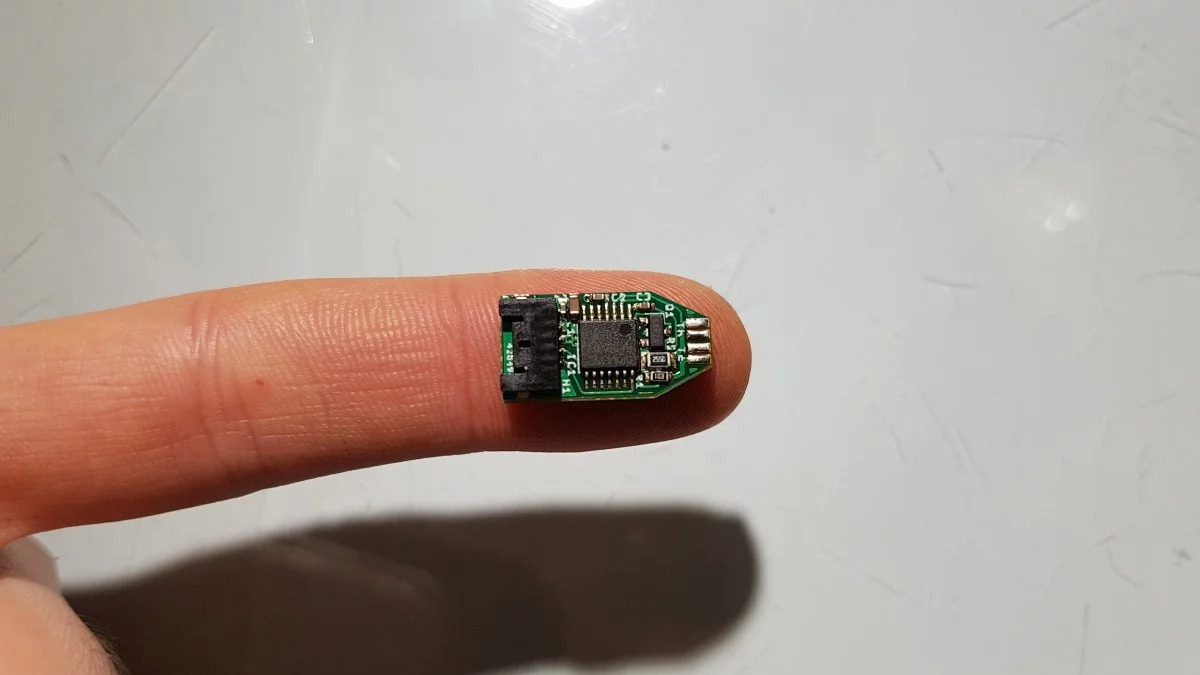
A new microsensor developed by a startup at the University of Surrey can detect ice build-up on an aircraft’s wings in real time.
Surrey Sensors say their 3cm-long sensors will help pilots understand what’s happening to their wings during a flight and ultimately make aviation safer. Dr David Birch, one of the leaders of the project, said:
What’s important is not just detecting ice, but understanding how it is affecting the aircraft’s performance. Combining different sensing approaches will help to make these measurements far more robust – particularly in the harsh conditions where current systems are most vulnerable.
Developed in collaboration with the Canadian Flight Test Centre of Excellence, the sensor could also make aircraft more fuel-efficient by reducing reliance on anti-icing systems. Alistair Chapman, Director of Marketing at Certification Center Canada, added:
Knowing your stall margin in all phases of flight is critical. Combining these technologies will both further address this safety issue and open up new possibilities for a rotary environment. Together, Surrey Sensors Limited and Flight Test Centre of Excellence are poised to set new standards in aerospace safety, efficiency and environmental sustainability through innovative airflow sensing technologies.
Even incremental layers of ice on plane wings can significantly disrupt aircraft aerodynamics. When ice builds up, airflow is reduced, cutting lift, increasing drag, and making take-off more dangerous.
While climate change is mostly associated with rising heat, it increases the frequency of extreme weather of all kinds – including freezing temperatures, hail, and snowstorms. As these events will only become more regular, it is essential that the aviation industry develop better systems for monitoring ice on aircraft to ensure safety on all flights.
Join us at Aerospace Tech Week 2026 to discuss the future of safe, efficient flight ops.
For more like this, see: