
by Elsie Clark | May 14, 2026 | Innovation, MRO IT
Singaporean software developers Soji AI have announced a new collaboration with Active Partners to advance AI use in MRO record keeping. Under the partnership, the parties will explore how technology can optimise the delivery and inspection of aircraft and engines.
Rob de Klerk, Director Technical Services of Active Partners, said:
Partnering with Soji AI represents a major milestone in our digital transformation journey. By adopting AI-driven engineering management, we are not only improving efficiency and reliability but also setting new standards for innovation and safety in the aviation industry. This collaboration with Soji does not simply digitise documents, it reduces manual document search and accelerates records by surfacing inconsistencies earlier.
Soji’s proprietary platform transforms fragmented aircraft data into an automated workflow that can support proactive decision-making. Engineers can use the system to access validated information rather than constantly extrapolating from raw data.
Ultimately, the service will allow Active Partners to improve efficiency for their clients: aircraft owners, lease managers, and operators. Florian Falk, CEO of Soji AI, commented:
We’re aiming for real-world workflow benefits and Active Partners is the type of forward-looking organisation we built our software for. Their decision to adopt our platform reflects a broader shift in the industry – from manual, document-heavy processes to intelligent, AI-powered operations. Together, we are setting a new benchmark for how aircraft engineering and records management can be executed. Human-AI workflow is the at the heart of our solution where engineers retain the final authority. We’ll be demonstrating how AI can be embedded into certified environments, supporting a shift towards scalable, digital-first aircraft lifecycle management.
Join us at Aerospace Tech Week 2026.
by ATR Contributor | May 13, 2026 | Innovation
The disruption environment changed underneath the people we trained to absorb it. The job description has quietly moved from fire station to portfolio management — and most operations are still running on the old manual.
By Joshua Goring, Chief Commercial Officer, StratosX
It’s 4 a.m. on a Tuesday in an airline OCC somewhere in North America. A controller who’s worked every irregular ops season since the 2010 ash cloud is fielding three phone calls, two chat channels, and four screens. She is extraordinary at what she does. She is also, by any honest modern definition, doing the wrong job. The work in front of her is not firefighting. It’s portfolio management: decaying options, competing constraints, and decisions that compound across the network. The tools haven’t been told yet.
The job description changed while nobody was looking
OCC culture was built for crisis. Heroic, adrenaline-driven, individual. A good controller in 1998 was the one who kept the aircraft moving through a thunderstorm with a phone in each hand. That instinct — react, decide, absorb — is still the backbone of how most ops floors run.
But the environment underneath has changed. EU261 in Europe. APPR in Canada. DOT rulemaking tightening in the United States through 2026. Every minute a disruption continues now carries a compensation number. Passengers expect proactive rebooking before they’ve even been told the flight is delayed.
Close to half of all delay minutes are now reactionary, disruption multiplying through the network. The cost of getting a recovery wrong is no longer a quiet operational footnote. It’s a line item the CFO watches. The job description has changed. The architecture around it has not.
What traders have that controllers don’t
Walk onto any trading floor and you’ll find a culture airline operations would recognise, but have not yet adopted.
Traders have real-time visibility across every position, consolidated into one view. Pre-computed scenarios for every plausible market move. A number on every option, and critically, they can see those options decaying in real time. A position available now won’t be in thirty minutes. The discipline is: decide while the option still has value, because deliberation has a cost.
Airline controllers face the same physics. The spare aircraft available right now will be assigned to another recovery in twenty minutes. A crew pairing that’s legal at 14:00 hits its flight duty limit at 14:45. The protection seat on the next connecting bank closes when the gate agent releases it. Every minute of deliberation narrows what’s possible, but nothing on the controller’s screen tells them the option is depreciating.
Worse, the information they need lives in separate systems. Aircraft state in one feed. Crew legality in another. Passenger connections in a third. Cost exposure derived manually. Controllers assemble the picture themselves, from memory and phone calls, under pressure. That isn’t a training gap. It’s a data architecture problem.
Why individual brilliance hits a ceiling the architecture built
The airlines with the strongest OCC operators look brilliant in normal operations. They get punished during compound events, not because the operators are less capable, but because individual brilliance doesn’t aggregate when the architecture forces sequential decisions.
A morning AOG triggers a cascade that will hit passenger connections in six hours. Three desks — aircraft, crew, passenger — each take ownership of their piece. Each solves the problem with excellent individual judgement, working from the information they can see.
The combined outcome is worse than it needed to be. The aircraft desk’s best swap breaks the crew desk’s pairing logic. The crew desk’s best reassignment strands passengers the passenger desk was about to protect. Three right answers, sequentially. One wrong outcome, together. By the time they reconciled it, the decision window had already depreciated.
This isn’t a coordination failure, and it certainly isn’t a people failure. It’s a structural one. When each desk can only see its own constraints, sequential conflict is built into the system. The answer isn’t faster controllers or better heroes. It’s a shared operational picture: aircraft, crew, and passengers evaluated as one joint problem, with trade-offs visible to everyone at the same time.
The three shifts the next decade requires
Getting the OCC from fire station to trading floor is not a single technology decision. It’s three shifts in how decisions get supported.
From fragmented to unified awareness. Aircraft, crew, and passenger constraints evaluated against each other at the same moment, not handed off through three desks or reconciled in the controller’s head under a countdown. One ranked set of options that accounts for crew legality, aircraft availability, passenger exposure, and downstream cost. The controller stops assembling and starts choosing.
From reactive to continuous. The analytical work doesn’t start when the disruption starts. It runs in the background, monitoring constraints and pre-computing scenarios, so when the moment arrives options are already ranked and the controller is choosing, not assembling.
From individual memory to institutional memory. Fifteen years of “which routes cascade, which bases have flex” lives in the heads of controllers who will retire in the next decade. The shift is to encode that knowledge into the decision support layer, while the experts are still around to validate it and trust that the system has learnt what they know.
What changes when you make the shift
The controller’s job doesn’t disappear. It evolves. Less time assembling information, more time making judgement calls with full awareness. Less adrenaline, more intent. The operation handles bigger problems with fewer fire drills, because the architecture surfaces what matters before the window closes.
Senior controllers stay not because the next recovery will be adventurous, but because the job lets them do work worthy of their experience, with the full picture in front of them rather than reassembled from memory under a countdown.
The airlines that complete the shift first will be the ones still competing in 2030. The alternative — heroic controllers burning out under a compounding disruption load and a tightening regulatory environment — is not a ten-year plan. You can’t fund what you can’t see, and recovery remains aviation’s largest unmeasured function.
The OCC of 2030 won’t be defined by headcount. It’ll be defined by whether the architecture gives controllers the full picture — aircraft, crew, passengers, cost — before the decision window closes.
Joshua Goring is Chief Commercial Officer at StratosX, the company behind X360, an integrated recovery platform for airline operations centres. StratosX will be presenting on this topic at Aviation Festival Americas, Miami, June 2026. Join us today.
For more like this, see:
by Elsie Clark | May 12, 2026 | Innovation
A new vertiport consortium led by eVOL developers SkyDrive hopes to make commercial air taxi services a reality in Japan. With partners including Osaka Metro Company, Soracle, and Marubeni Corporation, SkyDrive plan to launch their aircraft in the Kansai prefecture plan in 2028.
The ambition aligns with the Kansai government’s existing target of deploying 100 eVTOL craft by 2035. 146 existing heliports are being considered for redevelopment, alongside the consortium’s proposed vertiport project. Osaka Metro are long-term partners of SkyDrive, supporting the first public flight demonstration of its SD-05 prototype in 2024.
The eVTOL race is heating up across APAC. China has set ambitious targets in air taxi integration, with the city of Shanghai launching a strategy to become the world’s eVTOL capital by launching 500 aircraft by 2028. Chinese startup EHang are also leaders in autonomous transport, executing their first urban pilotless flights in Bangkok.
Meanwhile, South Korea are looking to deploy eVTOLs in the near future. An agreement between Korean Air and Californian advanced air mobility (AAM) firm Archer gives the airline the option to buy up to 100 of the company’s flagship Midnight aircraft. March 2026 also saw them sign an additional agreement with vertiport developers Skyports to establish robust infrastructure for eVTOLs alongside Korean Air’s existing operations.
Join us at Aerospace Tech Week 2026.
by Elsie Clark | May 7, 2026 | Innovation
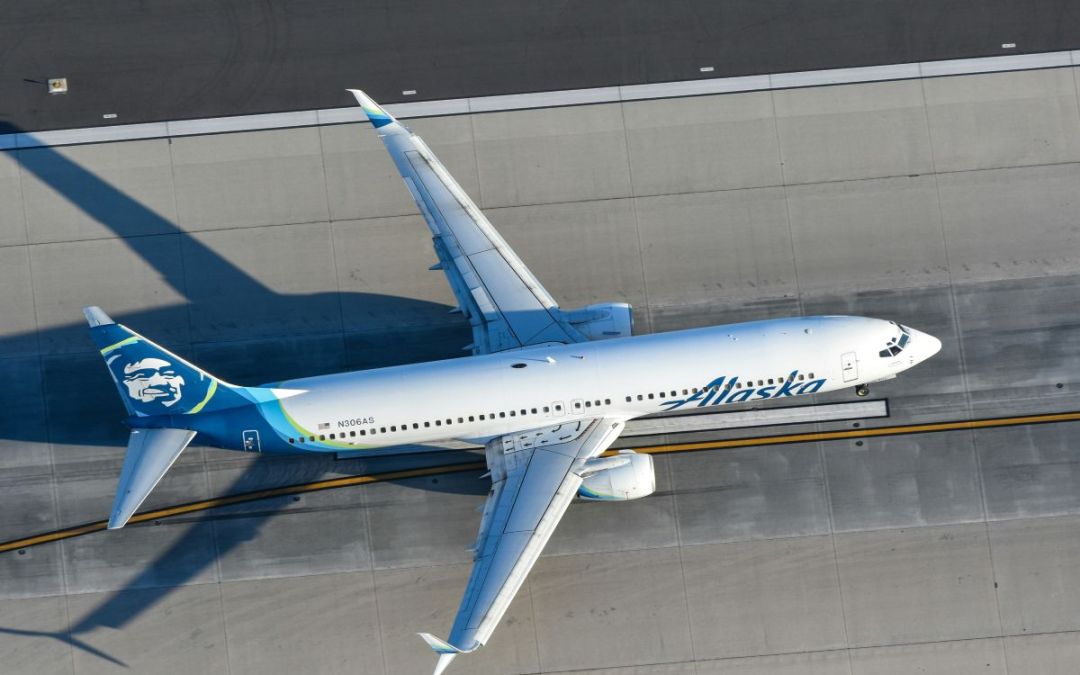
Alaska Airlines have signed a formal license agreement for the Boeing Virtual Airplane, a training solution designed to accelerate pilot readiness.
Alaska Airlines helped develop the tool, which is device-agnostic and lets pilots practice procedures within the dedicated app whenever they like. Additionally, the free-play Flight Management System (FMS) supports the standardisation of training so pilots can familiarise themselves with simulators more quickly.
Chris Broom, Vice President of Commercial Training Solutions at Boeing, commented:
Alaska Airlines’ commitment to innovation and safety has been instrumental in the development of Virtual Airplane. We are proud to see this partnership evolve as they move from beta testing to full adoption, leveraging Virtual Airplane to enhance pilot training and operational readiness.
Procedures Trainer is the first module in the Virtual Airplane’s suite of training tools. Currently available for Boeing 737 MAX training, the manufacturers say additional Boeing models will be added soon to enhance the programme. Jeff Severns, Managing Director of Flight Operations Training for Alaska Airlines, said:
Our collaboration with Boeing on Virtual Airplane has allowed us to provide our pilots with flexible, realistic training tools that complement traditional simulator sessions. We look forward to fully integrating this technology into our ground school curriculum to further improve training effectiveness and pilot proficiency.
Join us at Aerospace Tech Week 2026 to discuss the future of flight training.
For more like this, see:
by Elsie Clark | May 5, 2026 | AI & ML, Avionics, Connectivity, Flight Ops IT, Innovation, MRO IT, Sustainability
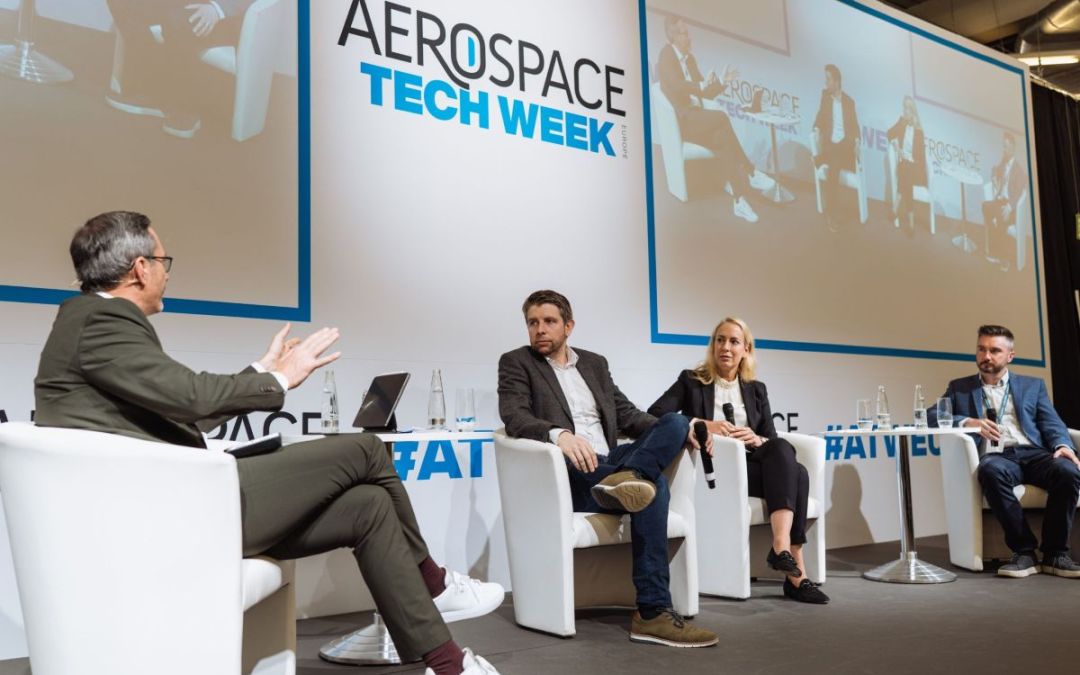
Aerospace Tech Week (ATW) have unveiled the agenda for the next edition of the event, taking place in November. This year the conference will be held in London for the first time, bringing together innovators across the industry while highlighting the UK’s dynamic aviation and aerospace value chain. The agenda covers the technologies disrupting the industry right now, from AI and avionics to digital MRO and sustainable aviation fuel.
Big players attending the event include executives from Airbus, Boeing, easyJet, Lufthansa, Thales, Safran, Leonardo, and many more. And through partnerships with ADS, the Aerospace Technology Institute, EUROCAE, and the European Aerospace Cluster Partnership, we’re making ATW 2026 the most impactful edition of the event yet.
Sessions you won’t want to miss:
Keynote panel: Aerospace 2030: Navigating the roadmap towards a resilient, intelligent, and sustainable aerospace. Featuring:
- Nick Earl VP UK, Safran
- Greg Ombach, Senior VP and Head of Disruptive Research, Technology, and Innovation, Airbus
- Ajay Chakravarthy, Chief AI Officer, Thales
- Giancarlo Buono,Group Director Safety and Airspace Regulation, Board Member, UK, Civil Aviation Authority
Workshop: Next steps for hydrogen propulsion
- Led by Helen Leadbetter, Technical Strategy Lead – Zero Emissions Flight, Civil Aviation Authority
Panel: Mastering data quality for the next steps in predictive maintenance. Featuring:
- Craig Lynch, Predictive Maintenance Specialist, easyJet
- Honor Powrie, Senior Director, Data & Analytics, ge
- Yannick Nkengsa, Manager, Aircraft Software & Data, Air Canada
Keynote panel: Towards sustainable skies: Strategies and innovations to green the future of aerospace. Featuring:
- Jonathon Counsell, Group Director of Sustainability, IAG
- Julien Manhes, Head of SAF & CDR, Airbus
- Stéphane Albert, Associate Director, Strategic Sustainability, Pratt and Whitney
- Steven Gillard, Regional Director, Europe & METACA Sustainability + Chair of UK Jet Zero Task Force, Boeing
Presentation: From requirements to practice: The WG-72 toolbox for Part-IS cybersecurity compliance.
- Anna Guégan, Senior Technical Programme Manager, EUROCAE
Keynote panel: Connected sovereign skies: Engineering a resilient UK & European airspace. Featuring:
- Sven Graeble, EVP, Head of Strategic Space Initiatives, Airbus Defence and Space GmbH
- Gareth Hetheridge, CIO & Director of Digital, Leonardo
Talent summit, in conversation with Women In Aerospace: Practical advice for forging a career in Aerospace. Featuring:
- Mamatha Maheshwarappa, Head of R&D, UK Space Agency
- Chiara Palla, Coordinator & Program Manager, Women in Aerospace UK Chapter
Excited yet? Check out the full agenda here.
And don’t forget to register your attendance to join us in London in November.
For more like this, see:
by Elsie Clark | Apr 28, 2026 | Innovation
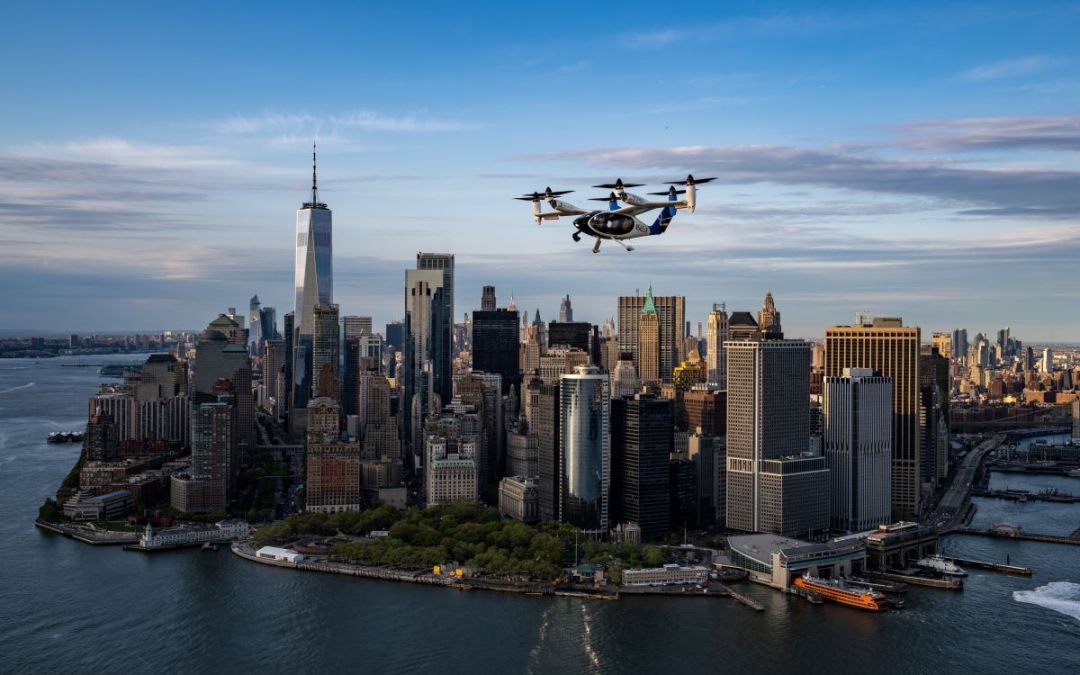
Joby Aviation have conducted the first ever point-to-point eVTOL flight across the New York City skyline in a demonstration of how an air taxi network could operate across the US’s most populous urban area.
During the test flight, Joby’s N545JX aircraft took off from JFK airport and travelled up Manhattan island, touching down at existing Downtown and Midtown helipads along the journey. The demo took place under the federal eVTOL Integration Pilot Program (eIPP), which selected New York as one of the testing hubs for air taxi technology. Joby will collaborate on five eIPP projects overall. JoeBen Bevirt, founder and CEO of Joby, commented:
New York has always been a city that defines the future by demanding better. We first flew here in 2023, and now we’re showing what the next chapter looks like: a quiet, zero operating emissions air taxi service designed to better serve New Yorkers. This week, flying between JFK and Manhattan, we showed what the White House-backed eIPP initiative makes possible and offered New York a look at what’s coming.
Joby face stiff competition in the race to receive certification from the Federal Aviation Authority (FAA). Other providers jostling to launch commercial service in NYC include British developers Vertical Aerospace and Californian startup Archer Aviation. All three air taxi providers claim their aircraft could cut travel times between key New York City locations down to as little as ten minutes.
NYC’s helipads will be electrified to prepare for the mass deployment of air taxis, while key partners at the city’s Economic Development Corporation and the Port Authority are facilitating integration with existing transport links.
Port Authority Chairman Kevin O’Toole said:
The bridges, tunnels, airports, and rail lines that the Port Authority operates move hundreds of millions of people through this region every year, and our job is to make sure that network keeps pace with the future. This cutting-edge aircraft is exactly the kind of innovation we have a responsibility to test, understand, and help shape for the good of the region and the public. These flights advance our work to determine how next-generation aviation technology can serve the people of New York and New Jersey.
Join us at Aerospace Tech Week 2026 to discuss the future of advanced air mobility (AAM).
For more like this, see:



You must be logged in to post a comment.