
by ATR Contributor | Aug 1, 2025 | Sustainability
As the aviation industry faces mounting pressure to decarbonize, OEMs are stepping up with bold innovation, practical design shifts, and deeper collaboration than ever before.
In this interview, Rebina Pozole, Head of Sustainability at Deutsche Aircraft, shares how the company is tackling sustainability challenges through smarter aircraft design, fuel experimentation, and strategic partnerships-with the D328eco aircraft leading the charge.
“We’ve always reduced fuel for economic reasons-now we’re doing it for environmental ones.”
Pozole explains that while long-term innovation is crucial, OEMs have a responsibility to pursue near-term, feasible solutions. For Deutsche Aircraft, this includes improving aerodynamics, weight, and engine efficiency while also testing alternative fuel types like hydrogen, batteries, and more sustainable hydrocarbon use.
“There aren’t that many energy carriers we can use in aviation. We need to explore realistic alternatives-and SAF is one of them.”
She highlights two tracks of experimentation:
- Applied tech testing, like flights using zero-aromatics synthetic fuels
- Research-based experimentation, exploring what may be possible in the future
One major milestone? The upcoming D328eco, scheduled for entry into service in late 2027:
“We’re on track. Seeing the aircraft take shape in the hangar-it’s really exciting.”
Pozole also dives into the critical need for deep, technical collaboration between OEMs, fuel producers, and other ecosystem players:
“It’s not just cooperation for the sake of it. We need to understand each other’s technical and business constraints-something we never had to do before.”
Looking ahead, Deutsche Aircraft is actively forming strategic partnerships with SAF producers to ensure their aircraft can fly with 100% PTL zero-aromatics fuel once it’s commercially available.
Questions asked include:
- What role do OEMs play in the aviation industry’s sustainability journey?
- How is aircraft design being optimized to reduce climate impact?
- What are the key challenges in experimenting with new technologies and fuels?
- Can you tell us about the progress of the D328eco?
- How vital is collaboration in meeting sustainability goals?
- Are there any exciting partnerships on the horizon?
Join us at Aerospace Tech Week Europe 2026!
Subscribe to our free monthly newsletter here.
For more like this see:
by Jessica Brownlow | Apr 2, 2025 | AI & ML, Avionics, Connectivity, Flight Ops IT, Innovation, MRO IT, Sustainability
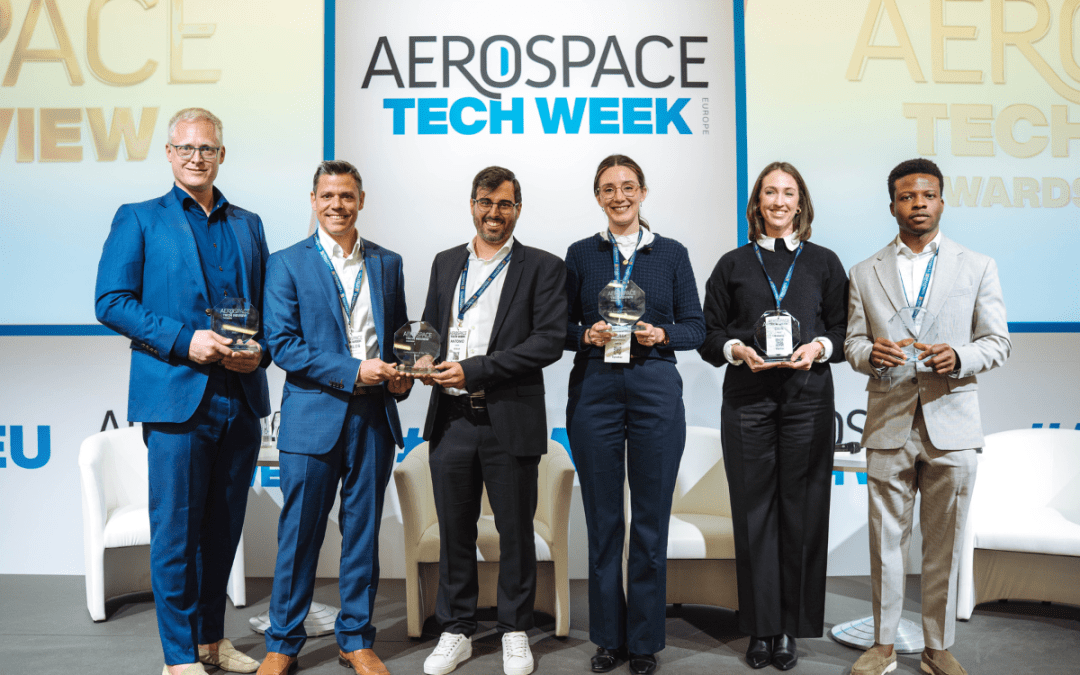
Earlier today, the five winners of this year’s Aerospace Tech Review (ATR) Awards were announced onsite at Aerospace Tech Week Europe in Munich. The awards recognise individuals and companies for their outstanding contributions to the aerospace industry in 2024.
Each category featured three deserving finalists, carefully selected from publication nominations, with the winners chosen by an expert judging panel prior to the event.
Sven Krause announced the results at the close of day one at Aerospace Tech Week Europe, putting a spotlight on the innovators, visionaries, and first-movers who are shaping the future of aerospace.
Top innovator – Individual person who has pushed the boundaries to make a lasting impact on the industry
Winner: Maxime Meijers (Co-Founder & CEO, Estuaire) for his leadership combining atmospheric modeling with real-time operational insights to address the full climate footprint.
Finalists: Victor Oribamise (CEO, Kquika), Eng. Catherine Cordonia (COO, DaS LAB)
Most disruptive start up – Start up that has shaken the industry, bringing a fresh approach to challenges/forward thinking solutions
Winner: AIXI – Founded to help airlines leverage decades of historical maintenance and reliability data to solve real-world challenges.
Finalists: Cosmofoil, JELLYSPACE
Speaking on the achievement, Cameron Byrd, AIXI CEO & Founder said:
“AIXI is empowering airlines to unlock the full value of their maintenance data with industry specific AI models. Our tools have been in production since 2022 and have most notably helped the maintenance and reliability teams at Southwest Airlines. We are thrilled at being recognized as the Most Disruptive Start-Up at Aerospace Tech Week Europe, which emphasizes our industry-leading tools and innovation.”
Best sustainability initiative – Company that has taken exceptional steps to reduce the industry’s environmental impact or significantly raised the standard for sustainability
Winner: Iberia Maintenance for its use of SAF in their test bench, producing renewable energy via solar panels, and broadening its in house repair capabilities to reduce emissions.
Finalists: EL AL, Airbus
Most creative product applying AI – Driving progress and opening up new possibilities
Winner: Kquika’s Trakt System which leverages AI and machine learning to revolutionise aircraft maintenance, addressing the aviation industry’s labor shortage and operational inefficiencies.
Finalists: Skypuzzler’s iDATC, DaS LAB’s Project StopOver
Collaboration of the year – Two or more companies whose collaboration has resulted in significant advancement for the sector
Winner: Airbus & Telefónica who have come together to transform the aerospace sector through the power of 5G technology.
Finalists: Spectrum Control & 3D Glass Solutions, International Aerospace Environmental Group’s Work Group 13
Natalie England, Project Director, Aerospace Tech Week said:
“This is the first year of the ATR Awards and we are thrilled to celebrate some of the remarkable people and products that are pushing the boundaries of what is possible in this dynamic industry. Aerospace Tech Week Europe brings together key players in the industry ecosystem to drive innovation, making it the perfect place to announce the results.”
For more information on Aerospace Tech Week, visit our website and follow us on LinkedIn.
by Jessica Brownlow | Mar 17, 2025 | Avionics, Innovation, Sustainability, Video
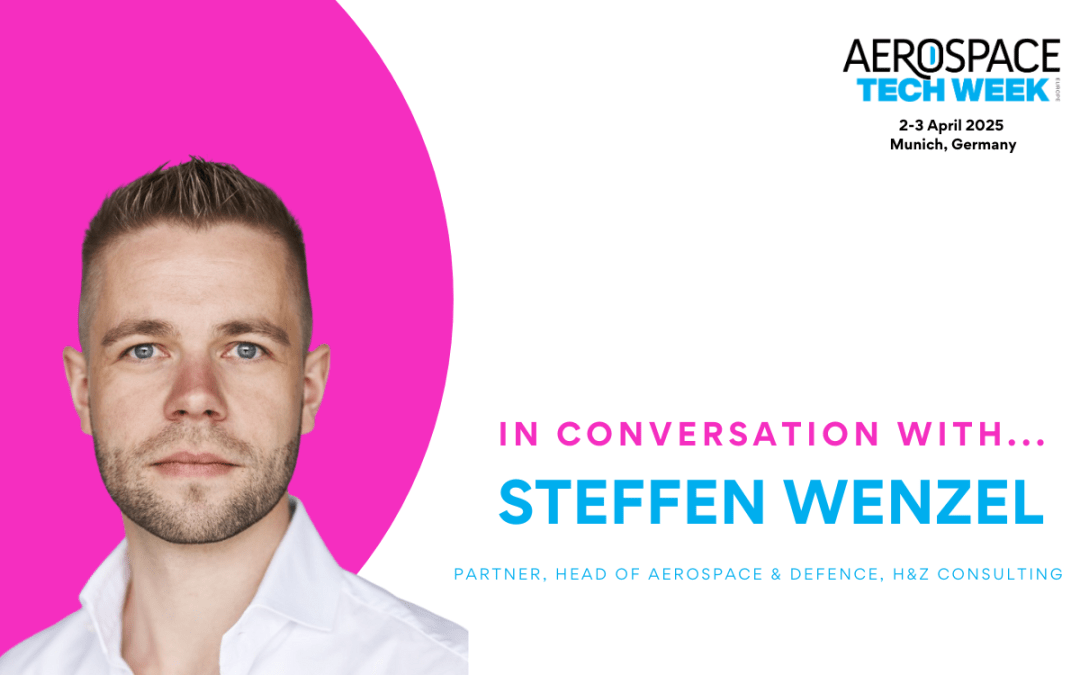
At Aerospace Tech Week Europe, Steffen Wenzel, Partner, Head of Aerospace & Defence, h&z Consulting will be chairing a selection of avionics tracks as well as moderating key sessions including a sustainability focused discussion with Anna von Groote, Director General of EUROCAE.
In this brief conversation, Wenzel draws on his 15 years of experience in the aerospace and defence industry to assess the current landscape. The discussion touched on everything from quantum computing to avionics, AI to sustainability.
Wenzel picked out sustainability as one of the industry’s major challenges. Unpacking the variety of solutions that will be necessary to curb emissions, he picked out SAF, hybrid-electric technology, route optimisation, and enhanced air traffic management as near term solutions that are already shaping the landscape.
Speaking about the upcoming event in Munich, Wenzel explained the sessions onsite will be critical in understanding how avionics will develop in the coming years. Sharing a glimpse into what to expect, Wenzel said:
“One area is cross-aircraft collaboration to avoid turbulence, which is an exciting area of innovation. Essentially, aircraft will be able to communicate with each other in real-time to share turbulence data, helping improve passenger comfort and operational efficiency.
Another key topic is Global Navigation Satellite Systems (GNSS) and the innovations they offer to operators. These advancements will improve navigation accuracy and allow for more precise and fuel-efficient routing, which is crucial as we work toward making aviation more sustainable.
On a more technical level, we will also be looking at multicore processors in avionics systems. This is a topic that has been around for some time, but it remains a challenge, particularly when it comes to certification…”
Watch the full conversation below. To join us at ATW Europe book your ticket now!
Questions asked include:
- What are the most exciting opportunities we are seeing with aerospace?
- What are the biggest challenges the industry is facing?
- Can you highlight some of key themes you expect to hear on stage at in April?
For more on Aerospace Tech Week 2025 see:
by Jessica Brownlow | Mar 6, 2025 | Innovation, Sustainability
Originally published on World Aviation Festival
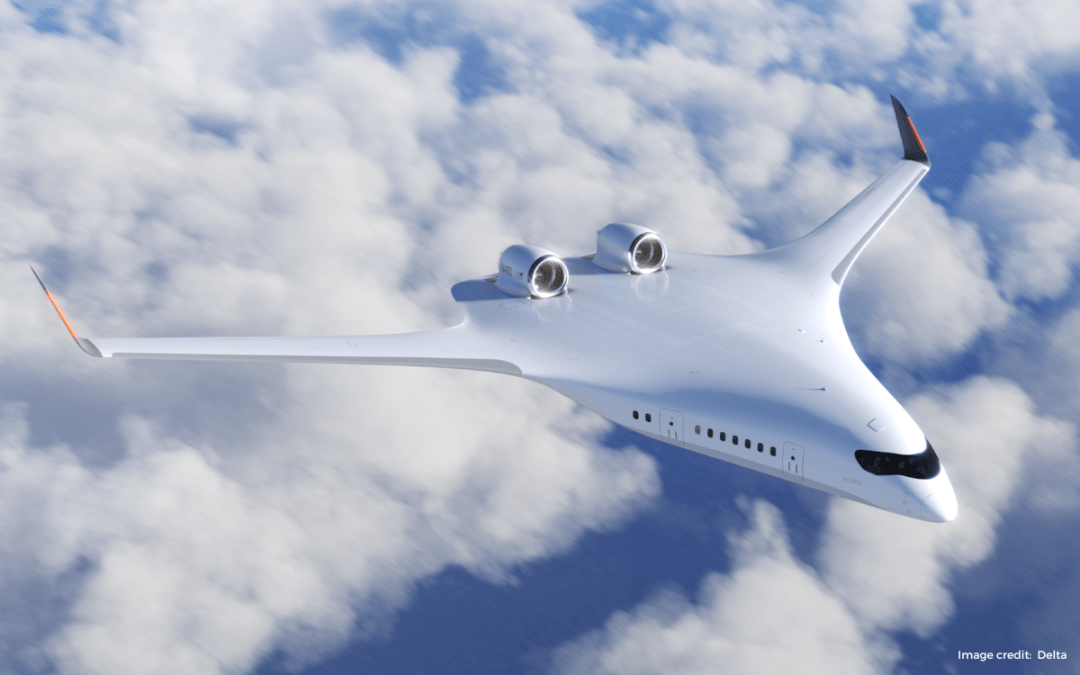
Delta Air Lines has announced a “game-changing” new partnership with start up JetZero to catalyse the production of a blended-wing-body (BWB) aircraft. The aircraft design is expected to be up to 50 per cent more fuel-efficient than today’s models.
The official partnership, announced yesterday, follows JetZero’s existing collaboration with the US Air Force, which awarded the start up a grant in 2023.
JetZero plans to launch its first aircraft in 2030 with 100 per cent SAF compatibility, bolstered by support from the US Air Force, NASA, and the FAA.
Delta will “provide the operational expertise to help make this technology viable,” committing its extensive knowledge of maintenance and operational insights to develop the aircraft.
Speaking on the announcement, Amelia DeLuca, Delta’s Chief Sustainability Officer said:
“Working with JetZero to realise an entirely new airframe and experience for customers and employees is bold and important work to advance the airline industry’s fuel saving initiatives and innovation goals. While Delta is focused on doing what we can today to address our carbon footprint, it’s critical we also work with a variety of partners to advance revolutionary technologies, like JetZero’s blended-wing-body aircraft, to solve for a significant portion of future aviation emissions.”
JetZero is the fourth “revolutionary fleet” partnership the carrier has signed as it assumes a leading role in shaping the future of sustainable aviation.
For more like this see:
by Jessica Brownlow | Feb 19, 2025 | AI & ML, Avionics, Connectivity, Flight Ops IT, Innovation, MRO IT, Sustainability

by Jessica Brownlow | Jan 22, 2025 | Innovation, Sustainability
Ascendance, a sustainability-focused start up creating a new generation of aircraft, recently extended its strategic partnership with tech transformation partner, Capgemini. This phase of collaboration will work to scale up from demonstrations to industrialisation.
Ascendance was founded in 2018 and has been developing a hybrid electric propulsion solution called STERNA and a VTOL (vertical take-off and landing) aircraft , ATEA, that will be powered by STERNA.
They have been partnered with Capgemini since 2021, which has supported the development of its system engineering, flight physics and control, and power systems and battery development. According to the press release, Capgemini will bring its end-to-end capabilities in engineering, technology, data and business transformation in the fields of electric battery, industrial ramp-up, connected services, and digital continuity
Speaking on the announcement, William Rozé, CEO of Capgemini Engineering and Group Executive Board Member, said:
“We are extremely pleased to expand our relationship with Ascendance. After a successful first phase to support their innovative product development roadmap, we are now pivoting from technology demonstrations to industrialization. Together, with Ascendance’s hybrid modular propulsion system and Capgemini’s end-to-end capabilities in critical engineering disciplines, digital and business transformation, we are ready to accelerate and soon deploy decarbonized solutions at scale for the aviation industry,”
Both STERNA and ATEA have entered the industrialisation phase and ATEA is scheduled for its first test flight in 2025.
At Aerospace Tech Week Europe, industry experts will come together to explore Sustainability, Advanced Air Mobility, Training & Simulations, Flight Ops IT, Avionics, MRO IT, Connected Aircraft, Cybersecurity, Testing, UAM, and Supply Chain & Procurement.
This year, speakers from Lilium and VOLOCOPTER will be unpacking how UAM will transform European airspace and aviation. View the agenda here and book your ticket now for free!
For more like this see:







You must be logged in to post a comment.