
by Jessica Brownlow | Feb 13, 2025 | Flight Ops IT
Disruption costs airlines billions of dollars each year in extra fuel, maintenance, crew, and compensation expenses. With extreme weather events on the rise, the industry must learn to navigate these events with minimal impact on customers and operations.
Turkish Airlines is tackling disruption with a new situational awareness and disruption management solution for airline operations control centres (OCCs).
The tool, CAE’s Unified Task Board promotes strategic decision making by integrating data from across multiple systems into a single view. It also auto-calculates disruption scenarios varying from common to complex day-of-operations issues to facilitate prompt disruption resolution.
The Turkish flag-carrier has also opted for CAE’s next-generation Crew Management product which “boosts crew productivity, optimises efficiency, and resolves disruptions when time is of the essence.”
Speaking on the announcement, Ahmet Acar, Senior Vice President of crew Planning at Turkish Airlines said:
“We are committed to maintaining our competitive edge and delivering the high-quality travel experience our guests rely on with Turkish Airlines. To achieve this, we continuously seek innovative solutions to enhance our operations. Building on the success of CAE’s Flight Management software, we are excited to move forward with the integration of the company’s Crew Management software and Unified Task Board. We are confident these solutions will increase efficiencies, reduce disruptions for our guests, allow faster disruption recovery, and create an even better working environment for our crew.
For more like this see:
by Jessica Brownlow | Jan 13, 2025 | AI & ML, Avionics, BUZZ, Connectivity, Flight Ops IT, Innovation, MRO IT, Sustainability
At Aerospace Tech Week, we celebrate innovation and excellence across the industry.
These awards put a spotlight on the innovators, visionaries, and first-movers who are shaping the future of aerospace. If there’s a company, individual, or product you want to recognise for their outstanding contributions to the industry in 2024, nominate them below.
Winners of each category will receive a prize package including dedicated social media promotion across our platforms and featured spots on our blog and website. The winners will also get either exclusive blog coverage or an interview, providing a chance to share their story. Each winner will also take home a small trophy as a token of their achievement.
For the winner of the most disruptive start-up category, an additional perk is offered: a small booth at either our US or Europe event, giving them a platform to network amongst key industry stakeholders.
The categories are:
- Top innovator
- Best sustainability initiative
- Most disruptive start-up
- AI visionary
- Collaboration of the year
Be sure to attend the Aerospace Tech Awards Ceremony on Wednesday 2nd April 2025 at 17:10 at after the Aerospace Tech Week closing keynote panel. Get your free ticket ‘
by Jessica Brownlow | Jan 2, 2025 | Flight Ops IT, Innovation
Towards the end of 2024, NATS’ Swanwick air traffic control centre deployed an innovative solution to enhance the efficiency of separating arriving aircraft at Heathrow airport. Pairwise separation considers “the specific characteristics of each individual aircraft type” when calculating separation time, moving beyond the traditional six categories that are commonly used.
This “granular technique” will empower air traffic controllers to minimise gaps between pairs of aircraft and reduce airborne holding. The graphics below illustrate how it differs from typical methods.
Pairwise, a new module in the Intelligent Approach tool, combines NATS’ air traffic expertise with technology provider and systems integrator, Leidos‘ cutting-edge technology. With existing modules from Intelligent Approach already in place at Heathrow, Toronto Pearson, and Amsterdam Schiphol airports, the tool has driven efficiency and environmental benefits “cutting headwind delays by more than 60% and reduced airborne holding by 230,000 minutes per annum, saving over 45,000 tonnes of CO2.”

Image credit: NATS
Image credit: NATS
Speaking on the solution, Chris Norsworthy, NATS Director Airspace & Future Operations, said:
“The introduction of Pairwise as part of Intelligent Approach is another world first and testament to our continuous efforts to improve the quality of the service we provide to our airport and airline customers. Delivering additional operational resilience for Heathrow will make a real positive difference to airline punctuality, helping to improve the passenger experience and reduce carbon emissions.”
At Aerospace Tech Week Europe, industry experts will come together to explore Flight Ops IT, Avionics, MRO IT, Connected Aircraft, Cybersecurity, Testing, UAM, Sustainability and Supply Chain & Procurement. To join the conversation, book your ticket now for free!
For more like this also see:
by Jessica Brownlow | Dec 23, 2024 | AI & ML, Avionics, Connectivity, Flight Ops IT, Innovation, MRO IT, Sustainability
As 2024 draws to a close, we are reflecting on the news and topics that grabbed your attention this year. Here are the top five most read articles of 2024.
1. What EWIS is and why it matters for wiring aircraft
If you play any part in the wiring of aircraft — whether as a manufacturer, installer or technician — then the acronym EWIS matters to you. The reason: EWIS stands for ‘Electrical Wiring InterConnect System’ or ‘Electrical Wiring InterConnection System.’ In either usage, EWIS represents a unified approach to aircraft wiring design and layout that encompasses all wires and wired devices that are installed in aircraft for transmitting electrical energy… Read full article here.
2. Harnessing data to drive the connected aviation ecosystem
Nicole White, Vice President, Business Development – Connected Aviation Solutions, Collins Aerospace, joined to discuss the connectivity landscape, looking at emerging technologies, challenges, and reaching the “eutopia state” of travel. The conversation emphasised the current fragmentation of the connectivity ecosystem, highlighting the urgent need to integrate solutions. Additionally, White characterised the digital side of the landscape as still in its infancy, with enormous untapped potential in the data being generated…Read full article here.
3. Industry 4.0: Digital Twin technology at Rolls-Royce
According to McKinsey, intelligent computers are to the Fourth Industrial Revolution (Industry 4.0), what steam was to the first. Powered by disruptive technology, machine learning (ML), artificial intelligence (AI), and data analytics, Industry 4.0 is characterised by the merging of the digital and physical worlds. Digital Twins epitomise this new era of industry. It is: “A technology based on the concept of creating…Read full article here
4. Aerospace Tech Review Awards 2024
At Aerospace Tech Week, we celebrate innovation and excellence across the industry. These awards put a spotlight on the innovators, visionaries, and first-movers who are shaping the future of aerospace. If there’s a company, individual, or product you want to recognise for their outstanding contributions to the industry in 2024, nominate them below. Winners of each category will receive a prize package including dedicated social media promotion across our platforms and featured spots on our blog and website. The winners will also get either exclusive blog coverage or an interview, providing a chance to share their story. Each winner will also take home a small… Read full article here
5. 15 Promising aerospace startups to watch
In an industry which must stay ahead of the curve, startups play a crucial role. Disrupting a space dominated by legacy systems, their comparative agility allows for rapid experimentation and iteration, bringing fresh perspectives and innovation. Here are 15 startups leveraging tech to drive innovation that are set to shake the aerospace industry…Read full article here
What do you think will be the biggest topics to explore in 2025?
by Jessica Brownlow | Dec 4, 2024 | Flight Ops IT
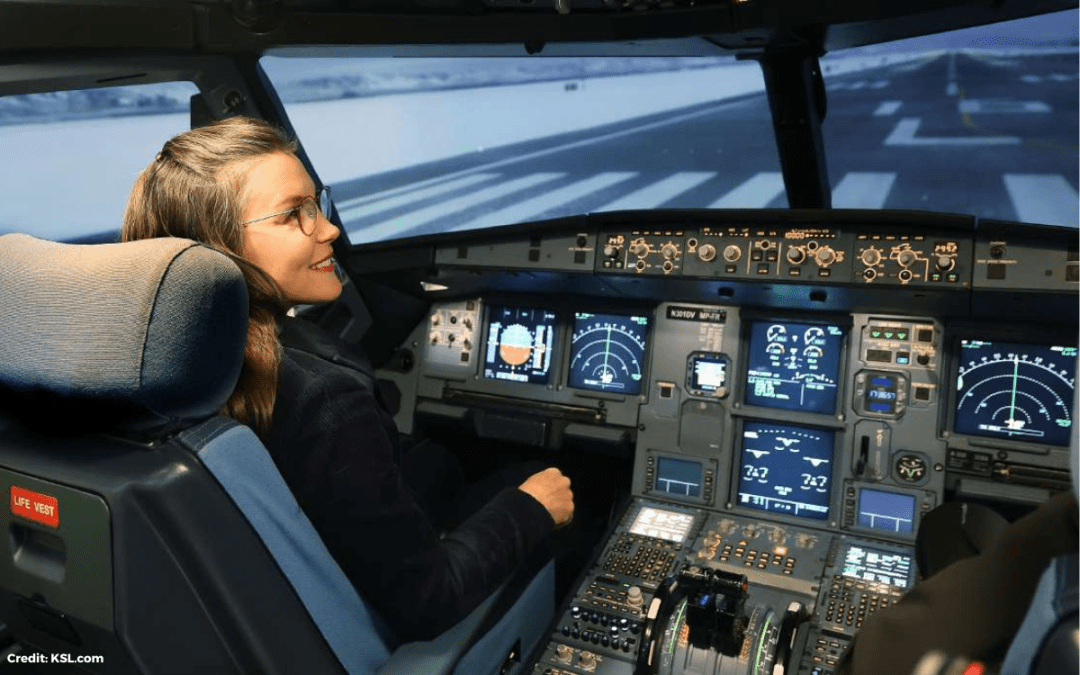
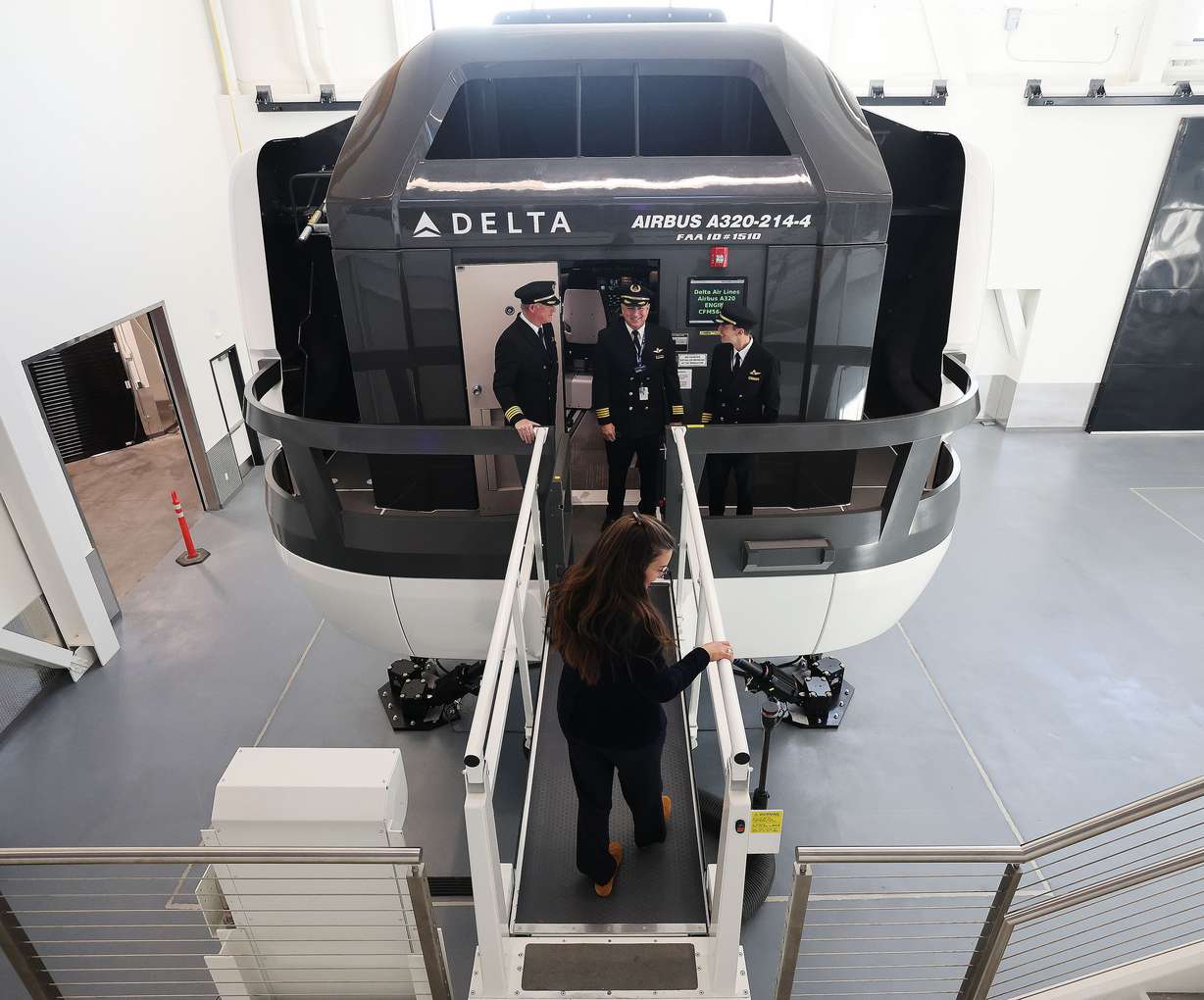
On Tuesday, Delta Air Lines opened its $50 million flight operations training facility in Salt Lake City (SLC). Spanning 50,000 square feet, the cutting-edge facility is the airline’s first outside Atlanta.
Speaking on the significance of the launch, Ed Bastian, CEO at Delta, said:
“We have 5,000 employees here in the region, and when you talk about our pilots, we have the very best pilots. We want to make sure we have the very best tools and technology and capability at their fingertips here. But all the other employees and families that we have here, it’s a statement to them, as well, in terms of seeing this great facility go up.”
Image credit: KSL.com
KSL.com reported that the facility currently has two simulators operational, “equipped with [both] an A350 and A320 simulator, with a B737 simulator set to join the mix in the spring.” It also has space onsite for six additional Full Motion Simulators. Complementing these, are seven classrooms for pilots in training and ten pilot briefing rooms.
The airline anticipates over 1,000 training events will be held at the facility every month as Delta pilots are recertified on an aircraft every nine months. This training facility adds to Delta’s existing 33 simulators at the airline’s HQ in Atlanta.
For more like this see:
by Jessica Brownlow | Nov 19, 2024 | AI & ML, Avionics, Connectivity, Flight Ops IT, Innovation, MRO IT, Sustainability
DOWNLOAD FULL REPORT HERE







You must be logged in to post a comment.