
by Elsie Clark | Jan 14, 2026 | AI & ML, Avionics, Connectivity, Flight Ops IT, Innovation, MRO IT, Sustainability
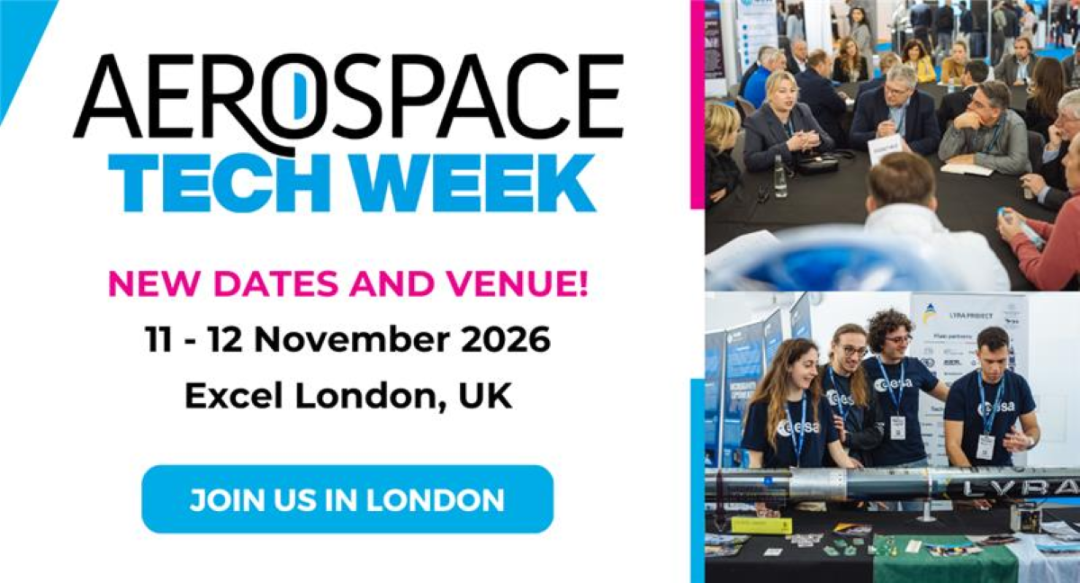
We are excited to announce a significant strategic update to Aerospace Tech Week 2026: the event will now take place in London, UK!
Moving from Munich, Germany to the world-leading Excel exhibition centre means the event can better serve the evolving needs of the aerospace industry. Additionally, new confirmed dates of 11 – 12 November 2026 give us more time to craft our dynamic exhibitor hall and informative agenda.
Lucy Matthews, Senior Conference Producer for Aerospace Tech Week, said:
Moving Aerospace Tech Week to London represents a major step forward for the event. It gives us the opportunity to grow our audience, expand the technical depth of the programme, and deliver our biggest and best edition yet.
Why join us in London?
- A global gateway: Unrivalled international connectivity to attract a truly global visitor base.
- The hub of innovation: Direct access to the UK’s leading aerospace, tech, and investment sectors.
- Enhanced programme: The new dates provide an extended runway to build our most ambitious conference and exhibition to date.
As we prepare for our biggest edition yet, we are now inviting industry leaders to secure their place in the 2026 programme.
Want to be part of the London launch? Whether you are looking to showcase your latest technology on the exhibition floor, lead the conversation as a speaker, or elevate your brand through sponsorship, we want to hear from you.
Click here to speak, sponsor, or exhibit.
Confirmed speakers already including representatives from the UK Ministry of Defence, Oman Air, Airbus, the Civil Aviation Authority, and TAP Maintenance & Engineering.
We look forward to welcoming you and the rest of the global aerospace community to London in November 2026.
About Aerospace Tech Week
Aerospace Tech Week is an event focused on driving innovation and technology advancements in the aerospace sector. Bringing together senior executives and technical leaders, ATW connects the whole value chain of aerospace to discuss, connect, and collaborate on emerging trends, challenges, and opportunities.
In 2026 we are excited to reunite our community of 1,500 industry experts for two inspiring days featuring over 120 speakers. Key topics covered include AI, avionics, flight ops, and sustainability, while our exhibitor and networking programmes spark connections that drive transformations across the industry.
Subscribe to our newsletter to get the latest aerospace news and exclusive interviews straight to your inbox.
by Elsie Clark | Dec 10, 2025 | Avionics, Innovation
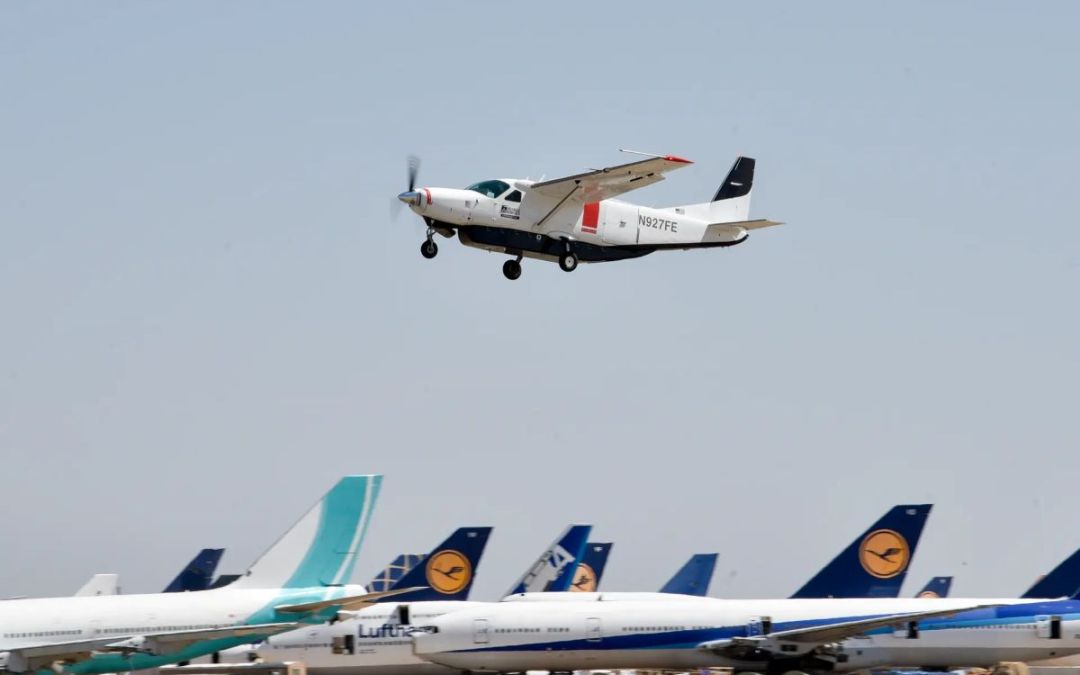
Reliable Robotics has signed a contract with NASA’s Aeronautics Research Mission Directorate (ARMD) to test its Cessna 208B Caravan at airports. Data collected from the flights will help inform the FAA and Standards Development Organizations (SDOs) as they set regulations for uncrewed aircraft systems.
Providing the tech for continuous autopilot engagement through all phases of flight, including auto-taxi, auto-takeoff and auto-landing, Reliable Robotics’ mission is to make flight safer. Designed for cargo operations, the company will use the new agreement with NASA to test interactions with air traffic control and potential contingency scenarios. There will be no pilot onboard during the final flight demonstration.
Robert Rose, CEO and co-founder, Reliable Robotics, said:
This testing campaign comes at a unique moment in time, when safety-enhancing aircraft autonomy is rapidly nearing FAA certification and entry into service for regional air cargo and military use cases. Efforts like this are how we continue to advance the necessary public policy ecosystem. We deeply value the continued partnership with NASA to conduct testing that will advance industry-wide efforts to expand remotely piloted aircraft operations at airports.
After the tests, data will be passed on to NASA, FAA, and SDOs to develop Minimum Operational Performance Standards (MOPS) and Minimum Aviation System Performance Standards (MASPS) for UAS. Demonstrating this technology in real-world environments is essential for proving — and enhancing — their safety in advance of commercial launch.
Join us at Aerospace Tech Week 2026 to discuss the future of uncrewed aircraft systems.
For more like this, see:
by Elsie Clark | Nov 20, 2025 | Avionics, Connectivity
The International Air Transport Association (IATA) are calling for safeguards around the deployment of 5G/6G to protect avionics systems and radio altimeters.
IATA has presented a paper at the International Telecommunication Union (ITU) WP5B Meeting in Geneva, Switzerland that outlines priority areas for protection. Radio altimeters, which need spectrum availability, must be taken into consideration in 5G planning to ensure aircraft and crew operate at optimum situational awareness.
Guiding the ITU’s studies will inform the output of the World Radiocommunications Conference 2027 (WRC-27), which will determine the technical conditions for 5G and 6G deployment.
Nick Careen, IATA Senior Vice President Operations, Safety and Security, said:
The benefits of 5G and 6G can never come at the cost of aviation safety. Spectrum decisions must be based on real-world aircraft operations, not idealized telecommunications industry modelling. That means ensuring ITU studies fully reflect the most demanding conditions pilots face. With input from aviation users, WRC-27 must deliver clear global rules to ensure the safe coexistence of radio altimeters and other safety-critical avionic systems with next-generation telecom networks across all phases of flight
In many countries, telecommunications providers have voluntarily implemented measures to avoid interference with o the Radio Altimeter (RAD ALT) allocation (4.2–4.4 GHz). However, in countries such as Canada, these temporary measures are about to expire, potentially leaving aviation communications vulnerable.
Careen added:
Current 5G mitigations were never designed as a long-term solution and several will expire within months. At the same time, more resilient radio altimeters will not reach airlines until the next decade. That leaves a significant mitigation gap. With new spectrum auctions underway and protections being lifted in key markets, regulators must not assume safety will take care of itself. The industry needs clear, consistent safeguards to bridge the period before new altimeters are available.
Join us at Aerospace Tech Week 2026 to discuss the impact of 5G and 6G on aviation and aersopace.
For more like this, see:
by Elsie Clark | Nov 17, 2025 | Avionics, Connectivity, Innovation
Fokker Services Group has launched a new anti-spoofing solution for the protection of critical avionics systems.
Rather than just detecting GPS spoofing and jamming, the Dutch company says the solution actively defends aircraft systems from attempted attacks. Providing a ‘full-spectrum’ defence, the countermeasures can be integrated with any avionics system and do not require additional pilot training.
Fokker Services CEO Menzo van der Beek said:
Safety is at the heart of everything we do. We assembled a team of experts to develop a solution that directly addresses the hazards posed by GPS disruptions. With very positive test results and expected entry into service scheduled for January 2026 with undisclosed launching operators, we’re confident this solution will bring peace of mind to pilots, crews, and airlines.
The introduction of such a solution comes at a critical time in aerospace. GPS spoofing and jamming incidents have increased significantly in Eastern Europe and the Middle East over the past few years. In one of 2025’s most high-profile incidents, a suspected Russian GPS attack forced pilots carrying the European Commission President Ursula von der Leyen to land her plane with paper maps.
Traffic Collision Avoidance Systems (TCAS), Flight Management Systems (FMS), and the Terrain Avoidance Warning Systems (TAWS) are among the avionics systems that can be targeted during such attacks. Developing robust security and defence systems is critical to maintain the safe positioning and landing of air crew and passengers.
Join us at Aerospace Tech Week 2026 to discuss the future of secure avionics.
For more like this, see:
by Elsie Clark | Sep 19, 2025 | Avionics, MRO IT
Avionics on IndiGo’s fleet of 430 A320 Airbus aircraft will now be maintained by Thales.
The new agreement lasts for 11 years, and includes IndiGo’s growth plans to increase its fleet to 800 craft. Thales’s Repair By The Hour (RBTH) and Avionics By The Hour (ABTH) solutions will be deployed to reduce downtime and ensure critical components are available.
The repairs will take place at IndiGo’s new avionics MRO facility near Delhi Airport in India. An additional 5-year contract has been signed with AvioBook Flight, a Thales company. AvioBook is the only Electronic Flight Bag (EFB) solution authorised by the Directorate General of Civil Aviation (DGCA) for paperless EFB, and provides pilots with essential digital tools to manage their crews.
Parichay Datta, Senior Vice-president, Engineering, IndiGo, said:
We are pleased to partner with Thales, a leading aerospace company trusted worldwide for its expertise in avionics support, to augment IndiGo’s maintenance and repairs capabilities.
With IndiGo’s growing scale and fleet, this association aligns with our commitment to offer a hassle-free and safe flying experience to our customers, while ensuring operational excellence and reliability
India has surpassed Brazil and Indonesia to become the world’s third-largest domestic aviation market. Earlier this week, IndiGo announced plans for a route to Athens from January 2026, as it expands its European strategy.
Since its founding in 2005, the airline has become the largest airline in India by passengers carried and fleet size. The partnership with Thales represents a significant step forward in the company’s efforts to guarantee its growing number of pilots and passengers with safety and efficiency.
Join us at Aerospace Tech Week 2026 to discuss the future of avionics.
For more like this, see:
by Elsie Clark | Sep 16, 2025 | Avionics, Innovation
Honeywell has confirmed that their new Surface Alerts (SURF-A) cockpit technology was trialled in Kansas City, US, in late August,
SURF-A was showcased alongside Honeywell’s already-certified SmartRunway/SmartLanding (SmartX) product, in two demonstrations that recreated real-life near-collisions.
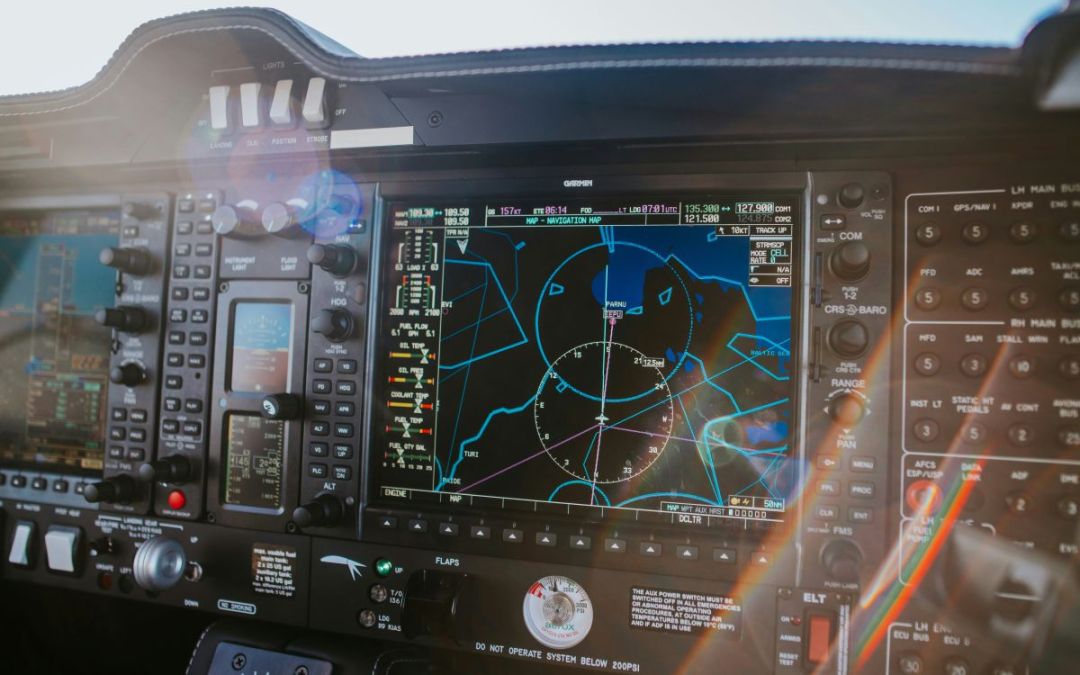
SmartX provides audio and visual clues to pilots during high-stress phases of flights, alerting them to configuration errors and wrong-surface alignments in real-time. SURF-A, meanwhile, has been specifically designed to alert pilots when traffic is on the runway. Callouts are given, and text appears on the display screen if another aircraft in the runway engagement zone presents a collision risk.
As global air traffic increases, cockpit alerts are needed to prevent accidents and close margins of error. Honeywell’s tests of SURF-A at Kansas City recreated two notable incidents from recent years: a February 2023 near-collision at Austin-Bergstrom International Airport during fog, and a January 2023 event at New York JFK where an aircraft taxied onto an active runway.
In the recreations of both scenarios, cockpit alerts warned of the traffic ahead, giving the pilots ample time to react and divert the aircraft’s movements.
Honeywell expects SURF-A certification for commercial aircraft in 2026. Southwest Airlines is currently deploying SmartX across its fleet of Boeing 737s, with more than 700 aircraft activated to date.
Join us at Aerospace Tech Week 2026 to learn more about next-generation avionics.
For more like this, see:




You must be logged in to post a comment.