
by Elsie Clark | Apr 10, 2026 | AI & ML, Innovation
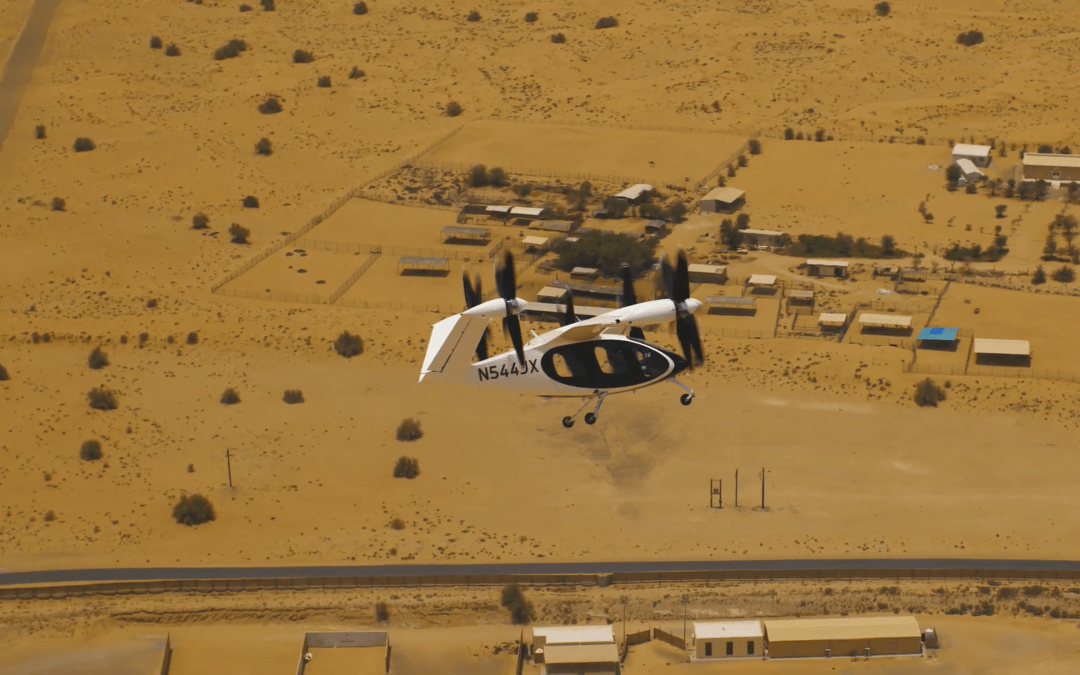
eVTOL developers Joby Aviation and software company Air Space Intelligence (ASI) are teaming up to explore the real-world integration of advanced air mobility (AAM).
Using ASI’s Flyaways AI Platform, Joby will deploy high-fidelity 4D modelling to understand how eVTOL operations can be scaled alongside existing air traffic procedures. With the Federal Aviation Administration (FAA) set to launch the Brand New Air Traffic Control System (BNATCS), the companies say the time is right to think seriously about AAM integration in the US.
Bernard Asare, President, Civil Aviation at Air Space Intelligence, said:
Scaling advanced air mobility requires more than new aircraft — it requires a new operating system for the airspace. Our Flyways AI platform gives operators and controllers the predictive awareness to coordinate high-density operations proactively, not reactively. This partnership brings that same capability to eVTOL operations from day one.
The commercial readiness of eVTOLs is accelerating at pace. While Joby have made significant gains and are expected to launch operations in Dubai later this year, competition in the US market is fierce, with rivals Archer and Vertical also keen to make their mark. In seeking FAA approval, demonstrating how the tech will perform in real-world scenarios is essential.
Greg Bowles, Joby Aviation’s Chief Policy Officer commented:
America has long set the global standard for aviation, and modernizing our airspace is key to maintaining that leadership, By combining Joby’s operational capabilities with ASI’s advanced AI-driven Flyways platform, we’re helping build the intelligent infrastructure needed to integrate electric air taxis seamlessly into the NAS — one of America’s most important national assets.
Join us at Aerospace Tech Week 2026 to discuss the future of advanced air mobility (AAM).
For more like this, see:
by Elsie Clark | Mar 4, 2026 | AI & ML, Avionics, Connectivity, Flight Ops IT, Innovation, MRO IT, Sustainability
Aerospace Tech Week, the premier international exhibition and conference for the aerospace technology community, is proud to announce a new partnership with ADS Group as the event prepares to launch its inaugural UK edition in London.
The move to the UK marks an exciting new chapter for Aerospace Tech Week, which has established itself as the event for senior executives and technical leaders across the aviation and aerospace sectors. The United Kingdom provides a natural home for the show’s next evolution. World-class engineering, global-leading MRO capability, pioneering sustainability research, and an unmatched supply chain make this industry a cornerstone of British economic and industrial strength. It deserves an event that reflects that ambition.
To mark this milestone, Aerospace Tech Week is delighted to partner with ADS Group, the UK’s leading trade association representing the aerospace, defence, security and space sectors. ADS supports over 1,800 member companies across the UK, championing their interests, enabling business growth, and advocating for the policies and investment that keep British industry globally competitive. The partnership will help ensure that Aerospace Tech Week’s London edition is deeply connected to the UK industry community from day one.
Daniel Boyle, General Manager at Aerospace Tech Week said:
Aerospace Tech Week brings together the leaders shaping the future of aviation technology, so partnering with ADS is a natural fit. As the UK’s leading trade association for aerospace, defence, security and space, ADS represents a powerful network of innovators and industry stakeholders. We are delighted to be working together to strengthen engagement across the ecosystem and ensure Aerospace Tech Week continues to provide real value, meaningful connections and forward-looking insight for the industry.
Balaji Srimoolanathan, Aerospace Director at ADS Group said:
We are pleased to partner with Aerospace Tech Week as it launches its first UK edition, and to have another opportunity to showcase the innovation, ambition and global competitiveness of the UK’s aerospace, defence, security and space industries. Aerospace Tech Week provides an important platform for industrial collaboration across the entire ecosystem. With more than 1,800 member companies spanning the full breadth of the supply chain, we are committed to forming partnerships that connect industry with new opportunities, new technologies and new international relationships. We look forward to supporting a successful inaugural event and ensuring the UK’s world leading expertise is front and centre as the sector continues to innovate, export and grow.
Aerospace Tech Week’s inaugural UK edition will bring together airlines, MROs, ANSPs, OEMs and their partners to explore the latest developments across avionics, connected aircraft, MRO IT, flight operations technology, cybersecurity, sustainability and more.
For further information, to register, or to enquire about exhibition and sponsorship opportunities, click here.
About Aerospace Tech Week | 11 – 12 November 2026, Excel London
Aerospace Tech Week is a conference and exhibition focused on driving innovation and technology advancements in the aerospace sector. Bringing together senior executives and technical leaders, ATW connects the whole value chain of aerospace to discuss, connect, and collaborate on emerging trends, challenges, and opportunities.
In 2026, the event will reunite its community of 1,500 industry experts for two inspiring days featuring over 120 speakers. Key topics covered include AI, avionics, MRO, flight ops, and sustainability, while exhibitor and networking programmes spark connections that drive transformations across the industry.
Visit the event website here.
Subscribe to our newsletter to get the latest aerospace news and exclusive interviews straight to your inbox
by Elsie Clark | Feb 12, 2026 | AI & ML, Innovation
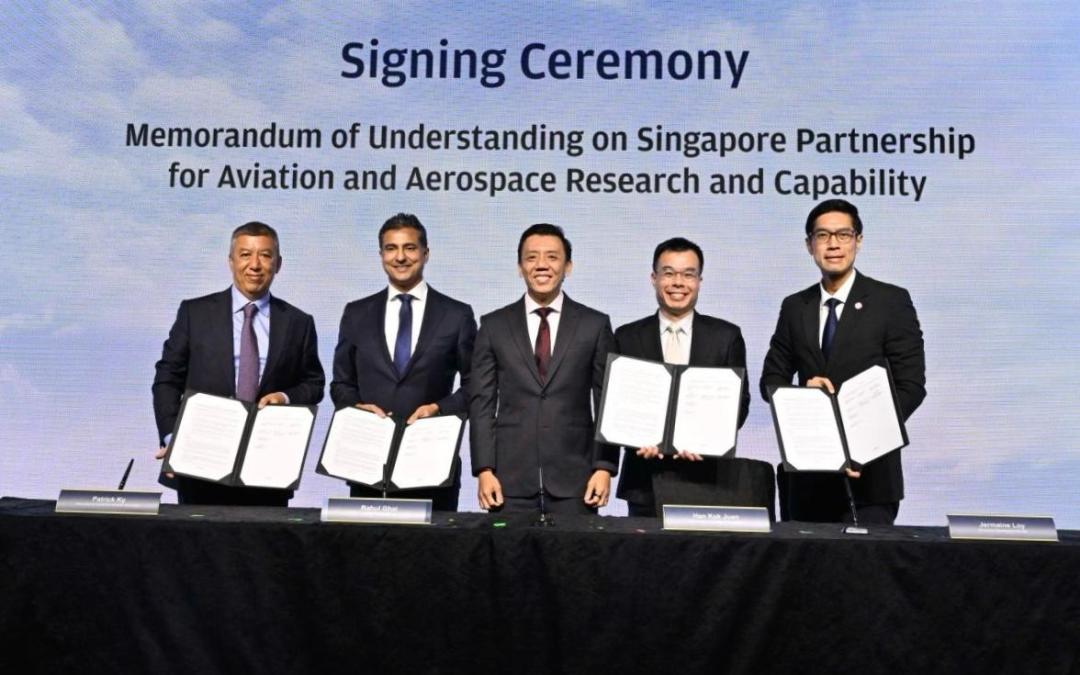
The Civil Aviation Authority of Singapore (CAAS), the Singapore Economic Development Board (EDB), GE Aerospace, and the International Centre for Aviation Innovation (ICAI) have signed a Memorandum of Understanding (MoU) to establish an innovation centre.
The Singapore Partnership for Aviation & Aerospace Research and Capability (SPAARC) will develop next-generation aviation and aerospace solutions. Covering AI, digital platforms, and aerodynamics, the centre will enhance operational efficiency and safety.
Mr. Han Kok Juan, Director-General of CAAS, said:
We have seen rapid advancement in technologies across many fields which, if applied to aviation, has the potential to fundamentally transform it. But because aviation is global and safety-critical, development and deployment at scale involves multiple stakeholders and is often long-drawn and costly. Through public-private-research partnerships such as this, we hope to establish and offer new innovation pathways that are more efficient and effective than what are available currently. These will help accelerate the development and deployment of breakthrough capabilities.
The establishment of a collaborative framework will structure the research and development (R&D) efforts while emphasising governance frameworks for new tech that meets critical safety standards. Mr. Jermaine Loy, Managing Director of EDB, said:
The establishment of SPAARC reflects Singapore’s commitment and ambition to spearhead aviation and aerospace innovation. This partnership will add new capabilities to Singapore in areas such as AI, air traffic management and aerodynamics. Our local workforce will also have opportunities to develop advanced technologies that will drive Singapore’s continued growth as a global aviation and aerospace hub.
Join us at Aerospace Tech Week 2026 to discuss the next innovations in the industry.
For more like this, see:
by Elsie Clark | Feb 3, 2026 | AI & ML, Connectivity, Innovation
Two of Elon Musk’s key businesses, SpaceX and xAI, are to merge as the tech mogul consolidates his business interests. Experts suggest the merger will create the world’s most valuable private company.
Operating across space and satellites, SpaceX has become one of the most well-known aerospace businesses. Its Starlink constellation of low-earth orbit (LEO) satellites is becoming increasingly valuable as a global connectivity provider, with multiple airlines signing deals for inflight WiFi through Starlink. xAI, meanwhile, is best known as the operator of the AI chatbot Grok, which has hit the headlines for generating explicit material and incorrect statements.
Estimates currently value xAI at US$125 billion, and SpaceX at US$1 trillion. A statement signed by Musk and shared on the SpaceX website said:
SpaceX has acquired xAI to form the most ambitious, vertically-integrated innovation engine on (and off) Earth, with AI, rockets, space-based internet, direct-to-mobile device communications and the world’s foremost real-time information and free speech platform.
The post adds that ‘space-based AI’ and ‘orbital data centres’ will be the focus of the merger. Musk explains:
My estimate is that within 2 to 3 years, the lowest cost way to generate AI compute [sic] will be in space. This cost-efficiency alone will enable innovative companies to forge ahead in training their AI models and processing data at unprecedented speeds and scales, accelerating breakthroughs in our understanding of physics and invention of technologies to benefit humanity.
He notes that the project will eventually involve factories on the Moon and expansion throughout the Universe, a cherished personal goal for Musk who has long nurtured the idea of establishing human civilisation on Mars.
SpaceX has proven to be an incredibly disruptive force in the aerospace world. Its dominance has forced its rivals Airbus, Leonardo, and Thales, to merge their aerospace operations in a bid to establish a credible European alternative to the Texas-based giant. While Elon Musk loves to make big promises, it can’t be denied that SpaceX, as well as his other companies including xAI and Tesla, have been incredibly impactful on their respective industries. What comes from merging his AI and aerospace businesses, whether it’s data centres in space or the promised factories on the Moon, will be eagerly anticipated across the industry.
Join us at Aerospace Tech Week 2026.
For more like this, see:
by Elsie Clark | Jan 14, 2026 | AI & ML, Avionics, Connectivity, Flight Ops IT, Innovation, MRO IT, Sustainability
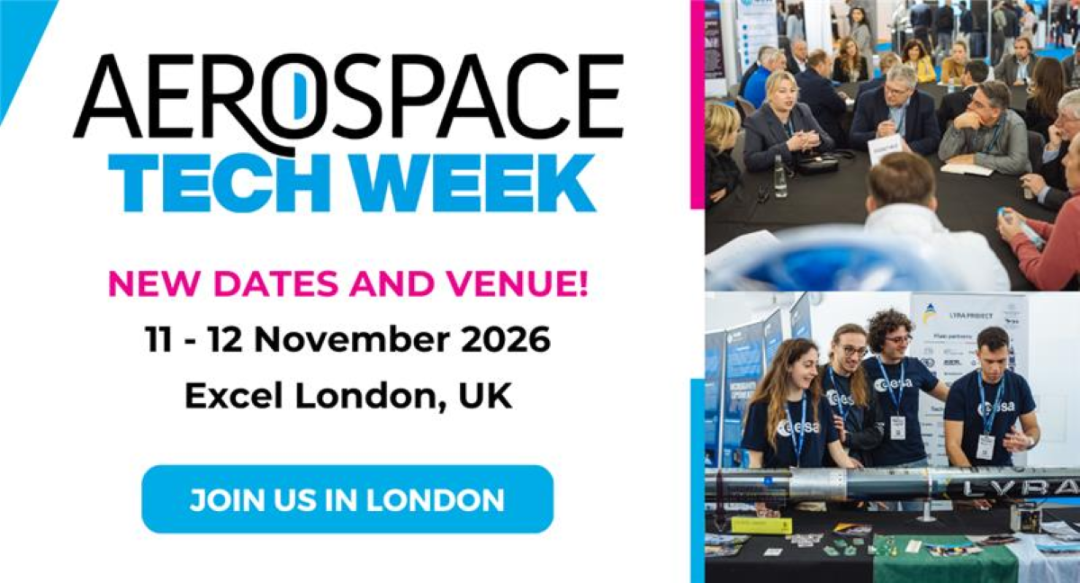
We are excited to announce a significant strategic update to Aerospace Tech Week 2026: the event will now take place in London, UK!
Moving from Munich, Germany to the world-leading Excel exhibition centre means the event can better serve the evolving needs of the aerospace industry. Additionally, new confirmed dates of 11 – 12 November 2026 give us more time to craft our dynamic exhibitor hall and informative agenda.
Lucy Matthews, Senior Conference Producer for Aerospace Tech Week, said:
Moving Aerospace Tech Week to London represents a major step forward for the event. It gives us the opportunity to grow our audience, expand the technical depth of the programme, and deliver our biggest and best edition yet.
Why join us in London?
- A global gateway: Unrivalled international connectivity to attract a truly global visitor base.
- The hub of innovation: Direct access to the UK’s leading aerospace, tech, and investment sectors.
- Enhanced programme: The new dates provide an extended runway to build our most ambitious conference and exhibition to date.
As we prepare for our biggest edition yet, we are now inviting industry leaders to secure their place in the 2026 programme.
Want to be part of the London launch? Whether you are looking to showcase your latest technology on the exhibition floor, lead the conversation as a speaker, or elevate your brand through sponsorship, we want to hear from you.
Click here to speak, sponsor, or exhibit.
Confirmed speakers already including representatives from the UK Ministry of Defence, Oman Air, Airbus, the Civil Aviation Authority, and TAP Maintenance & Engineering.
We look forward to welcoming you and the rest of the global aerospace community to London in November 2026.
About Aerospace Tech Week
Aerospace Tech Week is an event focused on driving innovation and technology advancements in the aerospace sector. Bringing together senior executives and technical leaders, ATW connects the whole value chain of aerospace to discuss, connect, and collaborate on emerging trends, challenges, and opportunities.
In 2026 we are excited to reunite our community of 1,500 industry experts for two inspiring days featuring over 120 speakers. Key topics covered include AI, avionics, flight ops, and sustainability, while our exhibitor and networking programmes spark connections that drive transformations across the industry.
Subscribe to our newsletter to get the latest aerospace news and exclusive interviews straight to your inbox.
by Elsie Clark | Jan 12, 2026 | AI & ML, Innovation, Sustainability
Industry body IATA has named the five risks that most threaten the aviation industry in 2026. With profit margins expected to remain tight at 3.9%, good decision planning and situational awareness will be critical in determining which airlines make it through the year unscathed.
1. Policy fragmentation
Last year saw the aviation industry thrown into chaos by tariffs, and Marie Owens Thomsen, Senior Vice President, Sustainability & Chief Economist, at IATA, reckons trade disruption will continue in the year ahead. However, this time policy fragmentation around the globe will have more impact.
From protectionism to divergence on sustainability and taxation, nations are more inclined than ever to sidestep industry bodies. Owens Thomsen notes:
Such policies raise little money for governments, have little or no impact on emissions, and make air transport more expensive.
2. Supply chain disruptions
This has been an ongoing theme for years now, but unfortunately pressure on supply chains remains high. IATA does not expect delays on aircraft orders to abate until the 2030s, and also highlights that this negatively impacts the pace on sustainable development.
3. Climate change-related disruptions
Rising temperatures are resulting in more extreme weather events. From violent snowstorms to heatwaves, the impact on all industries’ trade and infrastructure cannot be understated. In the years ahead, increased migration from ‘climate refugees’ will place further strain on air transport and immigration authorities.
4. Cyber threats and Artificial Intelligence (AI)
Airlines and airports are increasingly turning to technology to improve efficiency and manage greater passenger numbers. Yet the deployment of third-party tech providers also multiplies the frontiers for cyberattack. As a critical industry that hosts a wealth of sensitive data, the aviation world is especially vulnerable.
As for AI, the benefits could take years to realise, and the software is not infallible. Misinformation and loss of privacy could all damage relationships with passengers.
5. Macro-economic outlook
The weakening of the US dollar will have a significant impact on aviation, where over half of its cost base is invoiced in USD. While lower oil prices will benefit airlines, the world economy in general is not inclined to growth, threatening the aviation industry’s already narrow margins.
Nevertheless, IATA see reasons to be optimistic, with 4% of global GDP still linked to air travel. Additionally, they emphasise that a move towards sustainable aviation could generate far greater change than any economic policy.
Join us at Aerospace Tech Week 2026.
For more like this, see:



You must be logged in to post a comment.