
by Elsie Clark | Feb 3, 2026 | AI & ML, Connectivity, Innovation
Two of Elon Musk’s key businesses, SpaceX and xAI, are to merge as the tech mogul consolidates his business interests. Experts suggest the merger will create the world’s most valuable private company.
Operating across space and satellites, SpaceX has become one of the most well-known aerospace businesses. Its Starlink constellation of low-earth orbit (LEO) satellites is becoming increasingly valuable as a global connectivity provider, with multiple airlines signing deals for inflight WiFi through Starlink. xAI, meanwhile, is best known as the operator of the AI chatbot Grok, which has hit the headlines for generating explicit material and incorrect statements.
Estimates currently value xAI at US$125 billion, and SpaceX at US$1 trillion. A statement signed by Musk and shared on the SpaceX website said:
SpaceX has acquired xAI to form the most ambitious, vertically-integrated innovation engine on (and off) Earth, with AI, rockets, space-based internet, direct-to-mobile device communications and the world’s foremost real-time information and free speech platform.
The post adds that ‘space-based AI’ and ‘orbital data centres’ will be the focus of the merger. Musk explains:
My estimate is that within 2 to 3 years, the lowest cost way to generate AI compute [sic] will be in space. This cost-efficiency alone will enable innovative companies to forge ahead in training their AI models and processing data at unprecedented speeds and scales, accelerating breakthroughs in our understanding of physics and invention of technologies to benefit humanity.
He notes that the project will eventually involve factories on the Moon and expansion throughout the Universe, a cherished personal goal for Musk who has long nurtured the idea of establishing human civilisation on Mars.
SpaceX has proven to be an incredibly disruptive force in the aerospace world. Its dominance has forced its rivals Airbus, Leonardo, and Thales, to merge their aerospace operations in a bid to establish a credible European alternative to the Texas-based giant. While Elon Musk loves to make big promises, it can’t be denied that SpaceX, as well as his other companies including xAI and Tesla, have been incredibly impactful on their respective industries. What comes from merging his AI and aerospace businesses, whether it’s data centres in space or the promised factories on the Moon, will be eagerly anticipated across the industry.
Join us at Aerospace Tech Week 2026.
For more like this, see:
by Elsie Clark | Jan 14, 2026 | AI & ML, Avionics, Connectivity, Flight Ops IT, Innovation, MRO IT, Sustainability
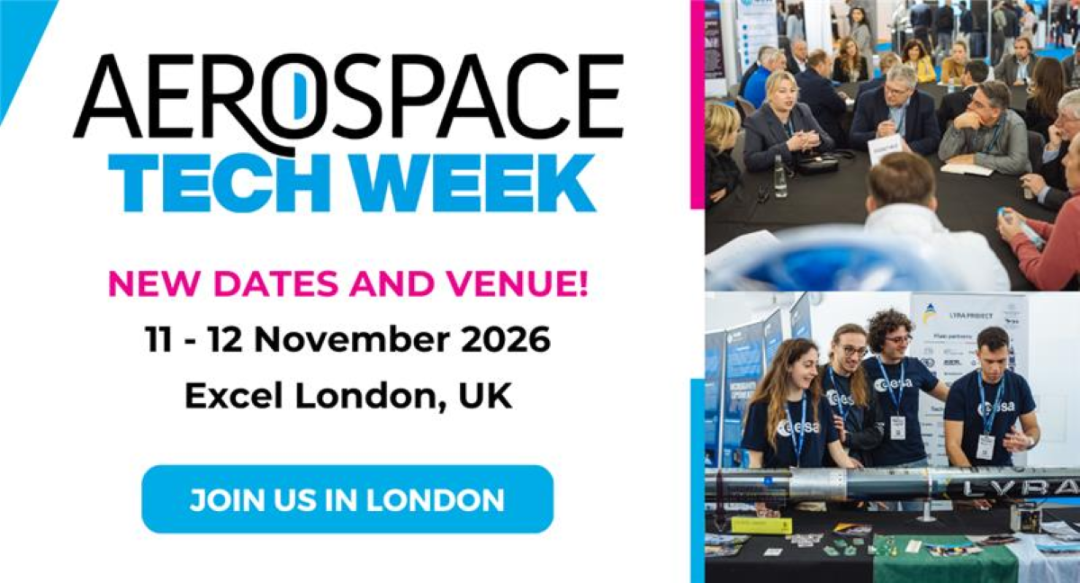
We are excited to announce a significant strategic update to Aerospace Tech Week 2026: the event will now take place in London, UK!
Moving from Munich, Germany to the world-leading Excel exhibition centre means the event can better serve the evolving needs of the aerospace industry. Additionally, new confirmed dates of 11 – 12 November 2026 give us more time to craft our dynamic exhibitor hall and informative agenda.
Lucy Matthews, Senior Conference Producer for Aerospace Tech Week, said:
Moving Aerospace Tech Week to London represents a major step forward for the event. It gives us the opportunity to grow our audience, expand the technical depth of the programme, and deliver our biggest and best edition yet.
Why join us in London?
- A global gateway: Unrivalled international connectivity to attract a truly global visitor base.
- The hub of innovation: Direct access to the UK’s leading aerospace, tech, and investment sectors.
- Enhanced programme: The new dates provide an extended runway to build our most ambitious conference and exhibition to date.
As we prepare for our biggest edition yet, we are now inviting industry leaders to secure their place in the 2026 programme.
Want to be part of the London launch? Whether you are looking to showcase your latest technology on the exhibition floor, lead the conversation as a speaker, or elevate your brand through sponsorship, we want to hear from you.
Click here to speak, sponsor, or exhibit.
Confirmed speakers already including representatives from the UK Ministry of Defence, Oman Air, Airbus, the Civil Aviation Authority, and TAP Maintenance & Engineering.
We look forward to welcoming you and the rest of the global aerospace community to London in November 2026.
About Aerospace Tech Week
Aerospace Tech Week is an event focused on driving innovation and technology advancements in the aerospace sector. Bringing together senior executives and technical leaders, ATW connects the whole value chain of aerospace to discuss, connect, and collaborate on emerging trends, challenges, and opportunities.
In 2026 we are excited to reunite our community of 1,500 industry experts for two inspiring days featuring over 120 speakers. Key topics covered include AI, avionics, flight ops, and sustainability, while our exhibitor and networking programmes spark connections that drive transformations across the industry.
Subscribe to our newsletter to get the latest aerospace news and exclusive interviews straight to your inbox.
by Elsie Clark | Jan 12, 2026 | AI & ML, Innovation, Sustainability
Industry body IATA has named the five risks that most threaten the aviation industry in 2026. With profit margins expected to remain tight at 3.9%, good decision planning and situational awareness will be critical in determining which airlines make it through the year unscathed.
1. Policy fragmentation
Last year saw the aviation industry thrown into chaos by tariffs, and Marie Owens Thomsen, Senior Vice President, Sustainability & Chief Economist, at IATA, reckons trade disruption will continue in the year ahead. However, this time policy fragmentation around the globe will have more impact.
From protectionism to divergence on sustainability and taxation, nations are more inclined than ever to sidestep industry bodies. Owens Thomsen notes:
Such policies raise little money for governments, have little or no impact on emissions, and make air transport more expensive.
2. Supply chain disruptions
This has been an ongoing theme for years now, but unfortunately pressure on supply chains remains high. IATA does not expect delays on aircraft orders to abate until the 2030s, and also highlights that this negatively impacts the pace on sustainable development.
3. Climate change-related disruptions
Rising temperatures are resulting in more extreme weather events. From violent snowstorms to heatwaves, the impact on all industries’ trade and infrastructure cannot be understated. In the years ahead, increased migration from ‘climate refugees’ will place further strain on air transport and immigration authorities.
4. Cyber threats and Artificial Intelligence (AI)
Airlines and airports are increasingly turning to technology to improve efficiency and manage greater passenger numbers. Yet the deployment of third-party tech providers also multiplies the frontiers for cyberattack. As a critical industry that hosts a wealth of sensitive data, the aviation world is especially vulnerable.
As for AI, the benefits could take years to realise, and the software is not infallible. Misinformation and loss of privacy could all damage relationships with passengers.
5. Macro-economic outlook
The weakening of the US dollar will have a significant impact on aviation, where over half of its cost base is invoiced in USD. While lower oil prices will benefit airlines, the world economy in general is not inclined to growth, threatening the aviation industry’s already narrow margins.
Nevertheless, IATA see reasons to be optimistic, with 4% of global GDP still linked to air travel. Additionally, they emphasise that a move towards sustainable aviation could generate far greater change than any economic policy.
Join us at Aerospace Tech Week 2026.
For more like this, see:
by Elsie Clark | Jan 9, 2026 | AI & ML, Innovation
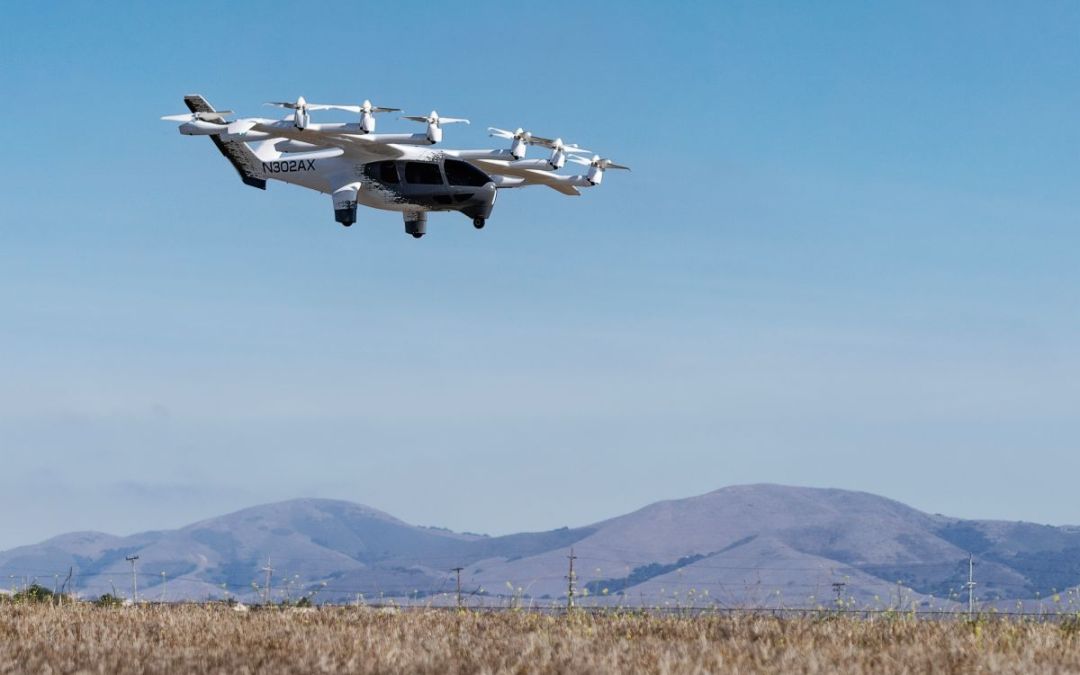
US-based advanced air mobility (AAM) company Archer has announced that it will develop new AI tech for aviation with NVIDIA’s IGX Thor platform. Improving pilot safety, advancing autonomous operation, and ensuring airspace integration will be the key priorities during development.
Archer recently acquired Hawthorne Airport in Los Angeles, California, for the purpose of testing its aircraft and new systems. The company will make use of this base as it advances its collaboration with NVIDIA.
Adam Goldstein, Archer’s Founder and CEO, said:
NVIDIA’s AI compute capabilities and software stack give us the foundation to accelerate toward safer, smarter aircraft systems and modernise how aviation interfaces with the world’s airspace.
The IGX Thor platform has been designed to enhance the safety and situational awareness of onboard computers, ensuring high performance at all times. Archer will build on this foundation and explore advanced uses of:
- Real-time flight path data for improved pilot awareness
- Improved routing and traffic planning
- Autonomous and semi-autonomous flight controls
One of the world’s leading AAM companies, Archer’s Midnight eVTOL is rapidly approaching commercialisation. Air taxi trials in the US and Saudi Arabia, announced at the end of 2025, will bring the aircraft closer to regulatory approval. The company has also signed development agreements with authorities in Japan and South Korea.
While the partnership with NVIDIA will contribute significantly to Archer’s product, the results will be of significant interest to the aviation industry as commercial automation begins to take flight.
Join us at Aerospace Tech Week 2026 to discuss the future of AI in aerospace.
For more like this, see:
by Elsie Clark | Nov 6, 2025 | AI & ML, Innovation
GE Aerospace will support propulsion and testing for Shield AI’s X-BAT.
Under a new Memorandum of Understanding (MoU), GE Aerospace will supply their 110-GE-129 engine to power Shield’s AI-piloted eVTOL fighter jet. Launched last month in Washington DC, the X-BAT operates autonomously using Shield’s Hivemind software. The company says it can perform even in environments with limited communications, whether working in a team or on independently.
Shield AI aircraft engineering senior vice president Armor Harris said:
GE Aerospace’s F110 engine is one of the most successful and reliable fighter engines in history and has the operability characteristics that X-BAT’s VTOL design demands. GE Aerospace has been a great partner, and we are excited by the potential of our combined team.
With over 11 million flight hours, the F110 engine has been tested and developed over four decades. GE Aerospace’s expertise in the fields complements Shield AI’s innovation. The eVTOL business has already been valued at more than US$5 billion as the defence and aerospace industries seek to advance AI-powered solutions.
Earlier this year, Shield announced a partnership with Korea Aerospace Industries to develop AI pilots. GE Aerospace defence and systems president and CEO Amy Gowder said:
We’re excited to pair GE Aerospace’s proven experience in developing and scaling propulsion systems with Shield AI’s vehicle development to move faster from concept to capability.
Join us at Aerospace Tech Week 2026 to discuss the future of AI-powered flight.
For more like this, see:
by Elsie Clark | Oct 29, 2025 | AI & ML, Flight Ops IT, Innovation
Dubai-based carrier Emirates has reported a measurable decrease in unexpected turbulence incidents over the past year thanks to onboard data and analytics.
Changing atmospheric conditions due to climate change are making inflight turbulence more regular and more severe. Notably, scientists at Reading University in the UK found that severe turbulence has increased by 55% between 1979 and 2020 over the North Atlantic. Professor Paul Williams, one of the scientists leading the project, told the BBC earlier this year that turbulent incidents could soon double or treble in length due to changes in temperature and wind patterns.
Turbulence hit the headlines in 2024 after one died and many more were injured on a Singapore Airlines flight from London Heathrow. Additionally, ICAO reported in 2023 that 40% of all inflight injuries were the result of turbulence.
Emirates takes action to mitigate unexpected turbulence
Over the past year, Emirates has been investing in multiple systems that can provide pilots with real-time analytics and help its aircraft avoid severe turbulence. Captain Hassan Alhammadi, Divisional Senior Vice President Flight Operations at Emirates, said:
While we cannot promise turbulence-free flights, these initiatives have contributed to a significant reduction in unexpected severe turbulence incidents over the past year, helping make journeys safer and more comfortable for our customers.
One technology partner is SkyPath, which uses AI and machine learning (ML) to detect and predict turbulence hotspots that traditional weather forecasting might overlook. Alongside this platform, Emirates has deployed Lufthansa Systems’ Lido mPilot application, which provides pilots with high-resolution weather data and real-time alerts.
Emirates is also participating in IATA’s Turbulence Aware programme, sharing data with airlines to help other aircraft adjust flight paths in advance to minimise the impact of turbulence.
Alhammadi added:
Our multi-layer approach with weather prediction and technology partners and active participation in the IATA Turbulence Aware programme also enables us to contribute valuable data and insights to the broader aviation industry as we collectively work to address this growing meteorological challenge.
Join us at Aerospace Tech Week 2026, where our dedicated track will be discussing data-driven flight ops.
For more like this, see:





You must be logged in to post a comment.