
by Jessica Brownlow | Mar 31, 2025 | Flight Ops IT, Video
Munich Aerospace fosters the collaboration between academia and aerospace advancements. By finding synergy between research, graduate programmes, and teaching, the association has pooled knowledge to become an innovation hub for science and industry.
At Aerospace Tech Week Europe, Andreas Lermann, Munich Aerospace’s Managing Director will be moderating sessions on Supply Chain & Procurement as well as Flight Ops IT, shaping the discussions that will be taking place over the next couple of days.
Ahead of the event, Lermann shared a brief overview of the disruptive innovations positioned to influence the sector, technologies with transformative potential for flight ops, and the critical role of technology in addressing supply chain disruptions.
“In flight ops, you need real-time solutions and optimisation. When it comes to route improvements, having real-time data is essential. This is where quantum technology has a real advantage – it enables air traffic control to operate more efficiently and optimises flight routing in a much shorter timeframe, almost in real-time. That’s where quantum technology is a huge asset.”
Watch the full conversation below. To join us at ATW Europe this week book your ticket now!
Questions asked include:
- Let’s start with supply chain as this is understood to be one of the greatest inhibitors to the industry right now. How do you see technology improving the situation here?
- And now Flight Ops and quantum technology. Can you start by giving a brief overview of quantum tech and its potential for the industry broadly speaking?
- What about its potential within flight ops specifically?
- What sessions are you most looking forward to onsite?
For more on what to expect onsite at Aerospace Tech Week Europe see:
by Jessica Brownlow | Mar 24, 2025 | Flight Ops IT, Innovation
Quantum computing is “a new computing architecture that mirrors the behaviour of matter at the subatomic level.” It harbours huge potential for a range of industries, including aerospace, with its capacity to process extensive volumes of data at a fraction of the rate of current computers.
At Aerospace Tech Week, Kolin Schunck, Sr. Manager Strategic Intelligence, Lufthansa Innovation Hub (LIH) will explore how quantum technologies can be leveraged for flight route optimisation. Ahead of this session, Schunck joined for a 20-minute conversation reviewing the topic, looking at:
- Real world case studies: How are we already seeing this in action and what applications is the technology best suited to?
- Expected timelines for adoption: This is still in its early stages so when is it realistic to see full integration?
- Key investors in the tech: Billions have already been invested in research but which corporates are increasing spend and leading the way?
- Challenges: What are the major hurdles that need to be addressed before the industry can expect to effectively leverage quantum computing?
To conclude the discussion, Schunck emphasised his take home message to industry leaders:
“Don’t wait for quantum – fix your digital foundation first. Many companies in aviation are still struggling to integrate even basic AI and automation. If we can’t get the basics done, are we really ready to implement such a top-notch technology? For example, crew scheduling might seem like an easy task to automate, but in reality, many airlines still rely on paper and Excel spreadsheets. We are just not there at an automation level and that’s what we need to fix this first. Then we can talk about quantum.”
Watch the full conversation below. To join us at ATW Europe book your free ticket now!
Questions asked include:
- Is quantum computing really the next big leap for aviation, or is it overhyped?
- We’ve seen billions flow into quantum computing. How much of this investment is actually dedicated towards aviation?
- What are some realistic near-term applications of quantum computing in aviation?
- When do you think quantum computing will actually impact aviation operations?
- What’s one key message you want aviation leaders to take away from this conversation?
- Why did Lufthansa Innovation Hub decide to join Aerospace Tech Week as an innovation partner?
For more on Aerospace Tech Week 2025 see:
by Jessica Brownlow | Mar 19, 2025 | AI & ML, MRO IT
At Aerospace Tech Week (ATW) Europe, Veronica Dall’Aglio, Manager at Oliver Wyman will be joined by experts from easyJet, SAS Scandinavian Airlines, Pegasus Airlines, TUI Airline, and Air Canada to explore where AI is being used most effectively across the MRO product lifecycle.
Ahead of this panel, Dall’Aglio shared her perspective on the industry’s post-COVID innovation landscape, highlighting the specific emerging technologies that are changing the game. She also provided insight into the upcoming session at ATW Europe, touching on the challenges inherent with AI implementation in MRO.
Having described a strong appetite to invest in tech and innovation, Dall’Aglio also emphasised that although some companies are embracing AI, others are still building digital foundations, transitioning from paper-based processes to data solutions.
Reflecting on her conversations with companies that have embraced AI, Dall’Aglio said:
“I’m very, very curious to listen to the real stories of implementing AI or looking at AI technologies and the challenges related to this – not only technology challenges but also organisational challenges and resource challenges. It’s not that easy to find the right type of resources to implement this technology, to design the right applications for your organisation, and definitely, it’s not so easy to change the mindset to utilise the technologies in the right way. So then, once they become operative, it’s not just another fancy toy that you have built, but it becomes truly an assistant to your work, and it becomes something that cuts your inefficiencies, that removes some of the manual tasks or unnecessary work that at the moment we’re still doing.”
Watch the full conversation below. To join us at ATW Europe book your ticket now!
Questions asked include:
- How would you describe aerospace’s innovation landscape at the moment?
- What emerging technologies are changing the game at the moment or do you think will shape the industry in the coming years?
- When it comes to MRO IT, data, and AI – what are some of the key discussions you’re expecting to hear on stage
- Any specific sessions you’re particularly looking forward to onsite?
For more on Aerospace Tech Week 2025 see:
by Jessica Brownlow | Mar 18, 2025 | Flight Ops IT, Innovation
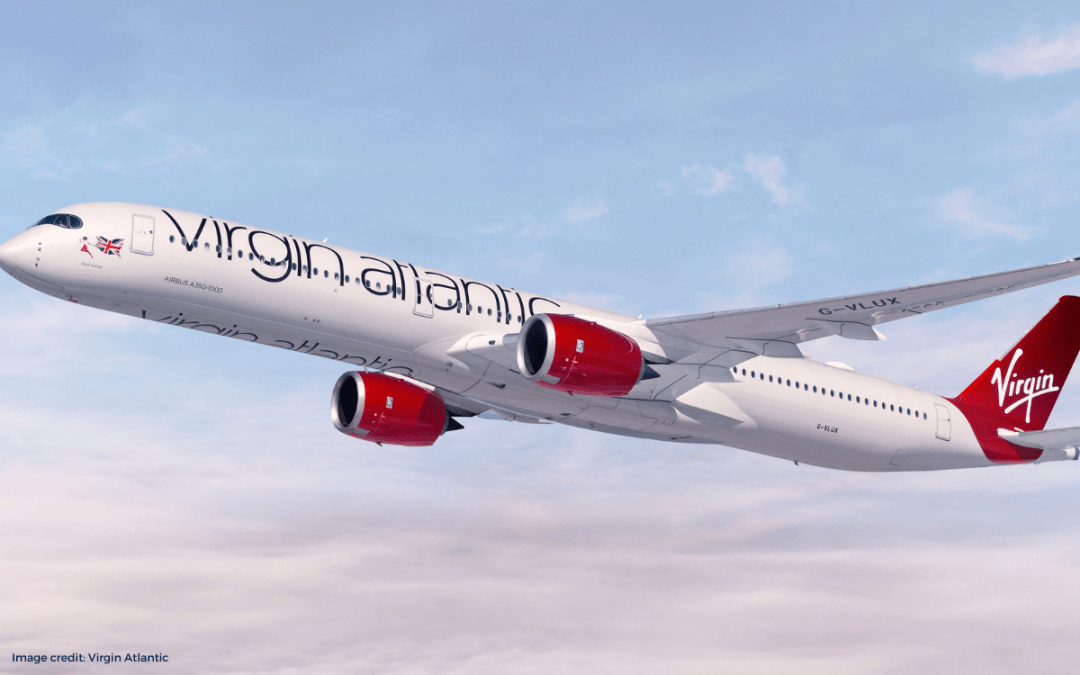
Virgin Atlantic is working to bring electric vertical take-off and landing (eVTOL) aircraft to Heathrow and Manchester Airport through a new partnership with Joby Aviation. When the air taxi launches, Virgin Atlantic customers will have the opportunity to simply book a seat on the aircraft via the airline’s app, website, or other channels.
Joby, a California-based electric vertical take-off and landing (eVTOL) aircraft developer is creating an electric air taxi that can travel at 200 mph. The aircraft will only seat four and one pilot and is designed to offer a fast, sustainable, alternative to ground transportation.
In the announcement, Joby highlighted the difference this could make to a passenger’s airport journey, stating a trip from Manchester Airport to Leeds would take only 15-minutes, or a flight from Heathrow to Canary Wharf could swap an 80 minute drive with an 8-minute trip.
Reinforcing the sustainability prospects of the partnership, Shai Weiss, CEO of Virgin Atlantic, said:
“As a leader in sustainability and with innovation firmly in our DNA, we are delighted to be partnering with Joby to bring short-haul, zero-emission flight to airports and cities throughout the UK. Our strategic partnership combines Joby’s expertise in design, engineering and technology with the power of Virgin Atlantic’s brand and award-winning customer experience. We look forward to working together to bring Joby’s service to the UK and to deliver greater connectivity for our customers.”
As part of the agreement, Virgin Atlantic will eventually market this option to their passengers, help grow support from the establishment of landing infrastructure at airports, and work alongside regulators.
This announcement comes as part of Joby’s existing partnership with Delta Air Lines which owns a 49 per cent stake in the UK carrier.
To join us at ATW Europe book your ticket now!
For more like this see:
by Jessica Brownlow | Mar 17, 2025 | Avionics, Innovation, Sustainability, Video
At Aerospace Tech Week Europe, Steffen Wenzel, Partner, Head of Aerospace & Defence, h&z Consulting will be chairing a selection of avionics tracks as well as moderating key sessions including a sustainability focused discussion with Anna von Groote, Director General of EUROCAE.
In this brief conversation, Wenzel draws on his 15 years of experience in the aerospace and defence industry to assess the current landscape. The discussion touched on everything from quantum computing to avionics, AI to sustainability.
Wenzel picked out sustainability as one of the industry’s major challenges. Unpacking the variety of solutions that will be necessary to curb emissions, he picked out SAF, hybrid-electric technology, route optimisation, and enhanced air traffic management as near term solutions that are already shaping the landscape.
Speaking about the upcoming event in Munich, Wenzel explained the sessions onsite will be critical in understanding how avionics will develop in the coming years. Sharing a glimpse into what to expect, Wenzel said:
“One area is cross-aircraft collaboration to avoid turbulence, which is an exciting area of innovation. Essentially, aircraft will be able to communicate with each other in real-time to share turbulence data, helping improve passenger comfort and operational efficiency.
Another key topic is Global Navigation Satellite Systems (GNSS) and the innovations they offer to operators. These advancements will improve navigation accuracy and allow for more precise and fuel-efficient routing, which is crucial as we work toward making aviation more sustainable.
On a more technical level, we will also be looking at multicore processors in avionics systems. This is a topic that has been around for some time, but it remains a challenge, particularly when it comes to certification…”
Watch the full conversation below. To join us at ATW Europe book your ticket now!
Questions asked include:
- What are the most exciting opportunities we are seeing with aerospace?
- What are the biggest challenges the industry is facing?
- Can you highlight some of key themes you expect to hear on stage at in April?
For more on Aerospace Tech Week 2025 see:


You must be logged in to post a comment.