
by Jessica Brownlow | Oct 23, 2024 | Innovation, Sustainability
Originally published on MOVEMNT
New York City (NYC) has announced an agreement with Atlantic Aviation to prepare for electric vertical takeoff and landing (eVTOL) aircraft operations in the City.
Atlantic Aviation has extended its concession agreement with New York City’s Economic Development Corporation (NYCEDC) and the City of New York for operations at the East 34th Street Heliport for the next five years.
Atlantic plans to soon begin a project to upgrade utility infrastructure and install charging stations at the heliport to support the eVTOL operations.
The East 34th Street Heliport facility provides support for helicopter operations in and around NYC and serves as a key facility to handle flights for the adjacent NYU Langone Health Center.
Atlantic is actively working with partners BETA Technologies, Joby Aviation, Archer Aviation, and others to understand aircraft needs and adapt the site for eVTOL operations.
NYCEDC President & CEO Andrew Kimball stated the department’s ambition for the eVTOL operations to become a “true asset for New Yorkers.”
NYC is reportedly poised to be a key market for early eVTOL operations, and Atlantic’s project at the 34th Street Heliport will play a critical role in the region’s introduction of these innovative aircraft.
“Atlantic Aviation is firmly committed to continuing our position as the leader in innovation and sustainability within the business aviation industry,” said John Redcay, chief commercial and sustainability officer at Atlantic Aviation. “Maintaining our presence at the East 34th Street Heliport and expanding infrastructure there to support eVTOL operations aligns with our commitment to community-beneficial transportation solutions and will support New York City on its journey to facilitating quiet and sustainable aviation operations.
At Aerospace Tech Week Americas, Archer’s VP of Operations will be speaking on the making of an eVTOL. For insights into Archer’s manufacturing journey book your ticket for free now!
For more like this also see:
by Jessica Brownlow | Oct 22, 2024 | AI & ML
As the aviation industry continues to evolve, the integration of artificial intelligence (AI) in aircraft cockpits is becoming increasingly prominent. This technological advancement aims to enhance flight safety, accelerate efficiency, and transform the roles of aviation professionals. While AI won’t entirely replace human expertise, it is reshaping how the industry operates, making air travel smarter and safer. The use cases of AI are expanding every day, particularly in optimizing fleet management, air traffic control, and overall operations.
Fleet Management
The capabilities of AI enable the identification of patterns, forecasting of events, and anticipation of risks, offering significant benefits across various aviation sectors. At the heart of these AI-powered systems is advanced data analytics—the foundation that allows AI to process real-time inputs, identify key insights, and drive decision-making. AI systems rely on massive real-time data to predict flight delays, optimize fuel efficiency, and guide operations with minimal disruptions. For a closer look at how data insights are driving innovation in the industry, explore this case study.
To further illustrate the transformative impact of AI in fleet management, let’s explore some practical applications:
- Airline revenue management: Maximizes long-term sales revenue by leveraging algorithms that optimize pricing and ensures flights are booked to capacity.
- Predictive analytics and technology: Analyzes vast real-time data to predict flight delays, update departure times, and efficiently rebook customers when needed.
- Generative AI in customer service: Utilizes chatbots to provide instant responses to customer inquiries regarding vehicle status, maintenance, billing and personalized recommendations.
Air Traffic Management
AI empowers air traffic controllers to better manage and optimize the flow of air traffic in real-time. For instance, airlines such as Lufthansa have harnessed the power of AI to enhance their forecasting systems, boasting a remarkable 40% increase in accuracy [1]. A critical requirement for this enhancement is the integration of both historical and real-time data, which is essential for accurate predictions. Furthermore, AI is facilitating the automation of certain routine control tasks, thereby reducing the workload on human operators. For example:
- Predictive analytics for air traffic control: Analyze real-time and historical data to predict flight delays, congestion, and other disruptions, allowing air traffic controllers to better manage and optimize air traffic flow.
- Route optimization: AI to recommend optimal flight routes and altitudes, taking into account factors like weather, wind, airspace restrictions, and fuel consumption to reduce delays and increase fuel efficiency.
AI for IT Operations
AI-driven operations (AIOps) play a critical role in aviation by ensuring that the complex IT infrastructure supporting various airline and airport operations runs smoothly. AIOps help monitor IT systems, proactively detect anomalies, and automate routine tasks, reducing downtime and increasing overall efficiency. For example:
- IT infrastructure monitoring and optimization: AIOps can help airlines ensure their operational systems, from booking platforms to fleet tracking technologies, are functioning without disruptions by automating responses to system alerts and predicting potential failures.
- Enhancing cybersecurity: AIOps can also detect potential cyber threats early on by monitoring network behavior and flagging unusual activity before it impacts operations.
Future of the AI-Powered Cockpit
The aviation industry is leveraging AI not only to streamline operations but also to address critical challenges, including the global shortage of aviation professionals. Airbus forecasts a critical deficit of over 585,000 pilots and 640,000 technicians in the next two decades [2]. This shortage is driven by factors such as increasing air traffic demand, stringent training requirements, and the impact of ongoing retirements.
AI-powered systems are emerging as a solution to this growing gap—not just for pilots, but for a range of aviation professionals, including ground staff, maintenance crews, and air traffic controllers. These systems offer enhanced support, helping professionals make better decisions in complex scenarios while reducing human error and increasing operational efficiency.
Revolutionizing the Human’s Role
The advent of AI is reshaping the roles of aviation professionals. Traditionally manual operators or passive observers, these roles are evolving into active collaborators with AI systems. For example, virtual copilots can monitor flight parameters, suggest corrective actions, and even take control in certain situations, reducing the burden on human operators.
One of the first cases of AI in the cockpit is the Airborne Collision Avoidance System X, which has significantly improved flight safety by reducing the risk of mid-air collisions. By cutting through the noise of false alarms, this AI system presents clear, actionable insights to human operators. With a 20% increase in mid-air collision avoidance and a 65% reduction in false alarms [3], AI is already proving to be a valuable partner for aviation professionals.
The successful integration of AI into these roles will require aviation personnel to shift their focus from routine tasks to more strategic thinking, complex problem-solving, and effective collaboration with AI systems. This evolution is essential to addressing the industry’s current challenges, such as the global talent shortage and the risks posed by human error.
By augmenting the capabilities of aviation professionals, AI-powered systems promise to enhance safety, optimize efficiency, and increase the industry’s overall capacity. This technology is set to revolutionize air travel, making it safer, more reliable, and more sustainable for the future.
Article by FPT Software
by Jessica Brownlow | Oct 21, 2024 | Connectivity
At Aerospace Tech Week Americas, Mahesh Harvu, Industry Transformation Advisor, Manufacturing and Mobility Industry, Microsoft will be speaking on connected aerospace, exploring how connected aircraft will elevate the industry.
With artificial intelligence (AI) playing a critical role in enhancing safety, efficiency, and innovation, the discussion will unpack practical insights into how companies can leverage this advanced technology to drive progress.
Drawing on his extensive experience with industry transformation, Harvu will be bringing this expertise to the panel alongside speakers from GE Aviation, Bombardier, and Intelsat.
Ahead of the event, Harvu shared some insight into the upcoming session and his view on the current landscape.
1.Tell us a bit about yourself and your role within Microsoft
I lead Industry Transformation for some of Microsoft’s largest Manufacturing, Aerospace and Defense Customers. My focus is on developing strategies tailored to the unique challenges faced by these companies.
Working with customers on industry transformation is a passion of mine, and I’ve dedicated most of my career to this field. At Microsoft, I have the flexibility to focus on developing tailored strategies supported by the Microsoft ecosystem and the solutions we bring to make these transformations real.
As a passionate advocate for AI adoption, I lead initiatives that harness the power of AI and Generative AI to leverage data-driven approaches to optimize operations, reduce costs, and elevate safety standards
My strength lies in aligning with customers on a mission and joint outcomes, and then putting together an execution road map.
- The aerospace industry is evolving rapidly – what is one recent development that you find particularly exciting?
I am seeing unprecedented growth and rapid convergence in the industry. As a result, the need for data sharing is more important than ever. The aerospace industry now requires an integrated digital system linking airlines, airframers, aerospace OEMs (engine manufacturers), suppliers, and MROs (maintenance, repair, and operations services). Managing this integration effectively is only possible using AI and leveraging data.
An integrated digital system of Airlines, Airframers, Aerospace OEM’s, MROs, and Suppliers all must come together to drive traceability and deliver secure operations. Advanced technologies, like AI, are essential for automating tasks such as managing policy and leasing documents, ensuring maintenance checklists are completed before takeoff, and enhancing traceability.
Traceability, in particular, is crucial. It allows us to track a part’s journey—from its origin to its installation and maintenance—thanks to AI. Without AI, it would be nearly impossible to know where a part came from or who maintained it. This technology enables us to integrate these capabilities, ensuring efficient and secure operations in the aerospace industry.
- What are some key projects or initiatives in the works that are influencing the landscape?
Key needle movers in the industry are flight optimization, maintenance efficiency and integrated operations. And fueling this is data and digital software on AI.
Simply put, data and digital software on AI is the new fuel driving the aerospace and defense industry. This new fuel is essential for enabling safe and secure operations, which is our primary focus. Ensuring these operations are safe and secure is crucial. Once we achieve that, we turn our attention to optimizing various facets of the industry. This includes optimizing aircraft routes, engine maintenance, and product development life cycles. By leveraging this new fuel, we enhance these capabilities significantly. Additionally, we can focus on optimizing field service response and worker productivity, further driving efficiency and innovation in the industry.
- Your session at Aerospace Tech Week Americas focuses on connected aircraft – what themes should the audience look out for in this discussion?
We are at a pivotal moment at the intersection of AI and aerospace, as advanced air mobility is now a reality thanks to advances in AI. The discussion will cover the power of AI and how natural language processing can enhance safety, efficiency, and innovation. We’ll explore how new technology is rapidly influencing the industry and ways companies are using it today.
- What are you most looking forward to about the event (aside from your own session)?
I’m excited to see how the agenda provides sessions for a practitioner to execute. I think it’s important for leaders of Aerospace and Defense to share their innovative thinking and practical insights. Overall, I think the event should help accelerate the industry.
To watch Harvu’s sessions and hear from industry leading innovators, book your ticket for free here.
For more from industry leaders also see:
by Jessica Brownlow | Aug 28, 2024 | Innovation
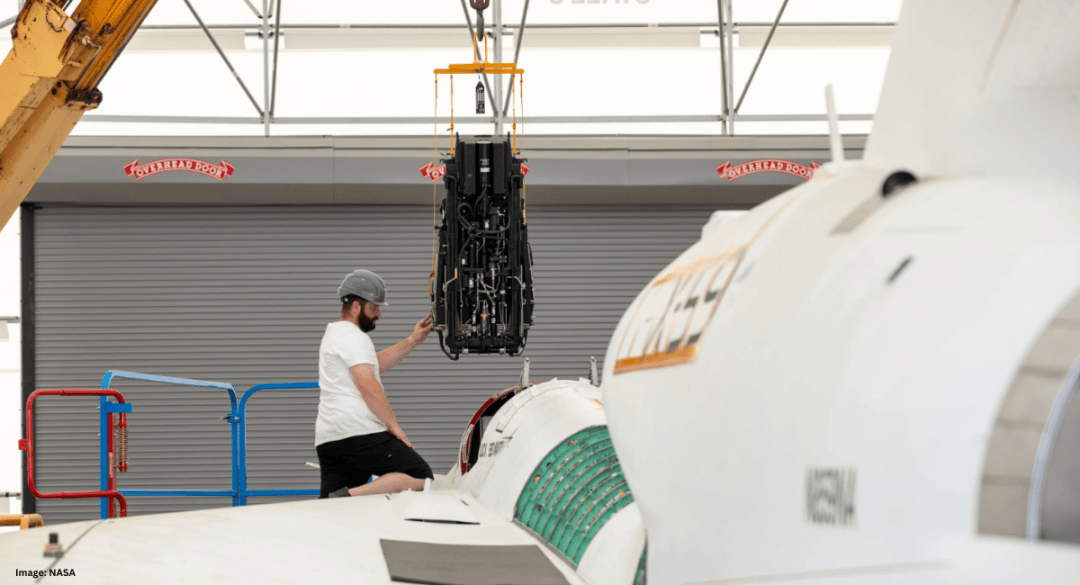
NASA is preparing for a first of its kind flight, testing a quiet supersonic aircraft that it hopes will open the door to commercial supersonic overland flight. As NASA’s X-59 gears up for the flight, the team are running a series of critical inspections and structural tests. The X-59 aircraft was initially debuted in January and is expected to fly at 1.4 times the speed of sound (925 mph).
Walt Silva, Senior Research Scientist at NASA Langley Research Center in Hampton, Virginia, who serves as structures lead for the X-59, explained:
The X-59 tests are part of NASA’s Quesst mission aiming to lift the ban on faster-than-sound flight over land. Having passed a key milestone in May, the upcoming flight will gather data to “pave the way for a new generation of commercial aircraft that can travel faster than the speed of sound.”
Following the tests in May, Brad Neal, chairman for the X-59 Airworthiness and Flight Safety Review board warned:
“None of these systems have ever worked and played together before. It’s a brand-new thing that we are developing, even though they’re components that have been on different legacy aircraft. As we get into integration testing here, it’s going to be a great opportunity to learn.”
At Aerospace Tech Week Americas, industry experts will be gathering to discuss aerospace testing, looking at the importance of safety and regulatory compliance as well as how to prioritise safety over pressure in a delivery-driven world. These conversations will be bringing together speakers from Gulfstream, Southwest Airlines, and ST Engineering. Book your ticket for free to be a part of the discussion!
For more like this see:
by Jessica Brownlow | Aug 21, 2024 | Avionics, Flight Ops IT
A recent article by Reuters has drawn attention to a surge in digital attacks known as GPS spoofing. These attacks have the potential to “send commercial airliners off course,” but typically can be resolved with the assistance of air traffic control (ATC). The article cited findings from OPSGROUP, showing a 400 per cent surge in these attacks in recent months with an estimated 900 flights a day encountering them on average. The increase in these incidents raises the associated risk levels.
However, these are not the only digital attacks the industry is currently facing. According to Bridewell’s latest research, 55 per cent of civil aviation cyber decision makers in the United States (US) have reported experiencing a ransomware attack in the past 12 months.
With the industry becoming increasingly reliant on digital technology and automated systems, the rise in digital attacks presents a significant challenge. Recognising this, 72 per cent of respondents in Bridewell’s survey plan to increase their IT security spend from last year, and 98 per cent are using at least one AI-drive tool to enhance their cybersecurity efforts.
The investment in cybersecurity measures must work in tandem with the industry’s digitalisation efforts to ensure safety and security across stakeholders. At Aerospace Tech Week Americas, industry experts from Airbus and IBM will discuss the evolving cybersecurity landscape, looking at threat monitoring and intelligence, as well cyber ranges, and leveraging data for improved maintenance cybersecurity.
Book your ticket for free to get involved in the conversation!
For more like this see:



You must be logged in to post a comment.