
by Elsie Clark | May 21, 2026 | Innovation
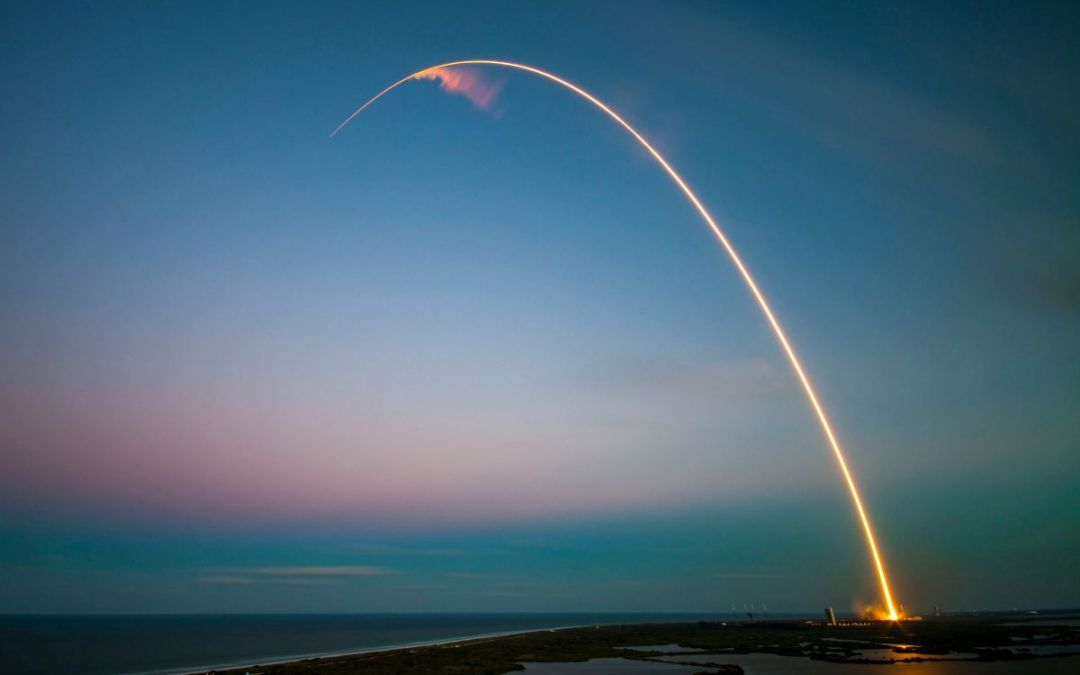
SpaceX CEO Elon Musk has announced the aerospace company’s intention to file a public IPO.
SpaceX values itself at an impressive US$1.25 trillion. Covering space exploration, satellite firm Starlink, and subsidiary xAI, the firm’s activities are innovative and often controversial. The move to go public would turn Musk, already the world’s wealthiest man, into a trillionaire.
Financial records show SpaceX made a loss in the first quarter of 2025, earning US$4.7 billion in sales but operating at a net loss of $4.3 billion. Starlink was the only arm of the business to turn a profit in those three months: its constellation of low-earth orbit satellites had quickly established it as a leading connectivity provider, including through high-value deals with airlines such as United and Qatar Airways.
Nevertheless, investors remain excited about the huge potential surrounding SpaceX. From establishing civilisation on Mars to orbital data centres, the company’s projects sprawl across the spectrum of aerospace technology.
xAI and the social media platform X, formerly known as Twitter, also fall under the SpaceX remit. These ventures have attracted criticism, especially the lack of safeguarding when using the AI chatbot Grok. xAI was cited as a potential risk under SpaceX’s IPO.
SpaceX’s dominance in the industry has concerned competitors. Airbus, Leonardo, and Thales agreed a €10 billion deal last year to combine their aerospace and defence businesses in an effort to create a credible European rival to the Musk-led company.
Join us at Aerospace Tech Week 2026.
For more like this, see:
by Elsie Clark | May 7, 2026 | Innovation
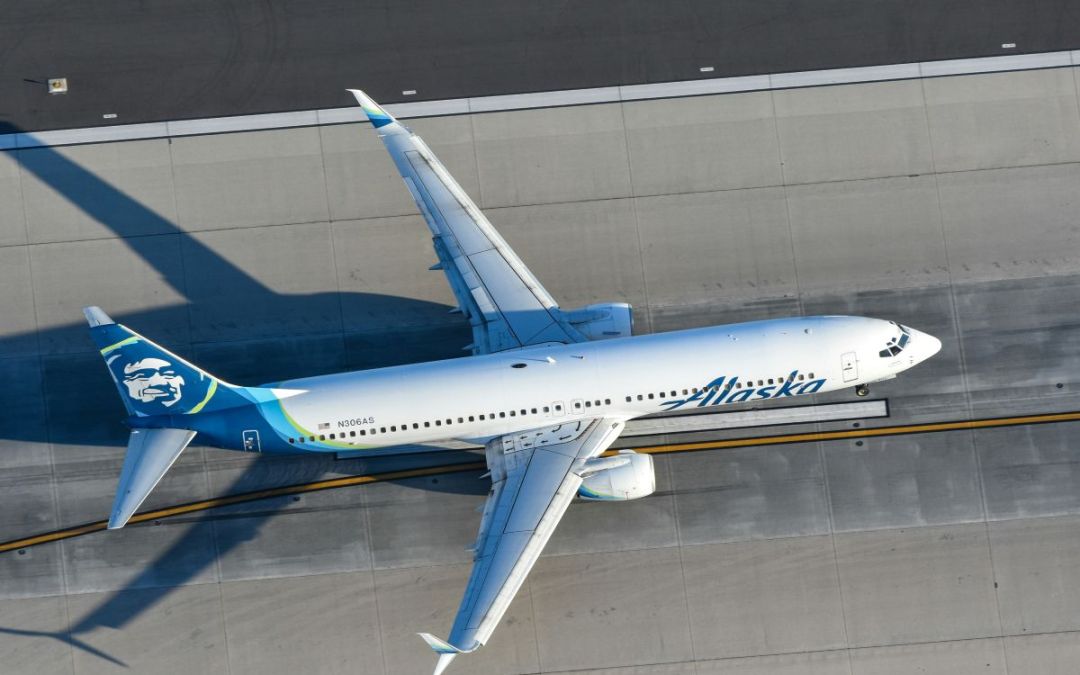
Alaska Airlines have signed a formal license agreement for the Boeing Virtual Airplane, a training solution designed to accelerate pilot readiness.
Alaska Airlines helped develop the tool, which is device-agnostic and lets pilots practice procedures within the dedicated app whenever they like. Additionally, the free-play Flight Management System (FMS) supports the standardisation of training so pilots can familiarise themselves with simulators more quickly.
Chris Broom, Vice President of Commercial Training Solutions at Boeing, commented:
Alaska Airlines’ commitment to innovation and safety has been instrumental in the development of Virtual Airplane. We are proud to see this partnership evolve as they move from beta testing to full adoption, leveraging Virtual Airplane to enhance pilot training and operational readiness.
Procedures Trainer is the first module in the Virtual Airplane’s suite of training tools. Currently available for Boeing 737 MAX training, the manufacturers say additional Boeing models will be added soon to enhance the programme. Jeff Severns, Managing Director of Flight Operations Training for Alaska Airlines, said:
Our collaboration with Boeing on Virtual Airplane has allowed us to provide our pilots with flexible, realistic training tools that complement traditional simulator sessions. We look forward to fully integrating this technology into our ground school curriculum to further improve training effectiveness and pilot proficiency.
Join us at Aerospace Tech Week 2026 to discuss the future of flight training.
For more like this, see:
by Elsie Clark | Apr 28, 2026 | Innovation
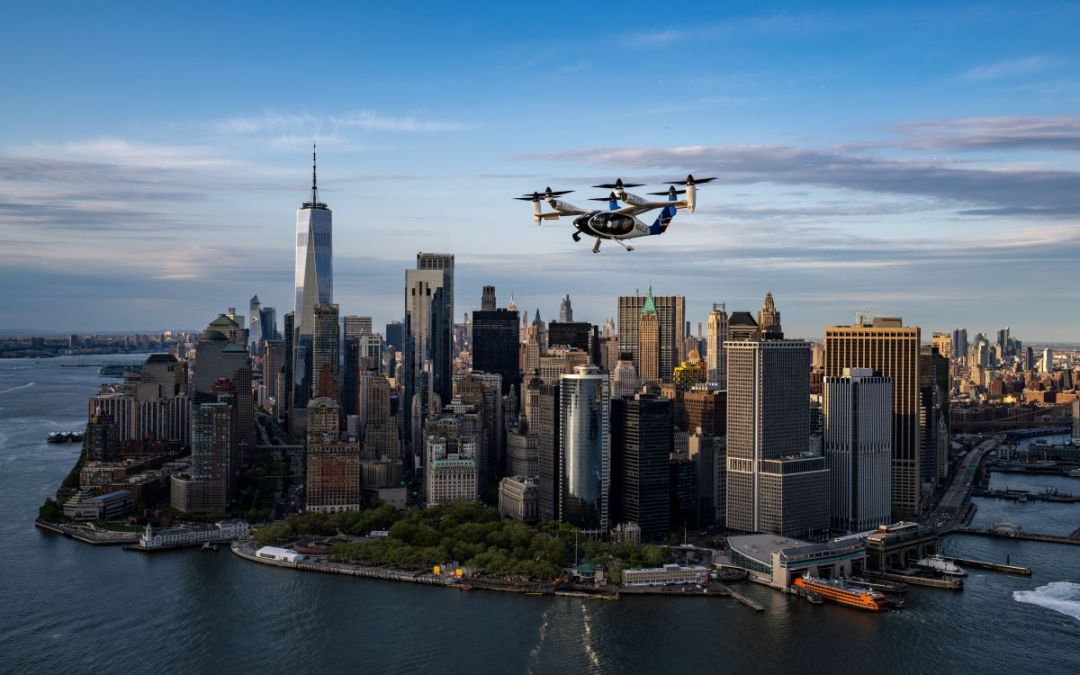
Joby Aviation have conducted the first ever point-to-point eVTOL flight across the New York City skyline in a demonstration of how an air taxi network could operate across the US’s most populous urban area.
During the test flight, Joby’s N545JX aircraft took off from JFK airport and travelled up Manhattan island, touching down at existing Downtown and Midtown helipads along the journey. The demo took place under the federal eVTOL Integration Pilot Program (eIPP), which selected New York as one of the testing hubs for air taxi technology. Joby will collaborate on five eIPP projects overall. JoeBen Bevirt, founder and CEO of Joby, commented:
New York has always been a city that defines the future by demanding better. We first flew here in 2023, and now we’re showing what the next chapter looks like: a quiet, zero operating emissions air taxi service designed to better serve New Yorkers. This week, flying between JFK and Manhattan, we showed what the White House-backed eIPP initiative makes possible and offered New York a look at what’s coming.
Joby face stiff competition in the race to receive certification from the Federal Aviation Authority (FAA). Other providers jostling to launch commercial service in NYC include British developers Vertical Aerospace and Californian startup Archer Aviation. All three air taxi providers claim their aircraft could cut travel times between key New York City locations down to as little as ten minutes.
NYC’s helipads will be electrified to prepare for the mass deployment of air taxis, while key partners at the city’s Economic Development Corporation and the Port Authority are facilitating integration with existing transport links.
Port Authority Chairman Kevin O’Toole said:
The bridges, tunnels, airports, and rail lines that the Port Authority operates move hundreds of millions of people through this region every year, and our job is to make sure that network keeps pace with the future. This cutting-edge aircraft is exactly the kind of innovation we have a responsibility to test, understand, and help shape for the good of the region and the public. These flights advance our work to determine how next-generation aviation technology can serve the people of New York and New Jersey.
Join us at Aerospace Tech Week 2026 to discuss the future of advanced air mobility (AAM).
For more like this, see:
by Elsie Clark | Apr 13, 2026 | Connectivity
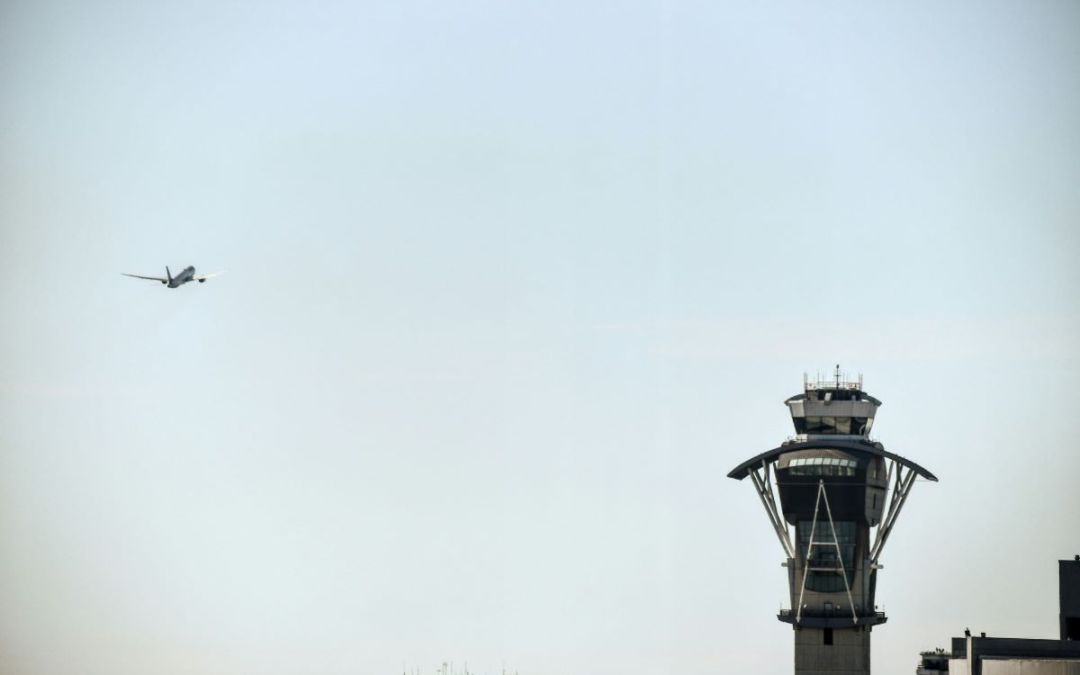
Delta Air Lines CEO Ed Bastian has revealed the area of aviation where he believes AI will have the biggest impact: air traffic control.
Speaking on the Fortune 500: Titans and Disruptors of Industry podcast, Bastian said the journey from Atlanta to New York takes longer today due to inefficiencies in air traffic management. He added:
All that technology investment that we put in AI is not going to change that, unless it’s focused on, how do you unlock the sky.
US air traffic control systems have come under increasing strain in recent years. Bastian notes that the technology is in need of an update, while staffing shortages have been compounded by recent government shutdowns.
The Trump administration, under Transportation Secretary Sean Duffy, have announced a comprehensive overhaul into American ATC systems. The US$31.5 billion plan includes building six new ATC towers and implementing new radio and radar systems. The Federal Aviation Administration (FAA) has also confirmed that they are developing machine learning and LLMs to analyse incident reports and develop a comprehensive picture of risk patterns.
Bastian’s comments come in the wake of several high-profile air traffic incidents across the US. Most notably, in March shortage of ATC personnel at LaGuardia airport resulted in two deaths and multiple injuries after an Air Canada plane crashed with a ground services van while landing on the runway.
Join us at Aerospace Tech Week 2026 to discuss the future of ATC, flight ops, and AI.
For more like this, see:
by Elsie Clark | Apr 9, 2026 | Innovation, Sustainability
Oak Ridge National Laboratory (ORNL) have developed a new process that could significantly cut the cost of sustainable aviation fuel (SAF) production.
The US-based research team have found a method of turning ethanol into jet fuel components in a single step, radically simplifying a process that usually requires multiple stages. Off the back of this discovery, Biofuel company Gevo are licensing the technology from ORNL to test the process on a larger scale.
Andrew Sutton, senior scientist in the Manufacturing Science Division at ORNL, said:
This partnership will streamline the transition of ORNL’s catalyst technologies from lab scale to pilot-scale reactors. By demonstrating industrial viability, our goal is to accelerate the commercialisation of this technology in the US, boosting global competitiveness and domestic production of aviation fuel.
SAF is derived from plant- or waste-based feedstocks. From these materials, ethanol is then converted to olefins, which are in turn transformed into fuel. By developing a one-step method for turning ethanol into olefins, ORNL could significantly accelerate the efficiency of SAF production while also reducing costs.
Many aviation industry calculations for net zero rest on the assumption that SAF will scale to meet commercial demand. As air travel only increases in popularity, finding innovative ways to boost production fast are critical to mitigating climate change. Industry body IATA has warned that aviation needs to build momentum on SAF or airlines risk falling well short of their sustainability targets.
Join us at Aerospace Tech Week 2026 to discuss sustainable aviation.
For more like this, see:


You must be logged in to post a comment.