
by Elsie Clark | Jan 19, 2026 | Innovation
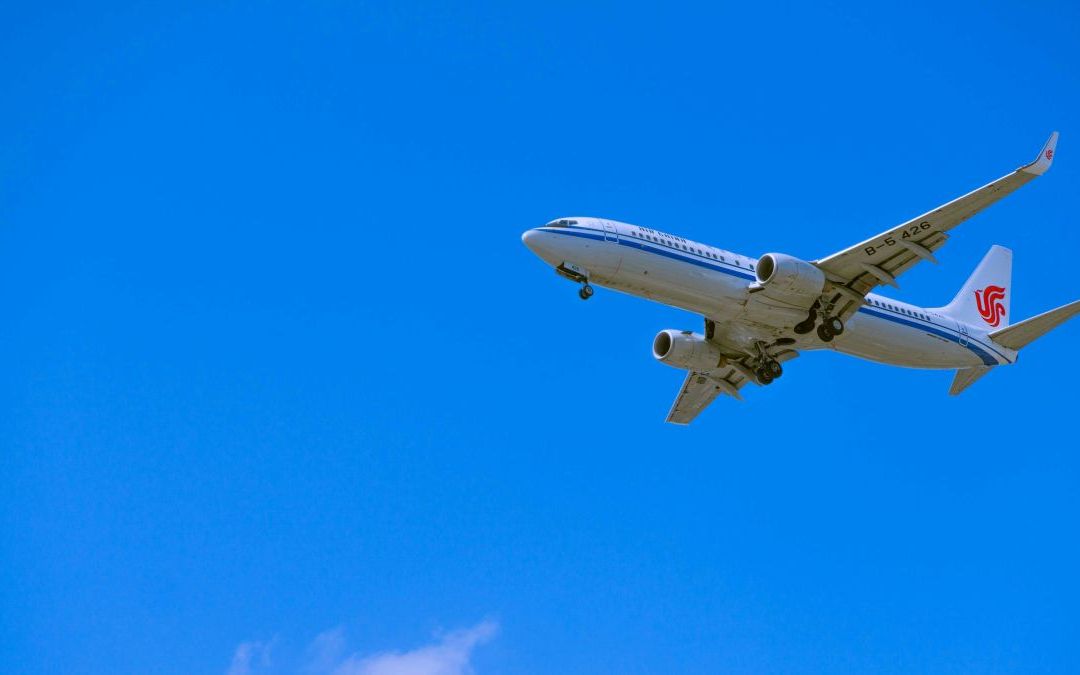
The South China Morning Post has confirmed that pilots working for the European Aviation Safety Agency (EASA) have been testing the COMAC C919 plane in Shanghai.
China’s rival to the Airbus A320 and Boeing 737, the C919 applied for EASA certification in 2019, but the process was delayed by the Covid-19 pandemic. Approval efforts restarted in 2023, and EASA confirmed that new ‘validation’ tests in Shanghai involved foreign pilots
The Federal Aviation Administration (FAA) is also yet to certify the C919 for US operations. COMAC aircraft are currently in service with Air China, China Eastern Airlines, and China Southern Airlines. The smaller regional C909 jet is also in use across China, with orders confirmed from Air Cambodia and TransNusa.
Lacking certification from any Western aviation authority puts a brake on COMAC’s expansion plans. Ryanair CEO Michael O’Leary told Skift in March 2025 that he would order COMAC aircraft if they were allowed into the market and priced competitively. These comments drew the attention of US Congressman Raja Krishnamoorthi, who said:
US and European airlines should not be even contemplating the future purchase of airplanes from Chinese military companies.
However, as supply chain pressures continue to cause Airbus and Boeing to underdeliver, COMAC aircraft could fill a critical gap in the market to fuel airlines’ ambitious growth targets.
Join us at Aerospace Tech Week 2026.
For more like this, see:
by Elsie Clark | Jan 16, 2026 | Connectivity, MRO IT
In a new report, Airbus predict that the centre of aviation’s afterservices market is shifting eastwards. The manufacturing and technology firm’s latest Global Services Forecast (GSF) asserts that the sector in China will more than double in value over the next 20 years, rising from US$24.8 billion in 2025 to US$63.8 billion in 2044.
The country hosts the single largest Airbus fleet in the world, with airlines such as China Southern, China Eastern, and Xiamen Air operating hundreds of Airbus aircraft between them. And the growth shows no signs of slowing: domestic passenger volumes grew by 17% in 2025 compared to the pre-pandemic year 2019, and the Global Services Forecast expects China to receive over 9,500 new aircraft in the next two decades.
Airbus add that superior connectivity services will result in huge savings across the Chinese aviation world. The report predicts that the industry will reduce expenses by US$2.2 billion with digital tech ops and a further US$5.7 billion through fuel cost reduction. The digital and connectivity space is the fastest-growing afterservices market in the country: currently worth US$1.8 billion, Airbus predict its value will rise to US$5.1 billion by 2041.
Other important segments in China include off-wing maintenance, which will be increasingly in-demand due to ageing fleets. At the same time, on-wing maintenance will become a US$6.8 billion market to care for the expected 9,500 new aircraft.
Airbus note that training and upskilling will be key to achieving growth: China’s aviation industry will need to be supported by an additional 485,000 personnel by 2044, including pilots and technicians.
Join us at Aerospace Tech Week 2026 to discuss the future of MRO.
For more like this, see:
by Elsie Clark | Dec 12, 2025 | Flight Ops IT, Innovation
European aerospace giant Airbus, in collaboration with Delta, Air France and Virgin Atlantic, has successfully completed a critical phase of flight testing for its innovative ‘fello’fly’ project. This uses wake energy retrieval (WER) to significantly cut fuel burn on long-haul routes.
The initiative, which draws direct inspiration from the ‘V’ formation adopted by migrating geese, involves a trailing aircraft positioning itself within the optimal updraft created by the lead jet. This highly precise manoeuvre reduces the trailing aircraft’s drag, resulting in a substantial increase in fuel efficiency for long-haul operations. Airbus and their partners worked under the SESAR Joint Undertaking GEESE project.
An Airbus spokesperson noted:
While the actual wake energy retrieval flights have not been tested yet on commercial flights, the successful completion of the rendezvous process is a crucial first step toward future efficiency gains.
Airbus has stated the method could deliver fuel savings of up to 5% on Transatlantic voyages. Specific flight demonstrators showed a resulting reduction in CO2 emissions of six tonnes per paired operation. Other collaborators included AirNav Ireland, DSNA, EUROCONTROL Network Manager, French bee, and NATS. Airbus described EUROCONTROL’s Innovation hub interface as ‘key’ to proving the concept’s safety in real-world conditions.
The project addresses a critical challenge for the future of commercial aviation, particularly for wide-body routes. For such aircraft flying over oceans, batteries do not represent a viable sustainability solution.
While the technical solution is now proven, the project’s next steps will focus on operational integration. This includes securing the necessary regulatory changes and working with Air Navigation Service Providers (ANSPs) to adapt procedures, ensuring that aircraft can safely fly in the close 1.5-nautical-mile proximity required for WER.
Join us at Aerospace Tech Week 2026, where we’ll be joined by leading speakers from EUROCONTROL.
For more like this, see:
by Elsie Clark | Dec 1, 2025 | Innovation, MRO IT
Airbus has reported that the majority of A320 and A320neo aircraft have returned to operation after being grounded suddenly on 28 November.
A safety alert was issued after a JetBlue A320 experienced an uncontrolled descent lasting for several seconds during a flight from Newark to Cancun on 30 October. Airbus’s subsequent investigation found that intense solar radiation was corrupting critical flight control data, forcing thousands of A320s across the world to be recalled for updates.
The manufacturer said on 1 December that fewer than 100 of the 6,000-strong fleet were still undergoing upgrades. For most aircraft, a simple software update was all that was required, but some older models require a more time-consuming hardware installation.
Around 60% of the world’s 9,900 active A320s and sister models were affected by the grounding. 2025 is a peak year in the solar weather cycle, which caused the unusually intense solar radiation that affected JetBlue’s flight.
In the wake of the disruption, Airbus CEO Guillaume Faury issued an apology on LinkedIn, stating:
I want to sincerely apologise to our airline customers and passengers who are impacted now. But we consider that nothing is more important than safety when people fly on one of our Airbus Aircraft – like millions do every day.
Our teams are working around the clock to support our operators and ensure these updates are deployed as swiftly as possible to get planes back in the sky and resume normal operations, with the safety assurance you expect from Airbus.
Join us at Aerospace Tech Week 2026, where Airbus Chief Technology Officer Dr Sabine Klauke will be speaking.
For more like this, see:
by Elsie Clark | Nov 25, 2025 | Innovation
GE Aerospace are investing nearly US$53 million in their manufacturing facility in West Jefferson, North Carolina. The facility is responsible for critical components in the CFM LEAP engine, which powers commercial narrow-body aircraft.
Under the new project, a 35,000 square foot extension will be added to the manufacturing site, and more equipment purchased to boost production. Funding from local government is supporting the initiative, while GE Aerospace has committed to training North Carolinians to fill 40 new job roles.
Parts made at the West Jefferson facility include rotating parts, turbines, and spools, The planned upgrades will take place over three years as GE Aerospace seeks to address directly the supply chain issues plaguing the aerospace sector.
A report from IATA and Oliver Wyman found that supply chain challenges could cost airlines as much as US$11 billion in 2025. Geopolitical instability, material shortages, and labour availability have compounded existing bottlenecks, all while increasing costs.
However, aviation’s growth plans continue to rise, with airlines ordering greater volumes of aircraft than ever. Airbus and Boeing are both struggling to meet the demand for narrow-body aircraft, with delivery slots for the A320neo and 737 MAX sold out for the next decade. The rapid growth of low-cost carriers such as flydubai and Ryanair, alongside legacy carrier’s focus on premium narrow-body experiences, has placed more pressure on manufacturers.
GE Aerospace’s investment hopes to ease some of these supply chain constraints. However, with the facility not set to open for a further three years, the industry must still address a range of production challenges to tackle the supply chain conundrum.
Join us at Aerospace Tech Week 2026, where our dedicated supply chain track will discuss how the industry can build resilience and mitigate disruption.
For more like this, see:




You must be logged in to post a comment.