
by Jessica Brownlow | Jun 4, 2025 | Avionics
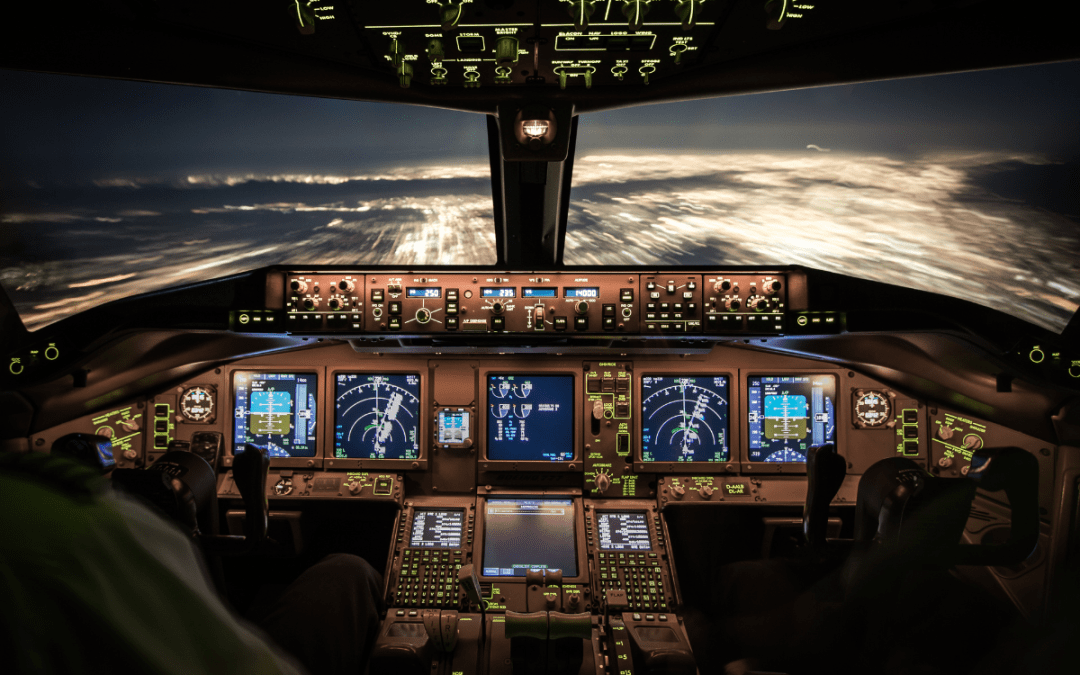
A new report estimates the avionics market will be worth $82.33 billion in the next five years. Currently sitting at $56.22 billion, the MarketsandMarkets™ report sees this growth stemming from rising aircraft production, technological innovation, and demand for modernised aviation infrastructure.
Released yesterday, the report states:
“The avionics market is thriving due to rapid advancements in digital technologies, such as artificial intelligence and data analytics, which enhance efficiency and safety. The increased demand for connected and autonomous aircraft, along with a focus on sustainability, is driving innovation in avionics systems. Geopolitical shifts and the expansion of emerging markets are also contributing to a strong market outlook. Airlines and manufacturers are prioritizing cutting-edge solutions to meet evolving industry needs, making the avionics market dynamic and poised for sustained growth. This industry is at the forefront of shaping the future of aviation technology.”
In terms of regional leadership and the competitive landscape, Normal America is predicted to have the largest and most mature avionics market. It is home to key players including Honeywell, Collins Aerospace, Garmin, and RTX who are driving innovation and exports. More specifically, the region has displayed leadership with NextGen air traffic systems and cockpit upgrades.
Looking forward, the opportunities ahead include advanced connectivity, emerging markets, and retrofits for aging fleets. Read the full report for more.
For more like this see:
by Jessica Brownlow | Jun 2, 2025 | AI & ML, Innovation, Video
At Aerospace Tech Week, Airbus’ Grzegorz Ombach discussed the next wave of transformative technology. As Group Head of Disruptive Research, Technology & Innovation & Senior Vice President at the largest aeronautics and space company in Europe, Ombach is uniquely well positioned to understand and speculate on cutting-edge breakthroughs and how they will shape the industry for decades to come.
During the interview, Ombach selected and unpacked the three technologies he is most excited by and explained their relevance to the industry: Agentic AI, microfusion energy, and quantum sensors. Speaking on potential use cases of quantum sensors, he explained:
“And the new sensors are coming from the industry like automotive for example. We are talking about radars, lighters and also the one interesting sensor which we see coming as a next, next, next generation is all about the quantum to measure the position of the aircraft in aerospace. If, for example, you don’t have available GPS and you would like to use this sensor for smart automation parallel to the computer vision which is going to be the eyes for the aircraft as well.”
The conversation also touched on Airbus’ ongoing projects as well as the critical industry challenges that they are responding to. For the full conversation, watch below.
Questions asked include:
- You’re at the cutting edge of disruptive tech in aerospace. Where are you seeing the most innovation and how do you think it will reshape the industry in the next decade or so?
- Talk me through some of the ongoing Airbus projects – how are these changing the landscape?
- If you had to pick one, which technology in aerospace excites you the most right now and why?
Subscribe to our free monthly newsletter here.
For more from ATW Europe see:
by Jessica Brownlow | May 28, 2025 | Connectivity
Originally posted on World Aviation Festival
A recent spate of unrelated power outages across the globe has highlighted just how critical staying connect is to maintaining smooth operations.
Yesterday, a blackout at Brisbane Airport caused lengthy delays for Qantas and Jetstar passengers. On a larger scale, last month’s critical power outage across Spain and Portugal impacted approximately 80,000 passengers. In the UK a month earlier, a substation fire caused a temporary power outage, resulting in nearly 1,400 flights being disrupted costing airlines tens of millions.
Combatting these vulnerabilities, SITA has launched its SITA Managed Satellites, designed to ensure vital airport communications remain operational even during during blackouts and natural disasters. This leverages low earth orbit satellites to deliver secure, high-bandwidth, low-latency communication.
Speaking on the importance of continuous connectivity, Martin Smillie, Senior Vice President, Communications and Data Exchange at SITA:
“ Airports, in particular, need new ways to ensure they can maintain critical operations in whatever circumstances they face – even when a dverse incidents strike. Delivering high-speed internet connectivity via established satellite providers, SITA Managed Satellites allows customers to optimize operational performance. SITA Managed Satellites is an innovative solution to keep all parts of the aviation industry connected to vital platforms – even in the most challenging of times – and can be adapted for other transport sectors and markets also. It delivers a blend of availability and cost-effectiveness to optimize investments in any cloud, on-premises or hybrid computing environment.”
The service is currently available across 130 countries with primary, secondary, and emergency connectivity options tailored specifically for the air transport industry.
Sign-up to the newsletter for the latest industry updates.
For more like this see:
by Jessica Brownlow | May 27, 2025 | Connectivity, Innovation, MRO IT
Ultra low-cost carrier Ryanair has posted a full year profit of €1.61 billion after tax, becoming the first European airline to carry more than 200 million passengers in a single year.
At Aerospace Tech Week in April, Ryanair’s Chief Operations Officer (COO), Neal McMahon, shared insights into the airline’s strategic aircraft investment and ambitious growth plans. McMahon unpacked Ryanair’s $40 billion investment in Boeing’s new aircraft tech, and detailed the airline’s plans to grow traffic to 300 million over the next decade.
Speaking on the current state of air traffic control (ATC), McMahon emphasised the urgent need to modernise outdated structures that operate in siloes, attributing upcoming struggles on staff shortages:
“ATC is going to be a shambles again this year. I’d love to say it’ll be better, and through our best efforts, trying to be helpful, trying to push people, trying to publicise it – we’ve been unsuccessful to get them to hire more. So, you take a few countries: Germany has less air traffic controllers than last year, they’re the worst in Europe; France hasn’t grown air traffic controllers, Spain hasn’t grown them quickly enough, and the UK has less air traffic controllers. So, we have a problem that there’s just not enough people being brought into the system.”
McMahon also discussed flight shaming which he claimed “does not exist,” alongside the airline’s expansion of its MRO facilities and pilot training initiatives. Watch the full interview below for more.
Join us at Aerospace Tech Week 2026.
Questions asked include:
- At the end of the year, Ryanair invested in Boeing’s new aircraft tech with the 737. How does this fit in with your wider strategy?
- You also recently began work on a new state-of-the- art hangar. How does this enhance your MRO capabilities and position you for future success?
- In summer of 2024, you described ATC services in Europe as “at their worst levels ever” with summer 2025 just around the corner, what is your current assessment of the ATC landscape?
Subscribe to our free monthly newsletter.
For more from ATW Europe see:
by Jessica Brownlow | May 22, 2025 | Innovation
Originally published MOVEMNT
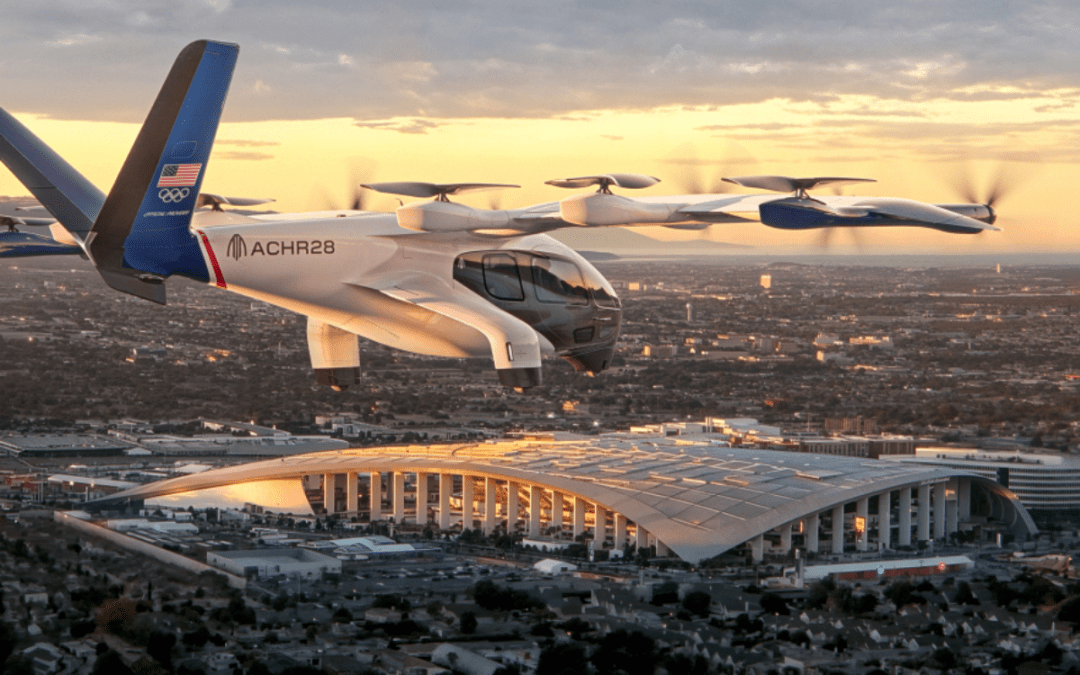
Electric vertical take-off and landing (eVTOL) aircraft company Archer has been selected as the official air taxi provider for the Los Angeles 2028 (LA28) Olympic and Paralympic Games and Team USA.
The California-based company will integrate its Midnight eVTOL aircraft across the LA28 Games for a variety of services including transporting VIPs, fans, stakeholders and providing support for emergency services and security.
Adam Goldstein, CEO and founder of Archer Aviation, said:
“We want to transform the way people get around Los Angeles and leave a legacy that shapes the future of transportation in America. There’s no better time to do that than during the LA28 Games.”
Midnight is Archer’s piloted electric air taxi designed to carry up to four passengers, which produces less noise and emissions than a traditional helicopter.
The LA28 Olympic Games are expected to host over 15 million visitors and broadcast to billions of viewers globally over the course of the Games.
LA28 Chairperson and President Casey Wasserman, said:
“Our vision is to fundamentally reimagine the Olympic and Paralympic Games experience.”
The LA28 Games will mark Los Angeles’ third time to host the Olympic Games, previously hosted in 1984 and 1932, and first time to host the Paralympic Games.
For more like this see:




You must be logged in to post a comment.