
by Jessica Brownlow | Dec 23, 2024 | AI & ML, Avionics, Connectivity, Flight Ops IT, Innovation, MRO IT, Sustainability
As 2024 draws to a close, we are reflecting on the news and topics that grabbed your attention this year. Here are the top five most read articles of 2024.
1. What EWIS is and why it matters for wiring aircraft
If you play any part in the wiring of aircraft — whether as a manufacturer, installer or technician — then the acronym EWIS matters to you. The reason: EWIS stands for ‘Electrical Wiring InterConnect System’ or ‘Electrical Wiring InterConnection System.’ In either usage, EWIS represents a unified approach to aircraft wiring design and layout that encompasses all wires and wired devices that are installed in aircraft for transmitting electrical energy… Read full article here.
2. Harnessing data to drive the connected aviation ecosystem
Nicole White, Vice President, Business Development – Connected Aviation Solutions, Collins Aerospace, joined to discuss the connectivity landscape, looking at emerging technologies, challenges, and reaching the “eutopia state” of travel. The conversation emphasised the current fragmentation of the connectivity ecosystem, highlighting the urgent need to integrate solutions. Additionally, White characterised the digital side of the landscape as still in its infancy, with enormous untapped potential in the data being generated…Read full article here.
3. Industry 4.0: Digital Twin technology at Rolls-Royce
According to McKinsey, intelligent computers are to the Fourth Industrial Revolution (Industry 4.0), what steam was to the first. Powered by disruptive technology, machine learning (ML), artificial intelligence (AI), and data analytics, Industry 4.0 is characterised by the merging of the digital and physical worlds. Digital Twins epitomise this new era of industry. It is: “A technology based on the concept of creating…Read full article here
4. Aerospace Tech Review Awards 2024
At Aerospace Tech Week, we celebrate innovation and excellence across the industry. These awards put a spotlight on the innovators, visionaries, and first-movers who are shaping the future of aerospace. If there’s a company, individual, or product you want to recognise for their outstanding contributions to the industry in 2024, nominate them below. Winners of each category will receive a prize package including dedicated social media promotion across our platforms and featured spots on our blog and website. The winners will also get either exclusive blog coverage or an interview, providing a chance to share their story. Each winner will also take home a small… Read full article here
5. 15 Promising aerospace startups to watch
In an industry which must stay ahead of the curve, startups play a crucial role. Disrupting a space dominated by legacy systems, their comparative agility allows for rapid experimentation and iteration, bringing fresh perspectives and innovation. Here are 15 startups leveraging tech to drive innovation that are set to shake the aerospace industry…Read full article here
What do you think will be the biggest topics to explore in 2025?
by Jessica Brownlow | Dec 17, 2024 | Innovation, Sustainability
The International Air Transport Association (IATA) recently released its 2025 financial outlook for the global airline industry. It predicts passenger numbers to hit 5.2 billion, up 6.7 per cent compared to 2024.
Despite strong demand, the association predicts persisting supply chain challenges will restrict airline profitability and growth.
Willie Walsh, IATA’s Director General underscored the significance of these issues, saying:
“Supply chain issues are frustrating every airline with a triple whammy on revenues, costs, and environmental performance. Load factors are at record highs and there is no doubt that if we had more aircraft they could be profitably deployed, so our revenues are being compromised. Meanwhile, the aging fleet that airlines are using has higher maintenance costs, burns more fuel, and takes more capital to keep it flying. And, on top of this, leasing rates have risen more than interest rates as competition among airlines intensified the scramble to find every way possible to expand capacity. This is a time when airlines need to be fixing their battered post-pandemic balance sheets, but progress is effectively capped by supply chain issues that manufacturers need to resolve.”
Key insights from IATA’s outlook include:
- Aging fleet: The average age of the global fleet is at a record high of 14.8 years. From 1990-2024 it averaged 13.6 years.
- Delivery shortfalls: The estimate for 2024 deliveries fell 30 per cent short of predictions at 1,254 aircraft
- Grounded aircraft: 14 per cent of aircraft are “parked”
- Order backlog: The backlog for new aircraft is at a record high of 17,000 planes
- Fuel efficiency stagnation: This remained unchanged between 2023 and 2024
Walsh also criticised manufacturers for the limitations this imposes on sustainability goals:
“Manufacturers are letting down their airline customers and that is having a direct impact of slowing down airlines’ efforts to limit their carbon emissions. If the aircraft and engine manufacturers could sort out their issues and keep their promises, we’d have a more fuel-efficient fleet in the air.”
Although traveller numbers will surpass five billion for the first time, the challenges faced this year will extend into 2025 and put continued pressure on the industry.
At Aerospace Tech Week in Munich, leaders from across the industry will be discussing the supply chain landscape, looking at the challenges and opportunities ahead. Book your ticket for free to be a part of the discussion!
For more like this see:
by Jessica Brownlow | Dec 11, 2024 | MRO IT
Last week, SkyTeam members Saudia and Air France-KLM signed a Memorandum of Understanding (MoU) targeted at expanding and localising Maintenance, Repair, and Overhaul (MRO) capabilities in the Kingdom.
The agreement will support Saudia in developing its technical operations and enables the airline to handle module assembly and disassembly of GE90 engines, which are used on Boeing 777 aircraft. The MoU stipulates that at least 50 per cent of the GE90 work orders will be awarded to Air-France KLM.
It also floats the establishment of a joint venture for GEnx engines, used on Boeing 787 aircraft.
Benjamin Smith, CEO of Air France-KLM stated:
“Saudia is a historic partner of Air France-KLM, and in the context of Saudi Arabia’s fast-paced development, we see a mutual interest in expanding our commercial cooperation and pooling our expertise, notably in the strategic MRO activity. Air France-KLM Engineering and Maintenance is already a leader in the field, and further cooperation with Saudia will unlock additional opportunities in the country and in the region.”
This MoU will additionally enhance the codeshare agreement between the airlines, with an expanded selection of domestic and international routes.
The signing ceremony was attended by President Emmanuel Macron of the French Republic, Engr. Saleh Al-Jasser, Chairman of Saudi Arabian Airlines Corporation, Engr. Ibrahim Al-Omar, the Director General of Saudia Group, along with ministers and distinguished dignitaries, the agreement was signed by Capt. Fahd Cynndy, Managing Director of Saudia Technic, and Anne Brachet, Executive Vice President of Air France-KLM Engineering & Maintenance, pictured above.
The Middle-East Aircraft MRO Market growth is driven by ongoing fleet expansion and modernisation programmes and is estimated to reach $7.14 billion by 2029. As the region bolsters its technical capabilities, there is a growing demand for strategic partnerships and skilled labour.
For more see:
by Jessica Brownlow | Dec 9, 2024 | AI & ML
Responding to the significant opportunities and challenges posed by artificial intelligence (AI), the UK Civil Aviation Authority has published its new AI strategy. The three part strategic response is split into:
While the opportunities presented by AI must be capitalised upon, it is imperative that safety and protection remain paramount. Tim Johnson, Director of Strategy and Policy at the UK Civil Aviation Authority, warned:
“AI is a technology that is being harnessed in many sectors, and aerospace is no exception. In doing so, we must ensure the benefits can be realised whilst maintaining the levels of safety and consumer protection that the public rightly expect.”
Below is a brief summary of the three sections of strategic response.
The CAA’s Response to Emerging AI-Enabled Automation
This section “outlines principles for managing both the introduction of AI in aerospace and also within internal operations. These are supported by a common framework that aims to foster innovation while safeguarding regulatory integrity and public trust.”
Here, the CAA highlights the expansive nature of AI transformation from aircraft design, manufacturing and certification to air traffic management, flight operations, maintenance, and customer experience.
Essentially, this response lays foundations to “ensure that the adoption and regulation of AI technologies in the aerospace sector align with our core regulatory responsibilities.”
The CAA pledges to work closely with the broader aerospace industry colleagues, and consumers.
Strategy for Regulating AI in Aerospace (Part A)
This maps out the two key challenges with integrating AI into the industry: ensuring the AI software is safe and reliability and understanding how roles change when AI takes over tasks.
Here, the response is made up of three key pillars:
Pillar 1 – Provides valuable insights and evidence through horizon scanning and market engagement. This will inform pillar 2.
Pillar 2 – Defines our strategic directions – the hypotheses and regulatory questions that we must explore and act upon.
Pillar 3 – Will then identify and provide the CAA with the skills and capabilities to deliver this extensive change programme.
The AI Strategy & Portfolio Hub will act as centralised expertise and an emphasis will be placed on international collaboration. Nurturing public confidence while leading in AI adoption will be key.
Strategy for Using AI in the CAA (Part B)
The focus of this section is on effectively “adopting and managing” AI as a tool for delivering on CAA objectives. It maps out how the regulator plans to leverage the benefits of this technology while effectively navigating its risks.
It looks at a phased approach to implementation and advocates a “human-first” approach to AI. Find the full strategy here.
Interested in AI? Join us at Aerospace Tech Week Europe for free to be in the room when leaders from the aerospace industry demonstrate the latest advancements in AI.
For more like this see:
by Jessica Brownlow | Dec 4, 2024 | Flight Ops IT
On Tuesday, Delta Air Lines opened its $50 million flight operations training facility in Salt Lake City (SLC). Spanning 50,000 square feet, the cutting-edge facility is the airline’s first outside Atlanta.
Speaking on the significance of the launch, Ed Bastian, CEO at Delta, said:
“We have 5,000 employees here in the region, and when you talk about our pilots, we have the very best pilots. We want to make sure we have the very best tools and technology and capability at their fingertips here. But all the other employees and families that we have here, it’s a statement to them, as well, in terms of seeing this great facility go up.”
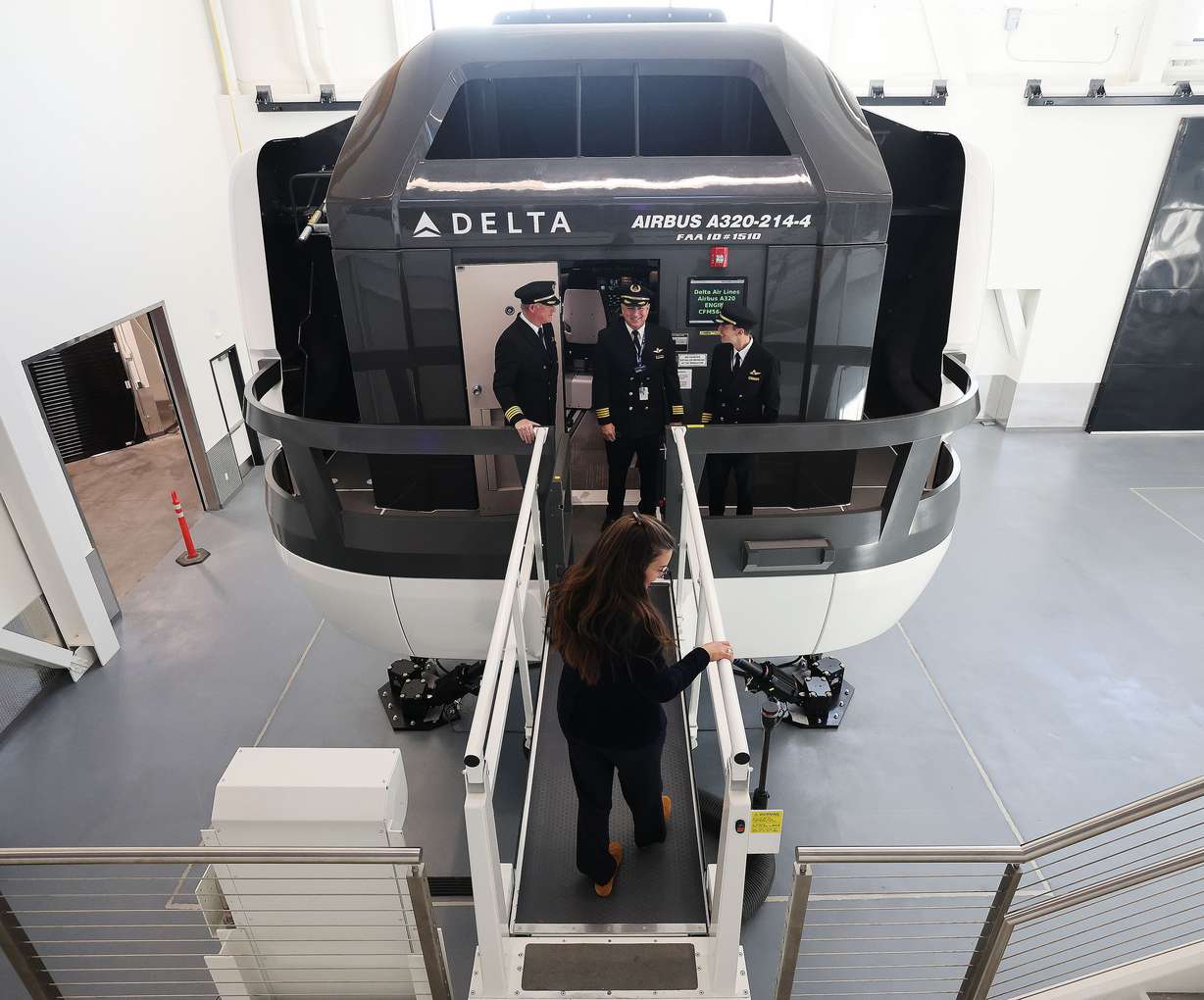
Image credit: KSL.com
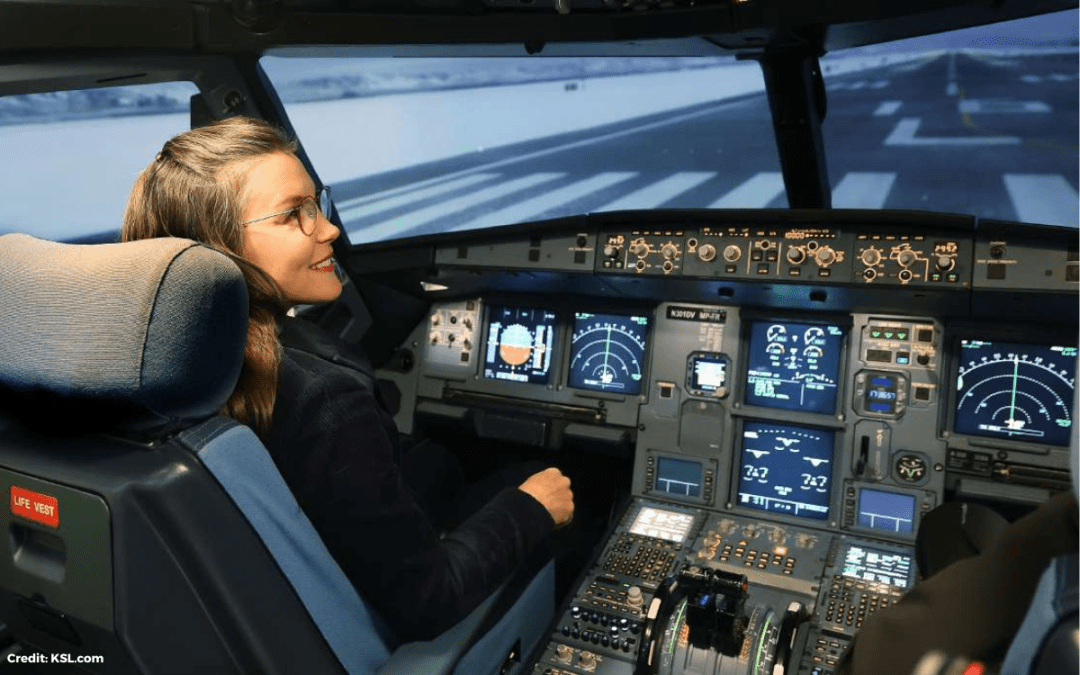
KSL.com reported that the facility currently has two simulators operational, “equipped with [both] an A350 and A320 simulator, with a B737 simulator set to join the mix in the spring.” It also has space onsite for six additional Full Motion Simulators. Complementing these, are seven classrooms for pilots in training and ten pilot briefing rooms.
The airline anticipates over 1,000 training events will be held at the facility every month as Delta pilots are recertified on an aircraft every nine months. This training facility adds to Delta’s existing 33 simulators at the airline’s HQ in Atlanta.
For more like this see:




You must be logged in to post a comment.