
by Elsie Clark | Mar 23, 2026 | Connectivity
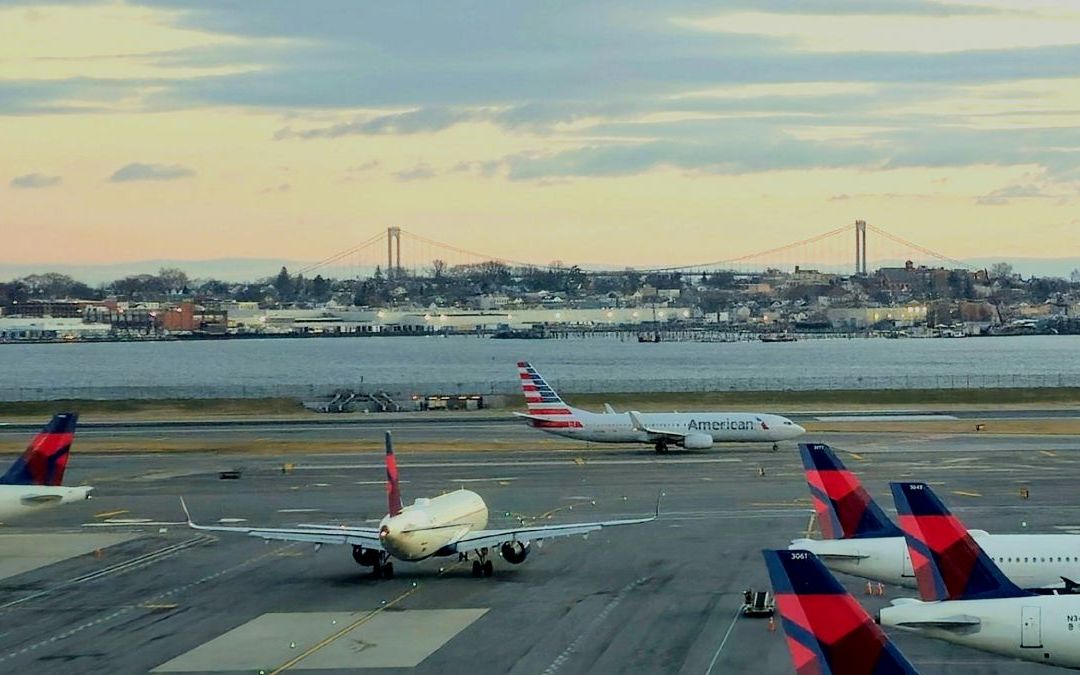
An aircraft has crashed with a ground vehicle at New York’s LaGuardia airport, resulting in multiple casualties.
The incident occurred on the evening of 22 March as an Air Canada Express landed. A CRJ-900, the aircraft recorded speeds of 39kmph as it hit the firefighting vehicle, which was on the tarmac attending to a separate incident. Both pilots were killed and several people seriously injured. As a result, the Federal Aviation Administration (FAA) announced they would close until it was safe to resume operations. The airport serves as a regional hub and handles around 30 million passengers a year, causing significant disruption to aviation across the Americas.
Photographers captured severe damage to the nose of the CRJ-900 as a result of the incident. Recent years have seen a notable uplift in ground and airborne collisions across the US, which have largely been blamed on a shortage of air traffic personnel. In October 2025, LaGuardia was the scene of another incident where two regional Delta jets collided at a taxiway intersection. Clipped wings and scrapes between aircraft have also taken place at Chicago O’Hare and San Francisco airports in the past year.
The ATC shortage has been exacerbated by the current government shutdown, which means many air traffic controllers are working without pay. Reports suggest that the controller managing the Air Canada flight was simultaneously responsible for overseeing a fire risk on a United aircraft due to a lack of staff.
Join us at Aerospace Tech Week 2026 to discuss the future of ATC, flight ops, and safety.
For more like this, see:
by Elsie Clark | Jan 22, 2026 | Innovation
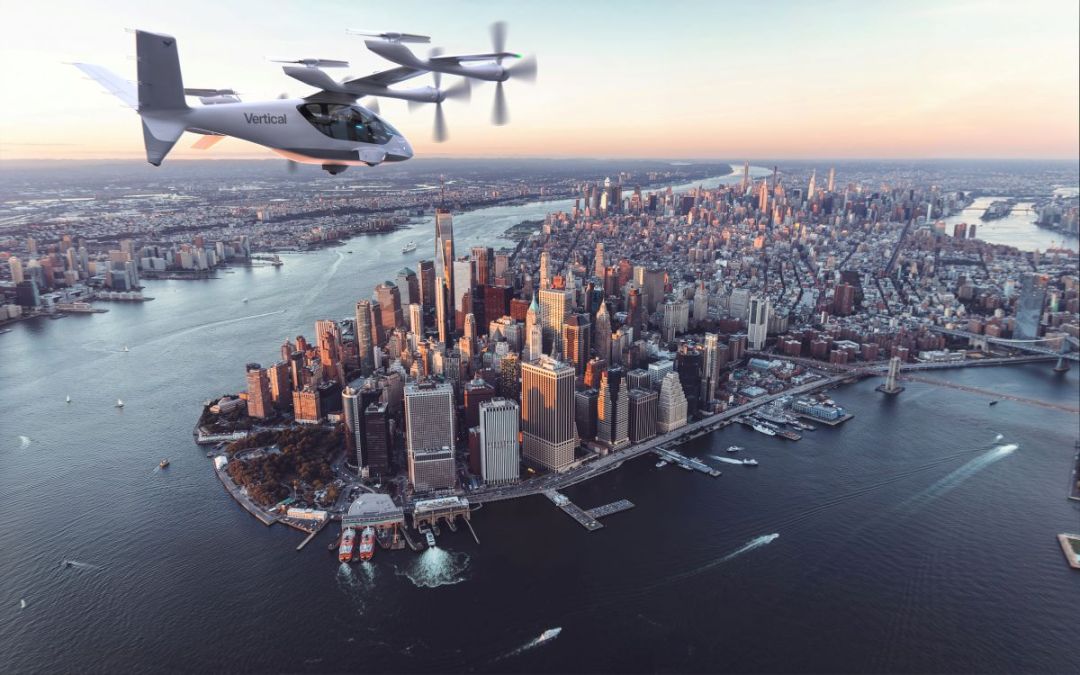
Vertical Aerospace, a UK eVTOL company, is directly taking on its competitors with plans to launch a New York air taxi network as early as 2028.
The company’s Valo aircraft will debut before American investors on January 23 in Manhattan. To align with this meeting, Vertical have announced a potential route map for commercial service across the biggest metropolis in the US. In collaboration with Bristow Group and Skyports Infrastructure, Vertical would open a hub in Downtown Manhattan to connect with the airports around the city: JFK, Newark, East Hampton, and Teterboro. Potential links could also be added to the MetLife Stadium, other heliports, and medical sites such as Westchester County Medical Center.
Stuart Simpson, CEO of Vertical Aerospace, said:
New York is a natural next step to explore how electric aviation could support urban and regional travel in the US, working with partners like Bristow and Skyports to keep safety, certification and real-world operations at the core.
The company has already unveiled prospective plans for a UK air taxi network that would see Valo connect Canary Wharf in London to Heathrow and Gatwick Airports, as well as the important academic research centres of Oxford and Cambridge.
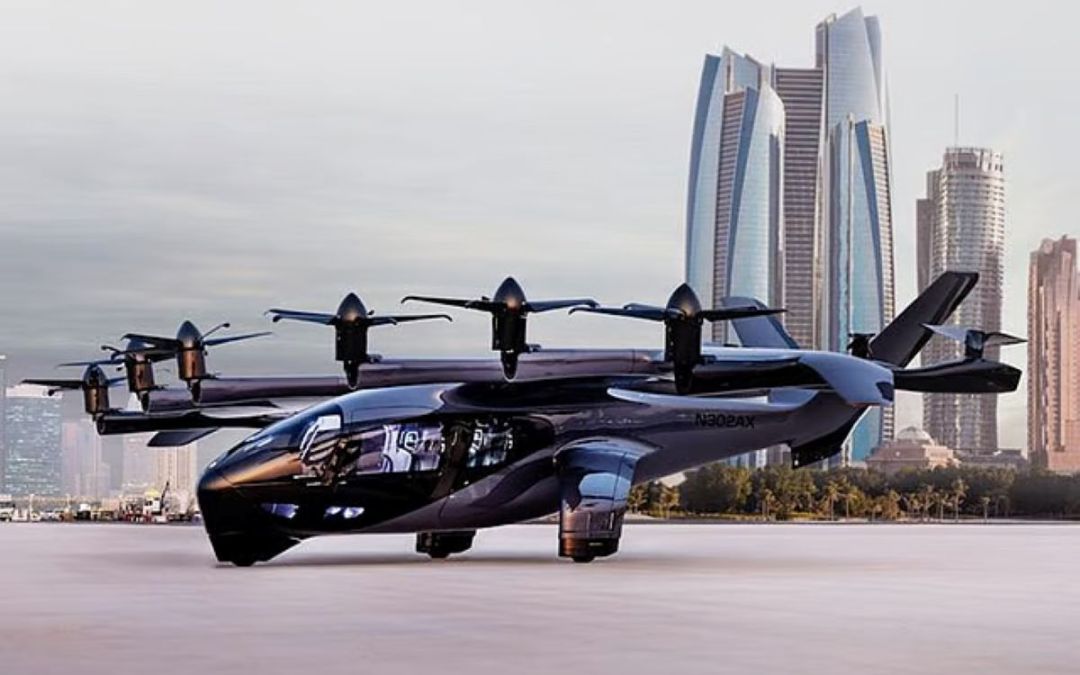
Rivals Archer and Joby have both released their own plans for vertiport networks across New York. Both companies have also signed development agreements with countries in the Middle East, with Joby expected to launch a commercial eVTOL service in Dubai later this year. Archer meanwhile have continued US testing in a bid for certification from the Federal Aviation Administration (FAA). Their Midnight aircraft is expected to launch in time to provide connections at the 2028 Olympic Games in Los Angeles.
Join us at Aerospace Tech Week 2026 to discuss the future of advanced air mobility (AAM).
For more like this, see:
by Elsie Clark | Dec 4, 2025 | Innovation
Archer Aviation has revealed plans for its vertiport network across Miami, as the eVTOL company hopes to launch its Midnight air taxis across the Floridian city in 2026.
The plans call for the redevelopment of existing heliports alongside the construction of new purpose-built vertiports. Designed to carry four passengers, Archer says that the Midnight aircraft is ideal for 10- to 20-minute journeys across Miami. The integration of a fully-fledged air taxi network will relieve congestion on the ground safely and efficiently, the company adds.
Miami’s three airports — Miami International, Fort Lauderdale-Hollywood International, and Palm Beach International — will be redeveloped to host air taxi landing and take-off points. In the city itself, investment firm Dragon Global and real estate developer Related Ross will partner with Archer to build new vertiports serving the Magic City Innovation District and the West Palm Beach development respectively.
Bob Zangrillo, founder of Dragon Global and a partner in the Magic City Innovation District, said;
The Magic City Innovation District was designed as a next-generation hub for technology, culture, and mobility.
By partnering with Archer to integrate an entirely new layer of transportation, [we are embracing] an air mobility network that connects our district with the broader region and advances a multimodal, future-ready transportation ecosystem for South Florida.
Hard Rock Stadium has asserted its readiness to adapt existing helipads for eVTOLs. Home to the Miami Dolphins NFL team, a Formula 1 Grand Prix, and the Miami Open, the stadium is one of the world’s leading sports venues and welcomes millions of visitors each year. Apogee Golf Club, another internationally-renowned sporting venue, also said they were willing to redesign a heliport to accommodate eVTOLs.
The Miami plans represent another stage in Archer’s global commercialisation effort. The company signed a deal with Korean Air earlier this year, and recent partnerships at Dubai Airshow will see eVTOLs flying in Abu Dhabi and Saudi Arabia.
Francis Suarez, the Mayor of Miami, added:
Miami has never been afraid to bet on the future. We’re a city that attracts visionaries, embraces breakthrough technology, and turns bold ideas into real impact.
For years, I have worked with Archer as they have advanced a vision for an air-taxi network that will elevate Miami’s position as a global capital for innovation and mobility. What they are building is not just transformational transportation; it embodies the Miami mindset: we lead, we innovate, and we redefine what is possible.
Join us at Aerospace Tech Week 2026 to discuss the future of advanced air mobility (AAM).
For more like this, see:
by Elsie Clark | Sep 10, 2025 | AI & ML, Innovation
A new strategic partnership between Adacel Technologies and Smart Eye will enhance the MaxSim air traffic control (ATC) simulation platform. MaxSim currently provides the Federal Aviation Authority (FAA), Air Force, and U.S. Army with controller training across a variety of scenarios.
Through integration with Smart Eye’s artificial intelligence (AI) programme, MaxSim will monitor trainee controllers’ eye movements and attention patterns during simulation exercises. This will allow instructors to analyse objective, quantifiable data on the trainees’ development, ultimately improving learning and preparedness.
Adacel vice president Michael Saunders commented:
Partnering with Smart Eye now brings advanced eye-tracking analytics into MaxSim, giving instructors unprecedented insight into attention, decision-making, and situational awareness—further enhancing safety and training effectiveness.
As well as ATC training, the sophisticated human performance analytics system has the potential to roll out across other aviation training in due course.
Improved training critical to planned ATC upgrades
The Adacel/Smart Eye partnership comes as the US begins a major overhaul of its ATC system. Department of Transportation Secretary Sean Duffy announced the plans in May 2025, and recently stated that the upgrade could cost US$31.5 billion.
Training new air traffic controllers is essential to these development plans. The FAA ended 2024 with around 3,900 controllers short of targets, but the ensuing recruitment drive has left instructors overworked. Adacel and Smart Eye’s new partnership will provide data that not only enhances ATC training programmes, but reduces the burden on instructors to evaluate performance.
Join us at Aerospace Tech Week 2026 to discuss the future of air traffic control, technology, and connectivity.
To read more, see:


You must be logged in to post a comment.