
by Elsie Clark | Jan 19, 2026 | Innovation
The South China Morning Post has confirmed that pilots working for the European Aviation Safety Agency (EASA) have been testing the COMAC C919 plane in Shanghai.
China’s rival to the Airbus A320 and Boeing 737, the C919 applied for EASA certification in 2019, but the process was delayed by the Covid-19 pandemic. Approval efforts restarted in 2023, and EASA confirmed that new ‘validation’ tests in Shanghai involved foreign pilots
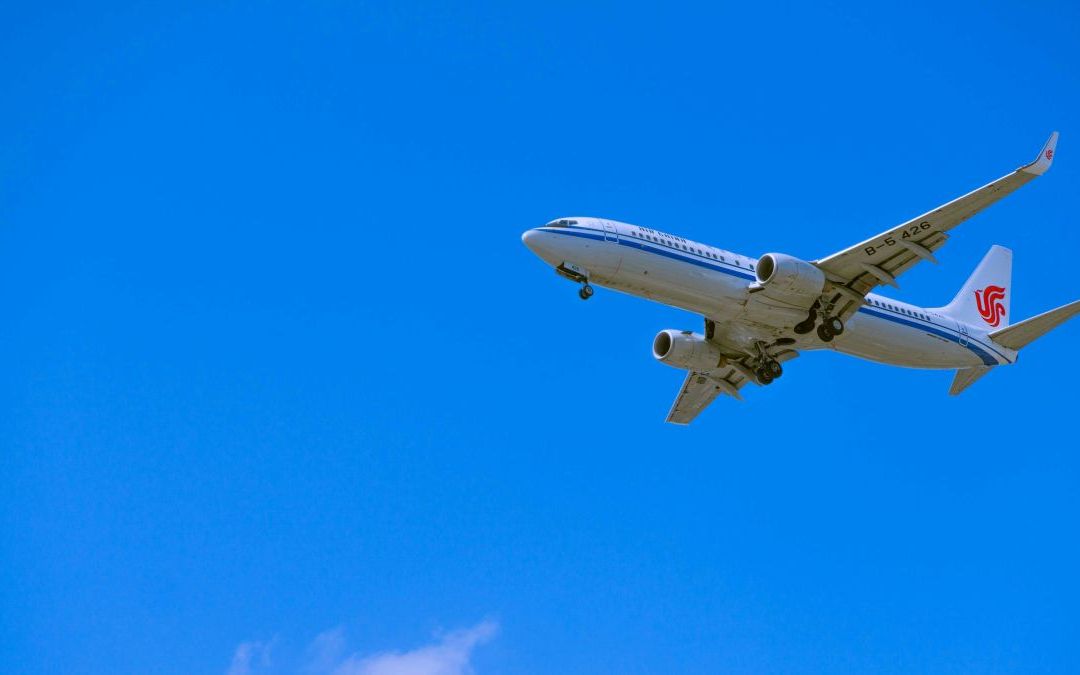
The Federal Aviation Administration (FAA) is also yet to certify the C919 for US operations. COMAC aircraft are currently in service with Air China, China Eastern Airlines, and China Southern Airlines. The smaller regional C909 jet is also in use across China, with orders confirmed from Air Cambodia and TransNusa.
Lacking certification from any Western aviation authority puts a brake on COMAC’s expansion plans. Ryanair CEO Michael O’Leary told Skift in March 2025 that he would order COMAC aircraft if they were allowed into the market and priced competitively. These comments drew the attention of US Congressman Raja Krishnamoorthi, who said:
US and European airlines should not be even contemplating the future purchase of airplanes from Chinese military companies.
However, as supply chain pressures continue to cause Airbus and Boeing to underdeliver, COMAC aircraft could fill a critical gap in the market to fuel airlines’ ambitious growth targets.
Join us at Aerospace Tech Week 2026.
For more like this, see:
by Elsie Clark | Jan 12, 2026 | AI & ML, Innovation, Sustainability
Industry body IATA has named the five risks that most threaten the aviation industry in 2026. With profit margins expected to remain tight at 3.9%, good decision planning and situational awareness will be critical in determining which airlines make it through the year unscathed.
1. Policy fragmentation
Last year saw the aviation industry thrown into chaos by tariffs, and Marie Owens Thomsen, Senior Vice President, Sustainability & Chief Economist, at IATA, reckons trade disruption will continue in the year ahead. However, this time policy fragmentation around the globe will have more impact.
From protectionism to divergence on sustainability and taxation, nations are more inclined than ever to sidestep industry bodies. Owens Thomsen notes:
Such policies raise little money for governments, have little or no impact on emissions, and make air transport more expensive.
2. Supply chain disruptions
This has been an ongoing theme for years now, but unfortunately pressure on supply chains remains high. IATA does not expect delays on aircraft orders to abate until the 2030s, and also highlights that this negatively impacts the pace on sustainable development.
3. Climate change-related disruptions
Rising temperatures are resulting in more extreme weather events. From violent snowstorms to heatwaves, the impact on all industries’ trade and infrastructure cannot be understated. In the years ahead, increased migration from ‘climate refugees’ will place further strain on air transport and immigration authorities.
4. Cyber threats and Artificial Intelligence (AI)
Airlines and airports are increasingly turning to technology to improve efficiency and manage greater passenger numbers. Yet the deployment of third-party tech providers also multiplies the frontiers for cyberattack. As a critical industry that hosts a wealth of sensitive data, the aviation world is especially vulnerable.
As for AI, the benefits could take years to realise, and the software is not infallible. Misinformation and loss of privacy could all damage relationships with passengers.
5. Macro-economic outlook
The weakening of the US dollar will have a significant impact on aviation, where over half of its cost base is invoiced in USD. While lower oil prices will benefit airlines, the world economy in general is not inclined to growth, threatening the aviation industry’s already narrow margins.
Nevertheless, IATA see reasons to be optimistic, with 4% of global GDP still linked to air travel. Additionally, they emphasise that a move towards sustainable aviation could generate far greater change than any economic policy.
Join us at Aerospace Tech Week 2026.
For more like this, see:
by Elsie Clark | Dec 8, 2025 | Innovation
Embraer has launched Smart Planning, an AI tool that will improve operational readiness and inventory management across its supply chain.
New data-driven process will offer the aircraft manufacturer visibility across the production line as it continues its digital transformation journey. AI pioneers Aquarela Analytics assisted on the project, which analysed over two terabytes of data across ten months. The two complementary methodologies — Embraer’s Agile framework and the Data Culture Methodology used by Aquarela Analytics — worked to extract, clean, and map data from Embraer’s operations.
Marcos Santos, CEO of Aquarela Analytics, noted
Throughout the process, we applied all of our expertise in data analysis, platforms, and artificial intelligence algorithms to improve, transform, and integrate Embraer’s operating system. It was a challenging project, where at each stage we deepened and broadened the scope as complexity and results were measured.
By creating this data architecture, Smart Planning has helped the Brazilian aerospace giant reduce operational costs and improve proactive decision-making. Dimas Tomelin, Vice President of Strategy, Digital and Innovation at Embraer, said:
Smart Planning is the most up-to-date data tool developed and integrated to make Embraer’s processes more effective. It consists of an interactive control panel on the materials used in the production process of our aircraft, helping the planning team in the management of purchases and stock levels to have more predictability in case of lack or excess of materials thanks to the use of artificial intelligence and a prediction model.
Ongoing geopolitical disruption, high labour costs, and material shortages have all compounded the aviation industry’s supply chain issues. These problems could cost as much as US$11 billion in 2025, industry body IATA warned earlier this year.
Join us at Aerospace Tech Week 2026 to discuss how digitisation and data can unlock greater supply chain efficiency.
For more like this, see:
by Elsie Clark | Nov 25, 2025 | Innovation
GE Aerospace are investing nearly US$53 million in their manufacturing facility in West Jefferson, North Carolina. The facility is responsible for critical components in the CFM LEAP engine, which powers commercial narrow-body aircraft.
Under the new project, a 35,000 square foot extension will be added to the manufacturing site, and more equipment purchased to boost production. Funding from local government is supporting the initiative, while GE Aerospace has committed to training North Carolinians to fill 40 new job roles.
Parts made at the West Jefferson facility include rotating parts, turbines, and spools, The planned upgrades will take place over three years as GE Aerospace seeks to address directly the supply chain issues plaguing the aerospace sector.
A report from IATA and Oliver Wyman found that supply chain challenges could cost airlines as much as US$11 billion in 2025. Geopolitical instability, material shortages, and labour availability have compounded existing bottlenecks, all while increasing costs.
However, aviation’s growth plans continue to rise, with airlines ordering greater volumes of aircraft than ever. Airbus and Boeing are both struggling to meet the demand for narrow-body aircraft, with delivery slots for the A320neo and 737 MAX sold out for the next decade. The rapid growth of low-cost carriers such as flydubai and Ryanair, alongside legacy carrier’s focus on premium narrow-body experiences, has placed more pressure on manufacturers.
GE Aerospace’s investment hopes to ease some of these supply chain constraints. However, with the facility not set to open for a further three years, the industry must still address a range of production challenges to tackle the supply chain conundrum.
Join us at Aerospace Tech Week 2026, where our dedicated supply chain track will discuss how the industry can build resilience and mitigate disruption.
For more like this, see:
by Elsie Clark | Oct 15, 2025 | MRO IT
A new report from IATA and Oliver Wyman, Reviving the Commercial Aircraft Supply Chain, forecasts that supply chain challenges could cost airlines more than US$11 billion in 2025.
This is largely due to the slow pace of aircraft production, which has been exacerbated by ever-increasing demand for air travel. In 2024, passenger demand rose by 10.4%, exceeding the capacity expansion of 8.7%, while the worldwide commercial backlog of aircraft reached historic high of 17,000.
Geopolitical instability, material shortages, and labour availability have compounded these supply chain challenges, forcing airlines to keep older aircraft in service for longer. This results in higher fuel costs, maintenance costs, engine leasing costs, and surplus inventory holding costs. According to IATA, these bottlenecks combined will cost airlines US$11 billion in 2025.
The report offers several suggestions for the aerospace industry to mitigate these problems. Willie Walsh, IATA’s Director General, commented:
Airlines depend on a reliable supply chain to operate and grow their fleets efficiently. Now we have unprecedented waits for aircraft, engines and parts and unpredictable delivery schedules. […]
There is no simple solution to resolving this problem, but there are several actions that could provide some relief. To start, opening the aftermarket would help by giving airlines greater choice and access to parts and services. In parallel, greater transparency on the state of the supply chain would give airlines the data they need to plan around blockages while helping OEMs to ease underlying bottlenecks.
Additionally, the report recommends that the industry improve its use of data, including accelerating predictive maintenance and data sharing to reduce downtime and optimise existing inventory.
Matthew Poitras, Partner in Oliver Wyman’s Transportation and Advanced Industrials practice, added:
Today’s aircraft fleet is larger, more advanced, and more fuel efficient than ever before. However, supply chain challenges are impacting airlines and OEMs alike. We see an opportunity to catalyse an improvement in supply chain performance that will benefit everyone, but this will require collective steps to reshape the structure of the aerospace industry and work together on transparency and talent.
Join us at Aerospace Tech Week 2026, where our dedicated supply chain track will discuss how the industry can build resilience and mitigate disruption.
For more like this, see:



You must be logged in to post a comment.