
by Elsie Clark | Dec 12, 2025 | Flight Ops IT, Innovation
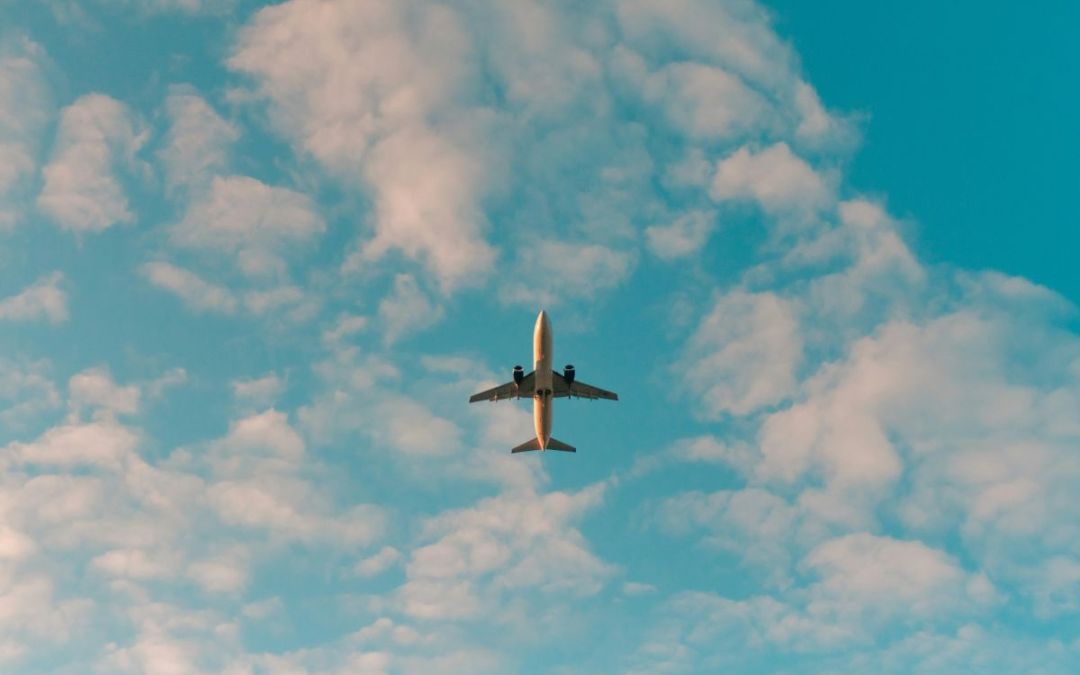
European aerospace giant Airbus, in collaboration with Delta, Air France and Virgin Atlantic, has successfully completed a critical phase of flight testing for its innovative ‘fello’fly’ project. This uses wake energy retrieval (WER) to significantly cut fuel burn on long-haul routes.
The initiative, which draws direct inspiration from the ‘V’ formation adopted by migrating geese, involves a trailing aircraft positioning itself within the optimal updraft created by the lead jet. This highly precise manoeuvre reduces the trailing aircraft’s drag, resulting in a substantial increase in fuel efficiency for long-haul operations. Airbus and their partners worked under the SESAR Joint Undertaking GEESE project.
An Airbus spokesperson noted:
While the actual wake energy retrieval flights have not been tested yet on commercial flights, the successful completion of the rendezvous process is a crucial first step toward future efficiency gains.
Airbus has stated the method could deliver fuel savings of up to 5% on Transatlantic voyages. Specific flight demonstrators showed a resulting reduction in CO2 emissions of six tonnes per paired operation. Other collaborators included AirNav Ireland, DSNA, EUROCONTROL Network Manager, French bee, and NATS. Airbus described EUROCONTROL’s Innovation hub interface as ‘key’ to proving the concept’s safety in real-world conditions.
The project addresses a critical challenge for the future of commercial aviation, particularly for wide-body routes. For such aircraft flying over oceans, batteries do not represent a viable sustainability solution.
While the technical solution is now proven, the project’s next steps will focus on operational integration. This includes securing the necessary regulatory changes and working with Air Navigation Service Providers (ANSPs) to adapt procedures, ensuring that aircraft can safely fly in the close 1.5-nautical-mile proximity required for WER.
Join us at Aerospace Tech Week 2026, where we’ll be joined by leading speakers from EUROCONTROL.
For more like this, see:
by Elsie Clark | Dec 9, 2025 | Connectivity
Research from IATA has found that air traffic control (ATC) delays in Europe have doubled over the past decade.
This increase has far outpaced the rate of traffic growth (6.7%), and affected 1.1 billion passengers. IATA estimates the delays have collectively cost the industry €16.1 billion since 2015. Delays due to weather and strikes were not covered in the analysis, which found staff shortages to be overwhelmingly responsible for ATC’s poor performance.
Staff capacity-related disruptions have increased by 179.7% and staffing-related delays by 201.7% since 2015. IATA Director-General Willie Walsh commented:
We’re now seeing the consequences of Europe’s failure to get a grip on air traffic control. A small, expected improvement in 2025 from a very bad 2024 does not change the deterioration that we have seen over the last decade. Airlines and travellers were promised a Single European Sky that would cut delays and reduce fuel burn through more efficient navigation and routes. Instead, passengers have seen delays more than double.
10 of the 39 European Air Navigation Service Providers (ANSP) were responsible for 87% of all delays. France (DSNA) and Germany (DFS) alone were responsible for more than 50% of delays. These statistics demonstrate how a handful of countries are having a disproportionately negative impact on the continent’s ATC performance.
Walsh added:
While Eurocrats debate ways to increase the burden of EU261 passenger compensation, the root cause of much of the delay suffered by travellers—air traffic control—escapes without action or censure. And Europe’s connectivity and competitiveness suffer from schedules that must accommodate ATC inefficiency. It is completely unacceptable.
Join us at Aerospace Tech Week 2026, where we’ll be joined by Heiko Teper, Head of Strategy and Technical Deployment, SESAR Deployment Manager.
For more like this, see:
by Elsie Clark | Oct 17, 2025 | Connectivity, Innovation
The SESAR Joint Undertaking (JU) and the Xunta de Galicia have signed a memorandum of cooperation (MoC) to advance air traffic management (ATM).
By partnering with the Galician government, SESAR JU will explore how regional capabilities can contribute to the Digital European Sky programme. This initiative aims to upgrade ATM infrastructure across Europe to reduce carbon emissions and optimise air traffic flow.
María Jesús Lorenzana Somoza, Regional Minister of Economy and Industry for Xunta de Galicia, commented:
Galicia has long recognised aerospace as a strategic sector for our economy. Through this cooperation with SESAR, we aim to position Galicia as a testbed for innovation and to ensure that our research and industrial capabilities actively contribute to Europe’s technological leadership in aviation.
The Galician partnership is the second regional agreement SESAR JU has orchestrated. As Galicia launches its Strategic Security, Defence and Aerospace Initiative 2025–2030, the region’s expertise in satellites, flight simulation, and unmanned aerial vehicles (UAVs) provides the ideal testing bed for innovative air traffic solutions. Regional collaborations also help the SESAR JU to advance European sustainability and connectivity more holistically.
Andreas Boschen, Executive Director of SESAR JU, added:
This agreement shows how regional innovation ecosystems can contribute to the Digital European Sky. By joining forces with Galicia, we can translate cutting-edge research into tangible benefits for citizens, such as safer, more sustainable, and more connected air mobility.
Join us at Aerospace Tech Week 2026, where we’ll be joined by Heiko Teper, Head of Strategy and Technical Deployment, SESAR Deployment Manager, to discuss ongoing progress of the Digital European Sky initiative.
For more like this, see:



You must be logged in to post a comment.