50 years after its first flight, could we revive Concorde?

50 years after its first flight, could we revive Concorde?

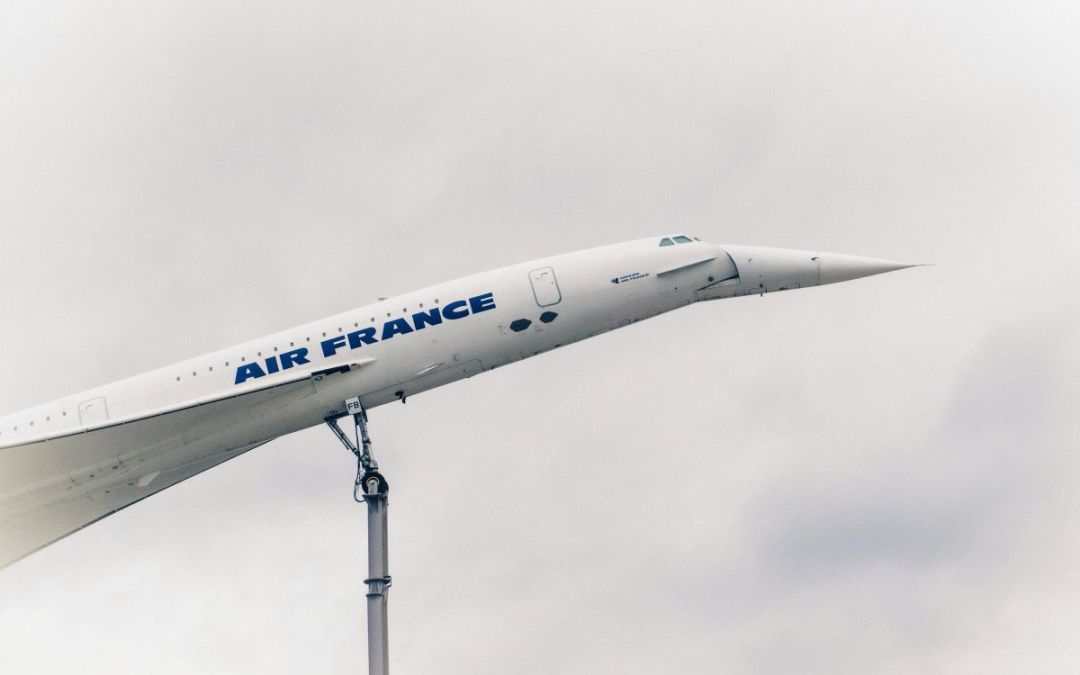
An icon of British and French engineering, the first commercial Concorde flight took off 50 years ago on 21 January 1976. But more than two decades after the famous jet touched down for the last time, are supersonic aircraft making a return above the Atlantic?

Capable of flying between New York and London in three-and-a-half hours, Concorde could travel at 1,354 miles (2,179 km) per hour — more than twice the speed of sound. The jet has come to epitomise both technological prowess and luxury, with tickets for a one-way flight in 1976 costing an eye-watering US$2,800 in today’s money.

An executive order from President Donald Trump has lifted the ban on commercial supersonic planes flying over US land, potentially opening a door for a greater number of routes. Meanwhile, companies are developing new premium supersonic commercial jets with modern technology to make them more energy-efficient. Could these twin developments pave the way for supersonic flight taking off again in the next five years?

The heirs to Concorde

Based in Colorado, Boom Supersonic are one developer hoping to revive the age of Concorde. Its Overture jet features an all-premium cabin that could host 60-80 passengers in a swish business-style experience. Compatible with sustainable aviation fuel (SAF), Boom claim the aircraft can reach speeds of Mach 1.7 and serve more than 600 global routes. A number of airlines have already placed pre-orders for Overture, including American Airlines, Japan Airlines, and United Airlines.

Overland civil supersonic flights had been banned in the US since 1973 due to concerns over the noise from sonic booms, as well as potential damage to property and people. However, Trump lifted this ban in June 2025, with the White House claiming in a press release:

Advances in aerospace engineering, materials science, and noise reduction now make supersonic flight not just possible, but safe, sustainable, and commercially viable. This order begins a historic national effort to reestablish the United States as the undisputed leader in high-speed aviation.

This executive order opens up the West Coast of the US to supersonic travel. But despite the White House’s claims, is the world ready to embrace Concorde-style travel once more?

Why was Concorde discontinued in the first place?

For all its technological achievements, Concorde faced a number of problems that ultimately contributed to it being retired from service in 2003. To reach its incredibly high speeds, the aircraft needed to consume 6,771 gallons of expensive jet fuel in a single transatlantic flight, making it difficult to run at a profit. Restrictions on overland travel further inhibit revenue, ultimately limiting Concorde deployment to routes between New York, Washington DC, London, and Paris.

Concorde’s environmental impact made it unpopular with the public. Sonic booms resulted in noise complaints, and residents reported windows being broken when the planes flew overhead. Additionally, Concorde was extremely carbon-intensive, producing three times more CO2 than subsonic planes and leaving visible air pollution in its wake.

Concorde’s decline was further accelerated by the Air France Concorde crash in 2000 that killed over 100 people, and the drop in air travel following the 9/11 terrorist attacks. But the aircraft’s ultimate failure lay with its unprofitability and environmentally-unfriendly technology.

Would a modern Concorde face the same problems?

Sustainability remains a huge question for the new supersonic jets. Boom Supersonic claim Overture is ‘SAF-compatible’. However, the sustainable fuels market is nowhere near ready to supply subsonic aircraft, let alone the supersonic, on the scale required. As it stands, there can be no justification for launching a jet that could have triple the carbon impact of a regular plane in an industry already struggling to meet net-zero targets.

Furthermore, experts have questioned whether there is sufficient demand for a modern Concorde. Business jets are more popular than ever, and wealthier customers may prefer to avoid commercial aircraft, no matter how fast they fly, when they could travel privately on their own schedule.

In its heyday, one of Concorde’s key benefits was to help business travellers get across continents in as little time as possible. Many meetings are now hosted online through Zoom or Teams, reducing the need for travel. And at the same time, more airlines are investing in high-speed inflight WiFi through Starlink, meaning work can continue even at 30,000 feet in the sky. Is the length of the flight so important now that the customer experience has improved significantly through better connectivity, entertainment, and comfort?

Blake Scholl, CEO of Boom Supersonic, remains confident. He told The Independent in 2025:

We believe in a world where more people can go to more places more often. Sustainable supersonic travel unlocks new possibilities for business relationships, prospects for vacation and opportunities for human connection.

Join us at Aerospace Tech Week 2026. 

For more like this, see:

JetBlue launch aircraft maintenance technician training scheme

JetBlue launch aircraft maintenance technician training scheme

JetBlue has introduced a substantial augmentation to its training portfolio with the launch of ‘Gateway University – Tech Ops’, a brand-new programme designed to provide students with a direct route into permanent positions as aircraft maintenance technicians (AMTs).

This scheme expands upon the airline’s existing internal Technical Operations Gateways and, for the first time, extends the opportunity to individuals outside of the organisation to enter a structured, clearly defined training-to-employment pathway.

The initiative begins with two academic partners: Vaughn College of Aeronautics and Technology in New York and Cape Cod Community College in Massachusetts. Both are institutions accredited by the Federal Aviation Administration (FAA) and possess established links to JetBlue’s workforce requirements.

David A. Marcontell, vice president of technical operations at JetBlue, said:

AMTs are integral to our industry, working days, nights, weekends and holidays ensuring safety, reliability, and efficiency on every flight.

JetBlue’s home in the Northeast sits at the centre of our operations and many of our current technicians were trained at these schools. We know the skilled talent available well here and streamlining the path from early development to a full-time job at a major airline is as much a benefit to us as it is to the many candidates who are often dissuaded by the post graduate employment uncertainty.

Students accepted into the programme are guaranteed a conditional job offer, will receive mentorship from experienced JetBlue technicians, be given full support throughout the requisite coursework and FAA certification process, and move directly into an AMT role once they have finished.

JetBlue has commenced accepting the first intake of students, with the graduates expected to join the Technical Operations team in the year 2026. The carrier has indicated plans for further expansion to other partner colleges across its maintenance network.

According to Oliver Wyman, the aviation industry could face a shortage of as many as 48,000 mechanics by 2027 if steps are not taken quickly to replace ageing staff.

Join us at Aerospace Tech Week 2026 to discuss training and development pathways in aviation.

For more like this, see:

easyJet to expand engineering apprenticeships as workforce ages

easyJet to expand engineering apprenticeships as workforce ages

British low cost carrier (LCC) easyJet has launched a fresh apprenticeship recruitment drive, as research shows that an ageing workforce threatens to create significant staff shortages across aviation and aerospace.

The UK Civil Aviation Authority found that over a quarter (27%) of British aircraft maintenance personnel will retire in the next decade. With over 22 billion air passengers expected by 2053, the industry must fill these gaps if it is to maintain safety standards, manage new aircraft, and unlock the full potential of maintenance tech, including AI.

easyJet’s apprenticeship programme will give students hands-on training and pay them to learn. Applications for 2026 are now open, with the scheme to launch at easyJet’s Gatwick and Luton hubs, and plans in place to expand to Manchester, Liverpool, Bristol, Edinburgh and Glasgow.

Brendan McConnellogue, director of engineering and maintenance at easyJet, said:

Today’s young people are motivated by purpose – they want to solve problems, travel, innovate and play their part in building a more sustainable future.

Our engineering apprenticeships give candidates the chance to gain valuable experience working on our state-of-the-art fleet while helping to deliver on aviation’s commitment to decarbonisation.

easyJet survey reveals depth of aviation recruitment problem

As well as expanding their apprenticeships, easyJet conducted a survey of 2,000 16-24 year olds to understand further the challenges of replacing the ageing aviation workforce.

65% of respondents said that they had never considered a career in engineering, with many holding misconceptions around cost, qualifications, and accessibility. A significant gender gap also emerged: 52% of young men said they had considered engineering as a career, compared with only 36% of women

However, the survey also highlighted how young people’s career preferences align well with the world of aviation engineering. 44% of respondents wanted to help tackle climate change, and 43% of that group saw engineering as a good career for helping develop low-emission technologies.

The UK government’s aviation minister, Keir Mather, commented:

[easyJet’s] engineering apprenticeship scheme marks an important step in continuing to build a highly skilled aviation workforce fit for the future.

Initiatives like easyJet’s unlock exciting, flexible routes into aviation, backing an expanding sector whilst offering young people valuable opportunities and long-term careers.

Join us at Aerospace Tech Week 2026 to discuss the future of aircraft engineering and maintenance.

For more like this, see: