
by Elsie Clark | Jan 19, 2026 | Innovation
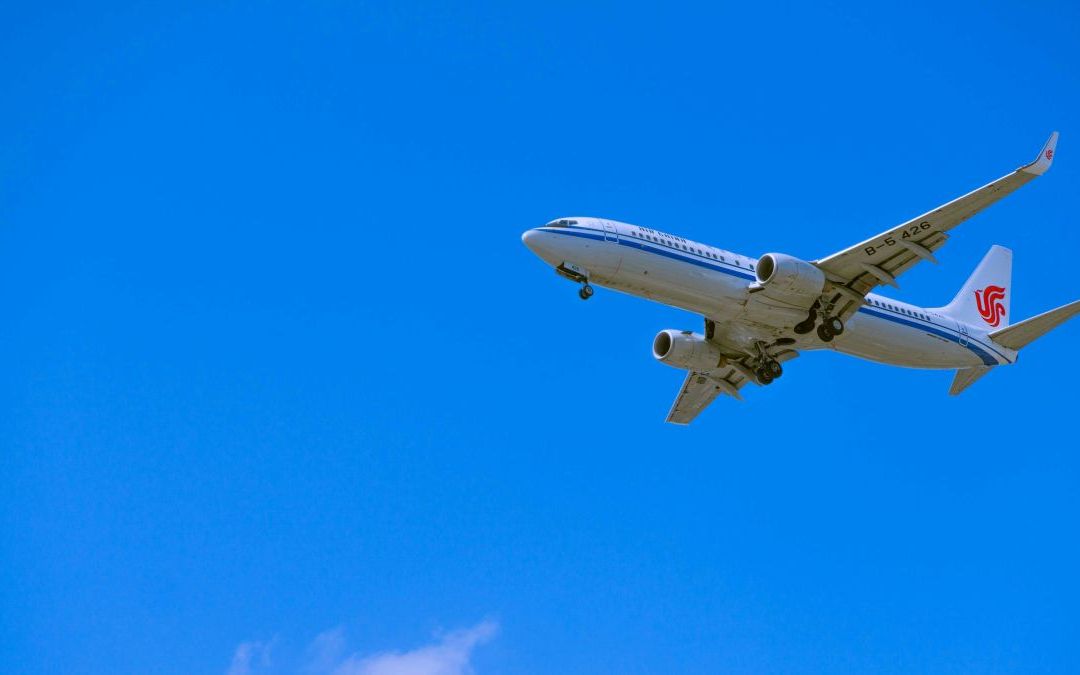
The South China Morning Post has confirmed that pilots working for the European Aviation Safety Agency (EASA) have been testing the COMAC C919 plane in Shanghai.
China’s rival to the Airbus A320 and Boeing 737, the C919 applied for EASA certification in 2019, but the process was delayed by the Covid-19 pandemic. Approval efforts restarted in 2023, and EASA confirmed that new ‘validation’ tests in Shanghai involved foreign pilots
The Federal Aviation Administration (FAA) is also yet to certify the C919 for US operations. COMAC aircraft are currently in service with Air China, China Eastern Airlines, and China Southern Airlines. The smaller regional C909 jet is also in use across China, with orders confirmed from Air Cambodia and TransNusa.
Lacking certification from any Western aviation authority puts a brake on COMAC’s expansion plans. Ryanair CEO Michael O’Leary told Skift in March 2025 that he would order COMAC aircraft if they were allowed into the market and priced competitively. These comments drew the attention of US Congressman Raja Krishnamoorthi, who said:
US and European airlines should not be even contemplating the future purchase of airplanes from Chinese military companies.
However, as supply chain pressures continue to cause Airbus and Boeing to underdeliver, COMAC aircraft could fill a critical gap in the market to fuel airlines’ ambitious growth targets.
Join us at Aerospace Tech Week 2026.
For more like this, see:
by Elsie Clark | Oct 28, 2025 | Sustainability
The European Union Aviation Safety Agency (EASA) says that the industry is on track to achieve its target of 6% sustainable aviation fuel (SAF) by 2030.
The ReFuelEU Aviation Annual Technical Report found that 0.6% of Europe’s supplied aviation fuel for 2024 was SAF. This percentage needs to increase rapidly, but nevertheless saved 714 kilotonnes of carbon emissions, the equivalent of around 10,000 flights between Madrid and Paris.
Overall, EASA believes the EU is on track to achieve its 6% blending target in the next five years. Whether the bloc hits its interim target of 2% SAF in 2025 will be assessed at the close of this calendar year.
China is Europe’s biggest supplier of biofuel
EASA’s findings also highlight the ongoing cost obstacles to SAF adoption. Currently, the average price of SAF sits at €2,085/tonne, compared to €734/tonne for conventional jet fuel. Until the cost becomes more competitive, it is difficult to see how SAF use can scale successfully. Earlier this year, Airlines for Europe (A4E) criticised the EU for imposing SAF mandates without taking action to create a viable SAF market. Nevertheless, EASA’s report affirms progress on the 6% target.
Europe’s biggest producer of SAF is currently Finland, responsible for 10% of supply. However, 69% of feedstock originates outside of the EU, with China the biggest supplier.
Maria Rueda, EASA’s safety management, sustainability and global outreach director, said:
This first annual technical report marks an important milestone and makes clear that the EU has taken important first steps.
A functioning reporting system is now in place, initial reporting compliance levels are solid, and SAF delivery is happening across multiple member states. This report sets an important benchmark for our sustainability efforts in the future.
Join us at Aerospace Tech Week 2026 to discuss the future of sustainable aviation.
For more like this, see:


You must be logged in to post a comment.