
by Elsie Clark | Jan 19, 2026 | Innovation
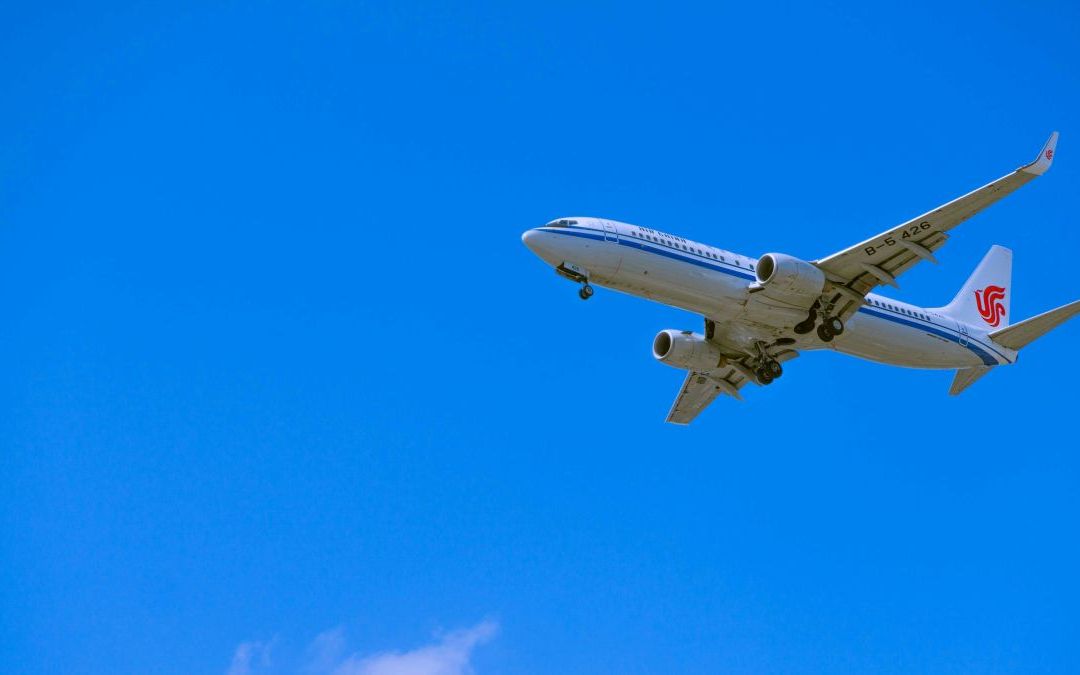
The South China Morning Post has confirmed that pilots working for the European Aviation Safety Agency (EASA) have been testing the COMAC C919 plane in Shanghai.
China’s rival to the Airbus A320 and Boeing 737, the C919 applied for EASA certification in 2019, but the process was delayed by the Covid-19 pandemic. Approval efforts restarted in 2023, and EASA confirmed that new ‘validation’ tests in Shanghai involved foreign pilots
The Federal Aviation Administration (FAA) is also yet to certify the C919 for US operations. COMAC aircraft are currently in service with Air China, China Eastern Airlines, and China Southern Airlines. The smaller regional C909 jet is also in use across China, with orders confirmed from Air Cambodia and TransNusa.
Lacking certification from any Western aviation authority puts a brake on COMAC’s expansion plans. Ryanair CEO Michael O’Leary told Skift in March 2025 that he would order COMAC aircraft if they were allowed into the market and priced competitively. These comments drew the attention of US Congressman Raja Krishnamoorthi, who said:
US and European airlines should not be even contemplating the future purchase of airplanes from Chinese military companies.
However, as supply chain pressures continue to cause Airbus and Boeing to underdeliver, COMAC aircraft could fill a critical gap in the market to fuel airlines’ ambitious growth targets.
Join us at Aerospace Tech Week 2026.
For more like this, see:
by Elsie Clark | Jan 16, 2026 | Connectivity, MRO IT
In a new report, Airbus predict that the centre of aviation’s afterservices market is shifting eastwards. The manufacturing and technology firm’s latest Global Services Forecast (GSF) asserts that the sector in China will more than double in value over the next 20 years, rising from US$24.8 billion in 2025 to US$63.8 billion in 2044.
The country hosts the single largest Airbus fleet in the world, with airlines such as China Southern, China Eastern, and Xiamen Air operating hundreds of Airbus aircraft between them. And the growth shows no signs of slowing: domestic passenger volumes grew by 17% in 2025 compared to the pre-pandemic year 2019, and the Global Services Forecast expects China to receive over 9,500 new aircraft in the next two decades.
Airbus add that superior connectivity services will result in huge savings across the Chinese aviation world. The report predicts that the industry will reduce expenses by US$2.2 billion with digital tech ops and a further US$5.7 billion through fuel cost reduction. The digital and connectivity space is the fastest-growing afterservices market in the country: currently worth US$1.8 billion, Airbus predict its value will rise to US$5.1 billion by 2041.
Other important segments in China include off-wing maintenance, which will be increasingly in-demand due to ageing fleets. At the same time, on-wing maintenance will become a US$6.8 billion market to care for the expected 9,500 new aircraft.
Airbus note that training and upskilling will be key to achieving growth: China’s aviation industry will need to be supported by an additional 485,000 personnel by 2044, including pilots and technicians.
Join us at Aerospace Tech Week 2026 to discuss the future of MRO.
For more like this, see:
by Elsie Clark | Jan 5, 2026 | Innovation
The Chinese city of Shanghai has set out a new strategy for aerospace development that aims to make it the world’s eVTOL capital by 2028.
According to policy documents, Shanghai’s ‘low-altitude economy’ could reach a value of CNY80 billion (US$11.4 billion) within two years. 10 leading firms will form a cluster for development, including eVTOl, drone, and other advanced air mobility (AAM) companies. Through investment across the supply chain, the city is targeting the production of 500 low-flying aircraft a year by 2028.
Shanghai is already established as China’s hub for eVTOL development. More than half of the country’s industry is concentrated there, including leading developers such as Vertaxi and TCab. EHang, based further West in Guangzhou, is another advanced eVTOL developer whose autonomous air taxis were recently trialled in a real-world test in Bangkok, Thailand.
Chinese businesses face stiff competition in the eVTOL adoption race. Middle Eastern countries including Bahrain, Saudi Arabia, and the United Arab Emirates (UAE) have all signed partnerships with rival Western AAM companies, including Eve Mobility and Joby. Dubai in the UAE plans to launch its first commercial air taxi services later this year, while through Archer Aviation the city of Miami in the US also hopes to see eVTOLs take flight in 2026.
Join us at Aerospace Tech Week 2026 to discuss the future of advanced air mobility.
For more like this, see:
by Elsie Clark | Nov 26, 2025 | Innovation
Chinese company EHang has carried out the first-ever urban autonomous passenger eVTOL flight in Bangkok, Thailand.
The pilotless two-seat EHang 216-S executed multiple take-offs and landings in Bangkok’s business district as part of an advanced air mobility (AAM) sandbox initiative. In partnership with the Civil Aviation Authority of Thailand (CAAT), the event represents a significant milestone for autonomous air taxis.
Among the passengers to fly in the aircraft was Air Chief Marshal Manat Chavanaprayoon, the Director General of CAAT, who became the first head of a civil aviation authority to ride the EHang aircraft. Conor Yang, Chief Financial Officer of EHang, said:
With the support of the CAAT, Thailand is highly likely to achieve the world’s first commercial eVTOL operations using an innovative regulatory approach of “sandbox”, creating a demonstration model for Southeast Asia and the world.
This week’s display in Bangkok hopes to prove the commercial potential of the tech in Thailand, a country EHang has identified as a significant potential market. Plans anticipate the company to collaborate with local partners in establishing air taxi services across the capital, as well as at Pattaya, Phuket, and Koh Samui.
Earlier in November, competitors Joby Aviation completed the world’s first crewed eVTOL flight in a demonstration at the Dubai Airshow, as commercialisation of AAM tech becomes imminent.
Join us at Aerospace Tech Week 2026 to discuss the regulation and innovation needed to power AAM.
For more like this, see:



You must be logged in to post a comment.