
by Elsie Clark | Feb 26, 2026 | Avionics, Innovation
Avionyx and Rapita Systems have announced they are partnering to accelerate avionics development. With software compliance issues constraining eVTOL and aircraft supply chains, the companies say their collaboration will help the aerospace industry hit regulatory targets faster.
Avionyx are owned by Joby Aviation, the electric air taxi developers. Focused on engineering, their capabilities complement Rapita’s expertise in software verification tools. Getting software to adhere to rigorous industry standards can take years and millions in investment, but by partnering the two businesses say they can create a ‘one-stop shop’ for safety and compliance.
Tom Ferrell, General Manager at Avionyx said:
This collaboration enables Avionyx to offer our customers a faster, more efficient path to certification, even for the most demanding DAL A and multi-core projects. Rapita’s tools, combined with our decades of aerospace experience, create a powerful solution for programs across the Americas.
Rapita say the partnership will help companies find and fix software bugs ‘in hours instead of weeks’. It will also support investment in the most powerful computer chips while remaining compliant with aviation regulation. If successful, the collaboration will reduce supply chain delays and associated costs. Jamie Ayre, Chief Commercial Officer at Rapita Systems, commented:
Rapita and Avionyx joining forces is a logical union given our shared focus on supporting high-criticality aerospace projects and commitment to solving the industry’s hardest challenges.
Join us at Aerospace Tech Week 2026 to discuss the future of avionics.
For more like this, see:
by Elsie Clark | Feb 4, 2026 | Avionics, Innovation
The Cathay Group has selected Thales to provide advanced avionics for its latest fleet expansion. The agreement covers 30 Airbus A330neo aircraft for Cathay Pacific and 18 A321neo/A320neo jets for its budget carrier, HK Express.
A central feature of the deal is the PureFlyt Flight Management System (FMS). Renowned for its trajectory precision, this FMS uses an intuitive interface to streamline pilot tasks. By optimising flight paths, the system significantly reduces fuel consumption and eases airspace congestion.
Safety is further bolstered by the inclusion of 5G-immune Radio Altimeters, which prevent interference from mobile networks. The aircraft will also be fitted with the T3CAS collision avoidance system and Head-Up Displays (HUD), allowing pilots to monitor critical data while keeping their eyes on the horizon.
Thomas Mouveaux, General Manager APAC for Aviation Global Services, Thales, said:
Thales is committed to providing airlines around the world with innovative products and services and a premium customer experience. We look forward to supporting Cathay Pacific and HK Express with our integrated, next-generation technologies that enhance flight safety, operational efficiency, and cockpit connectivity.
Cathay Pacific’s A330neo fleet will receive an additional boost with the AVIATOR S satellite communications system, providing high-speed, secure data links for improved operational flexibility. These technologies combine to deliver superior fuel efficiency and lower emissions through more accurate flight pathing. Furthermore, the integration of advanced collision technology and HUDs provides flight crews with much higher levels of situational awareness. By adopting 5G-resilient hardware and reliable connectivity, the group ensures its fleet is fully prepared for the complexities of modern airspace..
Join us at Aerospace Tech Week 2026 to discuss the future of avionics.
For more like this, see:
by Elsie Clark | Jan 20, 2026 | Avionics, Innovation
A new integrated platform from Curtiss‑Wright and Green Hills Software provides a computing solution for safety-critical avionics and aerospace systems.
Boasting advanced processing and real-time operating capabilities, the off-the-shelf design promises to reduce integration risk and accelerate technological adoption for safety-critical systems.
Lee Brown, general manager of C5ISR at Curtiss‑Wright Defense Solutions, said:
This solution delivers a modular and safety‑certifiable computing foundation that reduces integration risk and helps customers bring critical capabilities to market faster. As technology cycles accelerate, it’s essential that we support our customers with proven tools to meet safety requirements while keeping pace with mission needs. This collaboration helps accomplish both.
The V3‑1222 processing module is based on an Intel Core i7 processor. Additional computing powers help protect the system against remote and physical attacks. While the platform could be used in tactical radar and sensor function, it also has a range of applications across civil aviation, including digital cockpits, primary and multi‑function displays, and enhanced flight vision systems.
Join us at Aerospace Tech Week 2026 to discuss the future of avionics.
For more like this, see:
by Elsie Clark | Dec 10, 2025 | Avionics, Innovation
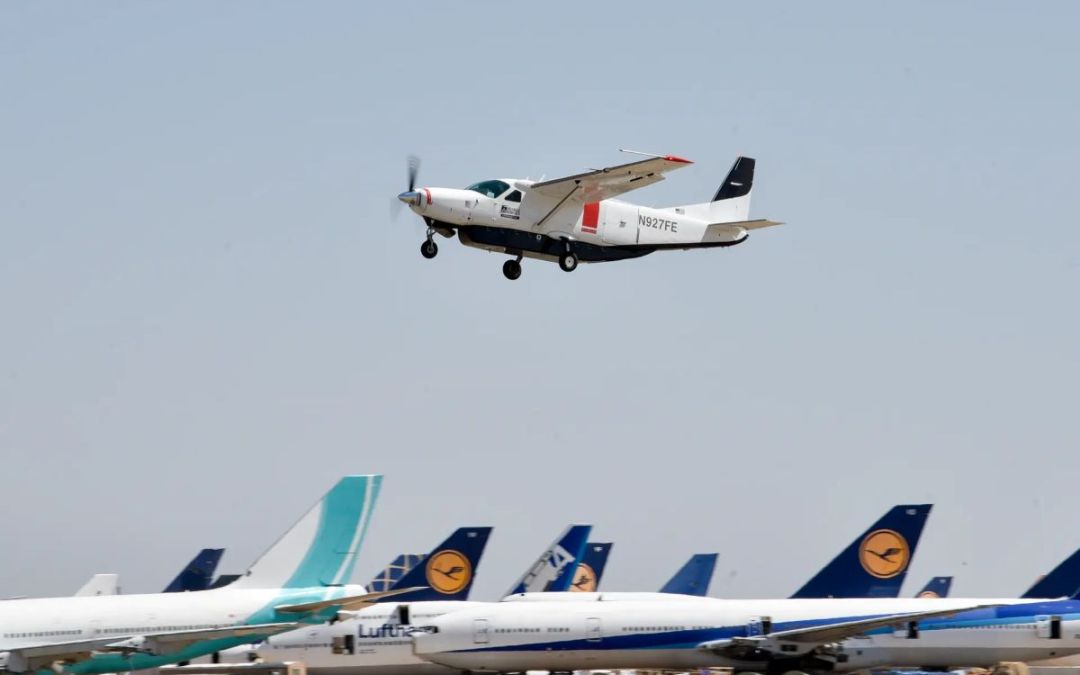
Reliable Robotics has signed a contract with NASA’s Aeronautics Research Mission Directorate (ARMD) to test its Cessna 208B Caravan at airports. Data collected from the flights will help inform the FAA and Standards Development Organizations (SDOs) as they set regulations for uncrewed aircraft systems.
Providing the tech for continuous autopilot engagement through all phases of flight, including auto-taxi, auto-takeoff and auto-landing, Reliable Robotics’ mission is to make flight safer. Designed for cargo operations, the company will use the new agreement with NASA to test interactions with air traffic control and potential contingency scenarios. There will be no pilot onboard during the final flight demonstration.
Robert Rose, CEO and co-founder, Reliable Robotics, said:
This testing campaign comes at a unique moment in time, when safety-enhancing aircraft autonomy is rapidly nearing FAA certification and entry into service for regional air cargo and military use cases. Efforts like this are how we continue to advance the necessary public policy ecosystem. We deeply value the continued partnership with NASA to conduct testing that will advance industry-wide efforts to expand remotely piloted aircraft operations at airports.
After the tests, data will be passed on to NASA, FAA, and SDOs to develop Minimum Operational Performance Standards (MOPS) and Minimum Aviation System Performance Standards (MASPS) for UAS. Demonstrating this technology in real-world environments is essential for proving — and enhancing — their safety in advance of commercial launch.
Join us at Aerospace Tech Week 2026 to discuss the future of uncrewed aircraft systems.
For more like this, see:
by Elsie Clark | Nov 20, 2025 | Avionics, Connectivity
The International Air Transport Association (IATA) are calling for safeguards around the deployment of 5G/6G to protect avionics systems and radio altimeters.
IATA has presented a paper at the International Telecommunication Union (ITU) WP5B Meeting in Geneva, Switzerland that outlines priority areas for protection. Radio altimeters, which need spectrum availability, must be taken into consideration in 5G planning to ensure aircraft and crew operate at optimum situational awareness.
Guiding the ITU’s studies will inform the output of the World Radiocommunications Conference 2027 (WRC-27), which will determine the technical conditions for 5G and 6G deployment.
Nick Careen, IATA Senior Vice President Operations, Safety and Security, said:
The benefits of 5G and 6G can never come at the cost of aviation safety. Spectrum decisions must be based on real-world aircraft operations, not idealized telecommunications industry modelling. That means ensuring ITU studies fully reflect the most demanding conditions pilots face. With input from aviation users, WRC-27 must deliver clear global rules to ensure the safe coexistence of radio altimeters and other safety-critical avionic systems with next-generation telecom networks across all phases of flight
In many countries, telecommunications providers have voluntarily implemented measures to avoid interference with o the Radio Altimeter (RAD ALT) allocation (4.2–4.4 GHz). However, in countries such as Canada, these temporary measures are about to expire, potentially leaving aviation communications vulnerable.
Careen added:
Current 5G mitigations were never designed as a long-term solution and several will expire within months. At the same time, more resilient radio altimeters will not reach airlines until the next decade. That leaves a significant mitigation gap. With new spectrum auctions underway and protections being lifted in key markets, regulators must not assume safety will take care of itself. The industry needs clear, consistent safeguards to bridge the period before new altimeters are available.
Join us at Aerospace Tech Week 2026 to discuss the impact of 5G and 6G on aviation and aersopace.
For more like this, see:





You must be logged in to post a comment.