
by Jessica Brownlow | Feb 10, 2025 | MRO IT, Video
Supply chain challenges can lead to significant disruption for airlines as a result of long lead times, high procurement costs, and the unpredictability of unplanned maintenance. In the International Air Transport Association (IATA)’s 2025 financial outlook for the global airline industry, the association predicted supply chain challenges would continue to restrict airline profitability and growth into 2026 despite strong passenger demand.
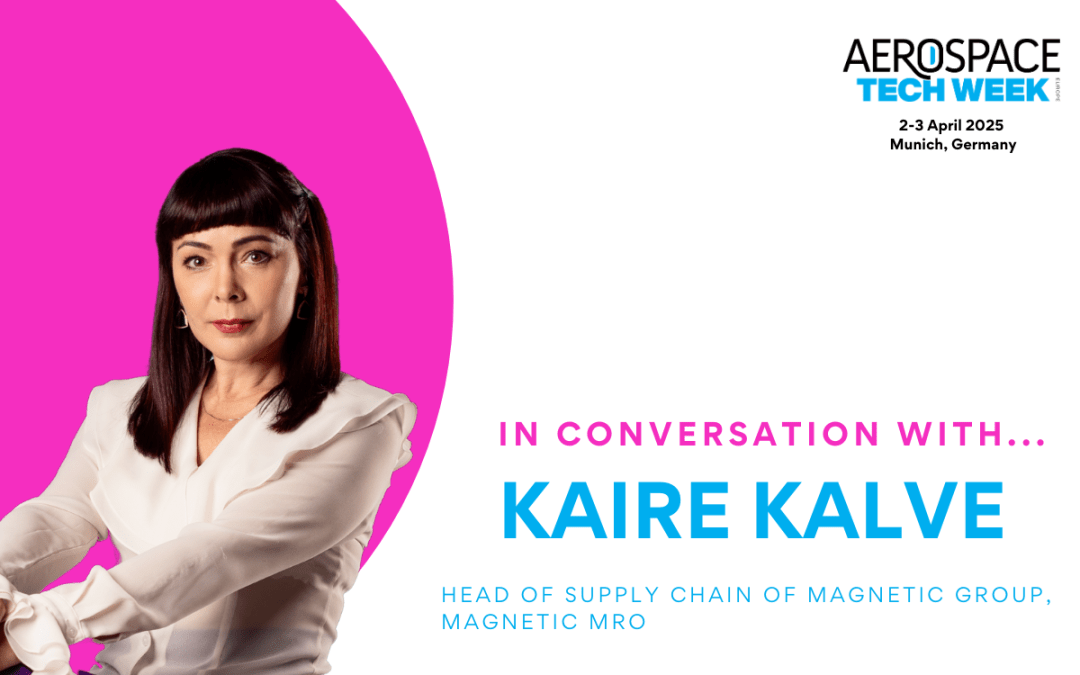
However, technology can ease these challenges, supporting a streamlined and proactive approach to purchasing. Magnetic MRO use an AI-driven purchasing system which has delivered tangible benefits. Speaking on this, the Head of Supply Chain of Magnetic Group, Kaire Kalve joined for a five-minute conversation, illustrating both the benefits of AI-driven procurements and the challenges of AI implementation.
Thinking about next steps in maintenance technology, Kalve added:
“In maintenance, we’re actually soon expecting the next step, where AI algorithms can monitor aircraft systems so that it will help airlines to perform more predictable maintenance, reduce downtime, and improve overall fleet efficiency. And if we are looking even further, then aircraft may be built with materials that actually repair themselves—so this really makes flying much safer. Because can you imagine that while flying, if there are small defects or cracks, they will be automatically repaired.”
Watch the full interview below to learn more.
Questions asked include:
- Can you briefly tell us a bit about Magnetic MRO and your role within the company?
- Magnetic MRO uses an innovative AI-based purchase management system. But before we get into detail on this, could you outline the severity of the supply chain challenges the industry has been tackling and explain the knock-on effect these can have?
- How has the introduction of AI made tangible changes to this?
- What were some of the major challenges you encountered when implementing AI in the procurement process, and how did you overcome them?
- What other new technologies do you anticipate having a significant impact in this space?
- What are you most looking forward to at ATW Europe? – (Any particular sessions/speakers/companies etc.)
At Aerospace Tech Week Europe, Kaire Kalve, Head of Supply Chain of Magnetic Group, Magnetic MRO will be speaking on Magnetic MRO’s AI-driven purchasing system. To Join us at ATW Europe (2-3rd April) – book your ticket here!
There will also be additional sessions dedicated to Supply Chain & Procurement as well as MRO IT where top speakers will discuss their approaches, lessons learned, and ideas for the future. For more on what to expect see:
by Jessica Brownlow | Feb 5, 2025 | Avionics
As part of the industry’s broader digital transformation, airlines are increasingly swapping their paper logbooks for electronic ones. This change is increasing accuracy, enhancing security, and driving efficiency across operations.
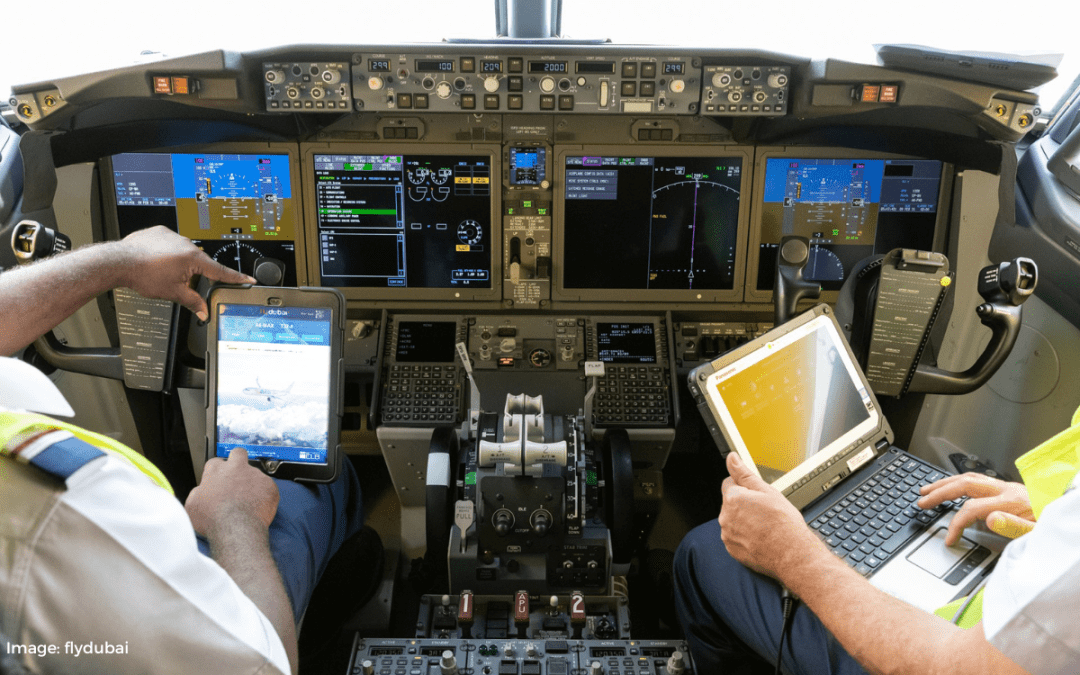
It was recently announced that flydubai is making the switch, transitioning to a new digital logbook as part of its partnership with Ultramain Systems.
This shift will elevate the airline’s data accessibility for pilots and engineers, fostering convenience and collaboration across the organisation.
Ultrammain ELB operates in the flight deck on installed EFB, notebooks, tablets and in the cabin on smart phones, tablets and IFE, driving efficiency by eliminating the need for manual scanning of paper log pages.
Christian Hall, Vice President of Engineering at flydubai, said:
“We are committed to adopting digital best practices to enhance our operational efficiency. The implementation of this digital solution will allow for real-time data tracking, advanced analytics, optimised performance as well as added compliance benefits without the need for bulky paper logbooks. We look forward to incorporating the electronic technical logbooks in our operations over the next few months.”
At Aerospace Tech Week Europe, industry experts will come together to explore Avionics, Sustainability, Advanced Air Mobility, Training & Simulations, Flight Ops IT, MRO IT, Connected Aircraft, Cybersecurity, Testing, UAM, and Supply Chain & Procurement. View the agenda here and book your ticket now for free!
For more like this see:
by Jessica Brownlow | Feb 3, 2025 | Innovation, Video
bavAIRia e.V. is the association of Bavarian stakeholders in civil and military aviation, space, and space applications, commissioned by the Bavarian Ministry of Economic Affairs, Regional Development, and Energy. It is designed to identify core competencies in aeronautics, aerospace and aerospace applications.
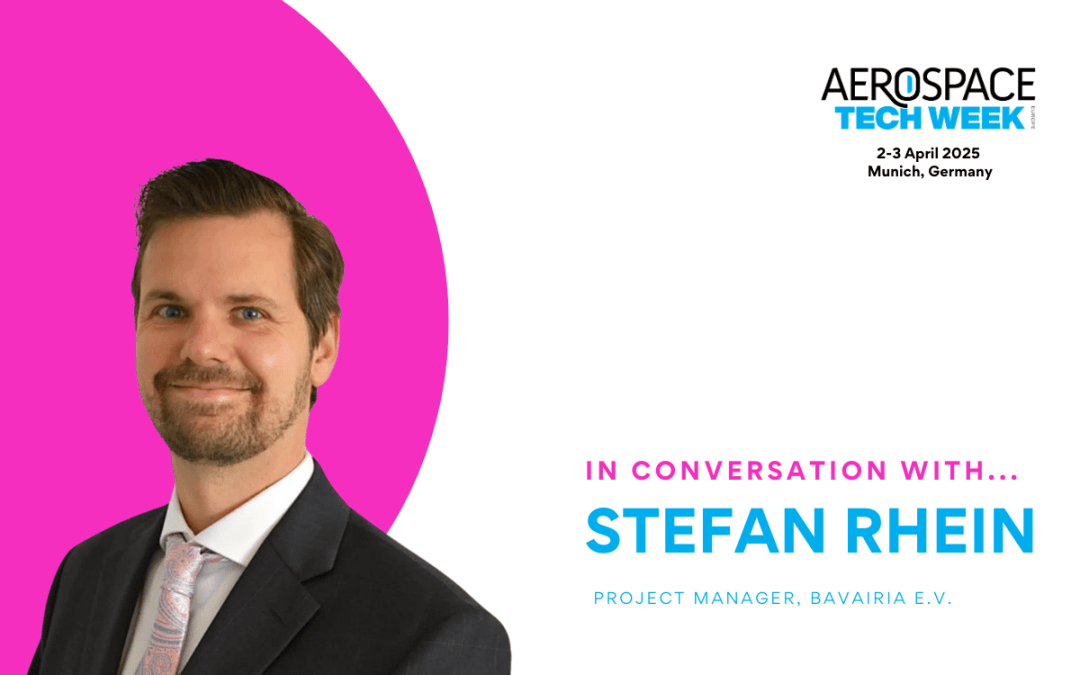
This year, with bavAIRia e.V. joining Aerospace Tech Week Europe as a partner, the association’s Project Manager, Stefan Rhein shared his insights in a brief interview on the 21st January. Rhein discussed the rapid advancements in advanced air mobility (AAM), the challenge of integrating new technologies into an existing ecosystem, and which key players to watch in terms of testing a development.
Even within the two weeks following this conversation, the landscape shifted once again with Airbus announcing it will be pausing the development of its CityAirbus NextGen electric vertical-takeoff-and-landing (eVTOL) advanced air mobility (AAM) aircraft at the end of the year due to concerns over the maturity of battery technology.
Reflecting on the last 12 months, Rhein provided an overview of the significant developments in AAM within this time pointing out bankruptcies, government roadmaps, emerging players, and more.
Speaking specifically on the significance of the German Federal Government publishing a strategy for AAM, Rhein explained:
“It definitely shows that the Ministry of Transportation here in Germany is encouraging to promote Advanced Air mobility and they see that as part of the future of Transportation.”
To find out which four key players Rhein says to watch out for, watch the full conversation below.
Watch the ATW Europe 2024 conversation with Rhein about building a competitive advantage in the Advanced Air Mobility sector. This year, speakers from Lilium and VOLOCOPTER will be unpacking how UAM will transform European airspace and aviation. View the agenda here and book your ticket now for free!
Questions include:
- We spoke onsite at Aerospace Tech Week in March, can you outline some of the major developments in AAM landscape that have happened since then?
- When we think about the major names in this competitive global market, who are the key players to watch?
- Looking ahead, what are the key milestones or challenges for the Bavarian AAM ecosystem in the next 12 months?
For more on ATW Europe 2025 see:
by Jessica Brownlow | Jan 30, 2025 | AI & ML, Innovation
Originally published on World Aviation Festival
At World Aviation Festival, Mitrankur Majumdar- SVP and Global Head, Services, Infosys explored how gen AI is catalysing progress in the aviation industry.
Majumdar outlined the areas where gen AI holds the greatest potential for the industry, listing: customer service, maintenance & operations, fraud detection & security, sustainability & efficiency, and autonomous technology. Providing real-world examples and his expert analysis, Majumdar illustrated how AI is already leading tangible progress in these areas, and speculated on the possibilities for the future.
Turning to the impact gen AI will have on jobs, Majumdar predicted that the workforce will require reskilling for the coming wave of technology, but this will change, rather than invalidate, jobs. He explained:
“The labour workforce in the aviation industry will evolve, not disappear. No doubt that there will be some automation and many repetitive jobs in the area of ticketing, baggage handling, or operations scheduling will get automated. But at the same time, new jobs around AI engineers, machine learning specialists, data scientists—those roles will evolve and become more prominent. The kind of skills that will become more important are customer interaction skills, creative problem-solving, and strategic decision-making. AI and human interaction roles will also become more important, because you need humans to monitor the use of AI systems so that they are safely and ethically used.”
Watch the full interview below to learn about how AI can be leveraged for safety & risk mitigation, training simulations, cybersecurity, and more.
Questions asked include:
- Where do you see the most potential for genAI in the industry?
- Future of workforce in the new world of Gen AI in aviation..
- How can GenAI help in safety and risk mitigation in the Aviation industry?
- How is Infosys looking at the Gen AI wave and how are you helping your customers?
For more from onsite at World Aviation Festival:
by Jessica Brownlow | Jan 29, 2025 | Innovation
This week, Airbus Helicopters CEO, Bruno Even, shared concerns over the maturity of battery technology. He announced the company will be pausing the development of its CityAirbus NextGen electric vertical-takeoff-and-landing (eVTOL) advanced air mobility (AAM) aircraft at the end of the year.
In a statement shared with Revolution.Aero, the company said:
“As part of the company’s constant review of its strategy we have decided to postpone the launch of a UAM [urban air mobility] programme […] As we’ve always said, the development of a viable UAM economy is dependent on many factors and today we still see some of the key technologies that need to continue to evolve.”
During a briefing on the company’s performance in 2024, Even added:
“We learned a lot with CityAirbus NextGen, and our 10 years of investment in the urban air mobility prototype has been clearly instrumental to advance our understanding of technologies which are not only relevant for this urban mobility market, but for all our portfolio and across the Airbus portfolio […] At the same time we see today . . . that the conditions to launch a new program are not necessarily there.”
As the industry grapples with developing eVTOLs and progressing AAM, Airbus Helicopters’ comes at a time where the sector is facing mounting financial pressure. Analysts have warned “billions more will [still] be needed to achieve certification, large-scale aircraft production and profitability,” which is a concern for many given investment peaked in 2021 at $4.3 billion. Find out more here.
At Aerospace Tech Week Europe, industry experts will come together to explore Sustainability, Advanced Air Mobility, Training & Simulations, Flight Ops IT, Avionics, MRO IT, Connected Aircraft, Cybersecurity, Testing, UAM, and Supply Chain & Procurement.
This year, speakers from Lilium and VOLOCOPTER will be unpacking how UAM will transform European airspace and aviation. View the agenda here and book your ticket now for free!
For more like this see:



You must be logged in to post a comment.