
by Elsie Clark | May 28, 2026 | Innovation
Airbus have blamed supply chain difficulties as it delays delivery of Qantas’s first ultra-long-haul A350-1000.
Nicknamed ‘Project Sunrise’, Qantas plans to use the aircraft to run direct flights from Sydney Kingsford Smith to London Heathrow and New York JFK. The Australia-US flight will last 22 hours, and is possible thanks to a 20,000-litre fuel tank.
Airbus had been scheduled to deliver the first of 12 A350-1000s to Qantas at the end of this year. However, the Toulouse-based manufacturer has pushed the date back to April 2027.
A Qantas spokesperson said:
We continue to work closely with Airbus on the delivery and certification process that will enable us to begin operating these history-making ultra long-haul flights.
Supply chain issues have blighted the aviation industry for several years now. In its 2025 end-of-year report, Airbus reported a record backlog of 8,754 commercial aircraft. Engine suppliers Prattt & Whitney were blamed as the principal cause of delays. An increasingly fragmented geopolitical environment has been complicated further by the ongoing closure of the Strait of Hormuz, exacerbating supply chain complications.
Qantas assert that test flights of the A350-1000 will begin within weeks, and that pilot training in the simulator is underway. The inaugural route and schedule for Project Sunrise is also set to release in the coming months.
Join us at Aerospace Tech Week 2026.
For more like this, see:
by Elsie Clark | May 19, 2026 | Innovation, MRO IT
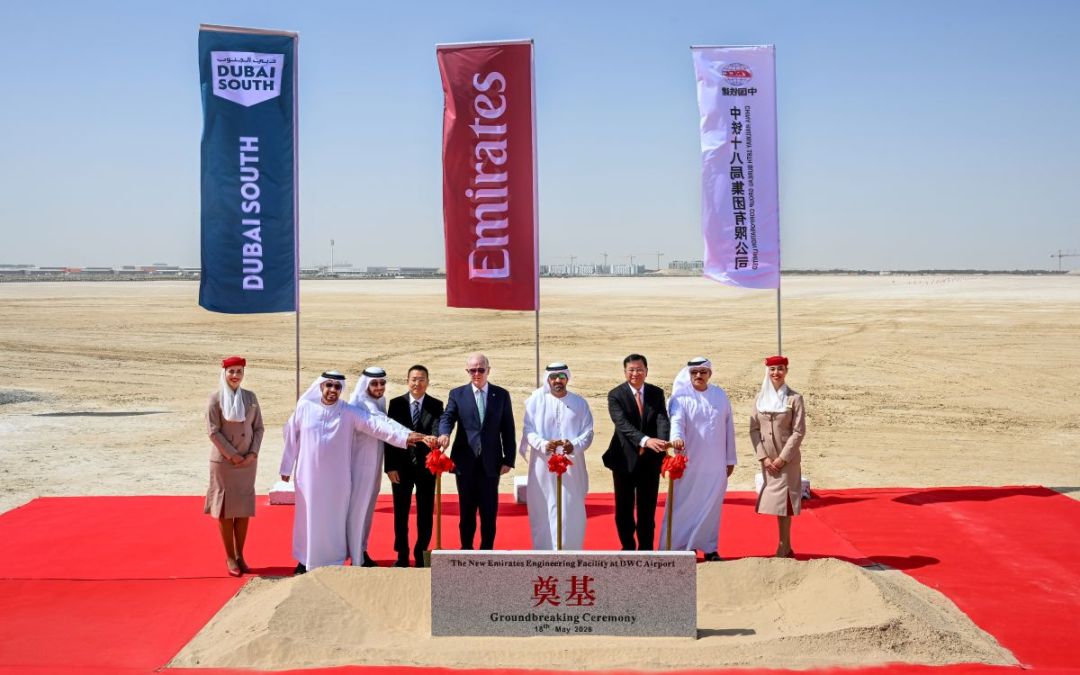
Emirates have begun construction on a high-tech US$5.1 billion MRO facility in Dubai South. Totalling 1.1 million square metres, once complete the building will be one of the world’s largest by volume, as well as the largest steel structure in the Gulf.
China Railway Construction Corporation are leading construction, alongside Artella as project consultants. The ambition is to create an advanced hangar that can simultaneously accommodate 28 wide-body aircraft and two painting hangars.
Ahmed bin Saeed Al Maktoum, Chairman and Chief Executive at Emirates Airline and Group, said:
The new facility strengthens Emirates Engineering’s vertical integration strategy by bringing more skills, infrastructure, parts production, and specialist capabilities under one roof, while positioning the airline to serve as a strategic engineering partner for the future requirements of the regional and global aviation industry.
Alongside the latest MRO tech, the facility will also incorporate sustainability with solar panels across the roof. Construction is scheduled to complete in 2030, with the hangars initially serving as overspill for Emirates Engineering work at Dubai International Airport (DXB).
As supply chain delays continue to impede the delivery of new aircraft, effective maintenance and overhaul have become key priorities for airlines who want to make the most of their existing assets. Emirates continues to target an ambitious growth strategy that will not be possible unless they keep their aircraft in top condition. As a carrier that prides itself on its superior customer service, this MRO investment will reduce turnaround times and delays, ultimately producing a better experience for passengers.
Join us at Aerospace Tech Week 2026.
by Elsie Clark | May 14, 2026 | Innovation, MRO IT
Singaporean software developers Soji AI have announced a new collaboration with Active Partners to advance AI use in MRO record keeping. Under the partnership, the parties will explore how technology can optimise the delivery and inspection of aircraft and engines.
Rob de Klerk, Director Technical Services of Active Partners, said:
Partnering with Soji AI represents a major milestone in our digital transformation journey. By adopting AI-driven engineering management, we are not only improving efficiency and reliability but also setting new standards for innovation and safety in the aviation industry. This collaboration with Soji does not simply digitise documents, it reduces manual document search and accelerates records by surfacing inconsistencies earlier.
Soji’s proprietary platform transforms fragmented aircraft data into an automated workflow that can support proactive decision-making. Engineers can use the system to access validated information rather than constantly extrapolating from raw data.
Ultimately, the service will allow Active Partners to improve efficiency for their clients: aircraft owners, lease managers, and operators. Florian Falk, CEO of Soji AI, commented:
We’re aiming for real-world workflow benefits and Active Partners is the type of forward-looking organisation we built our software for. Their decision to adopt our platform reflects a broader shift in the industry – from manual, document-heavy processes to intelligent, AI-powered operations. Together, we are setting a new benchmark for how aircraft engineering and records management can be executed. Human-AI workflow is the at the heart of our solution where engineers retain the final authority. We’ll be demonstrating how AI can be embedded into certified environments, supporting a shift towards scalable, digital-first aircraft lifecycle management.
Join us at Aerospace Tech Week 2026.
by Elsie Clark | Apr 30, 2026 | Connectivity
The New Zealand government is enacting a wide-ranging series of reforms to modernise its civil aviation infrastructure. 23 projects are preparing to take off, with the South Pacific country claiming 20 years of changes will be made in two years.
These include implementing new International Civil Aviation Organization (ICAO) guidelines and other rules to improve overall security and safety. Additionally, the government is making it easier to recognise overseas approvals of aircraft maintenance providers and parts. Removing red tape in this way will reduce costs and turnaround times for airlines in a complex supply chain environment.
Associate Transport Minister James Meager explained:
Supported by robust sector engagement and consultation, we’ve identified many long-standing issues which have presented barriers for aviation, and prioritised what needs to be resolved first.
The reforms are supported by the New Zealand Airports Association, who say the plans will reduce risk, improve connectivity, and cut costs for customers and businesses. CEO Billie Moore commented:
For airports, the programme will address longstanding issues around safety, security and quality infrastructure investment. Our number one priority – Runway End Safety Area requirements – has a consultation already underway. We are also pleased to see runway strip widths included in the programme, as well as important initiatives for sector partners – from a comprehensive review of pilot licensing, to the recognition of overseas approvals for aircraft maintenance providers and parts, which will deliver major cost reductions for airlines operating in New Zealand.
Join us at Aerospace Tech Week 2026 to discuss the future of civil aviation infrastructure.
For more like this, see:
by Elsie Clark | Apr 15, 2026 | MRO IT
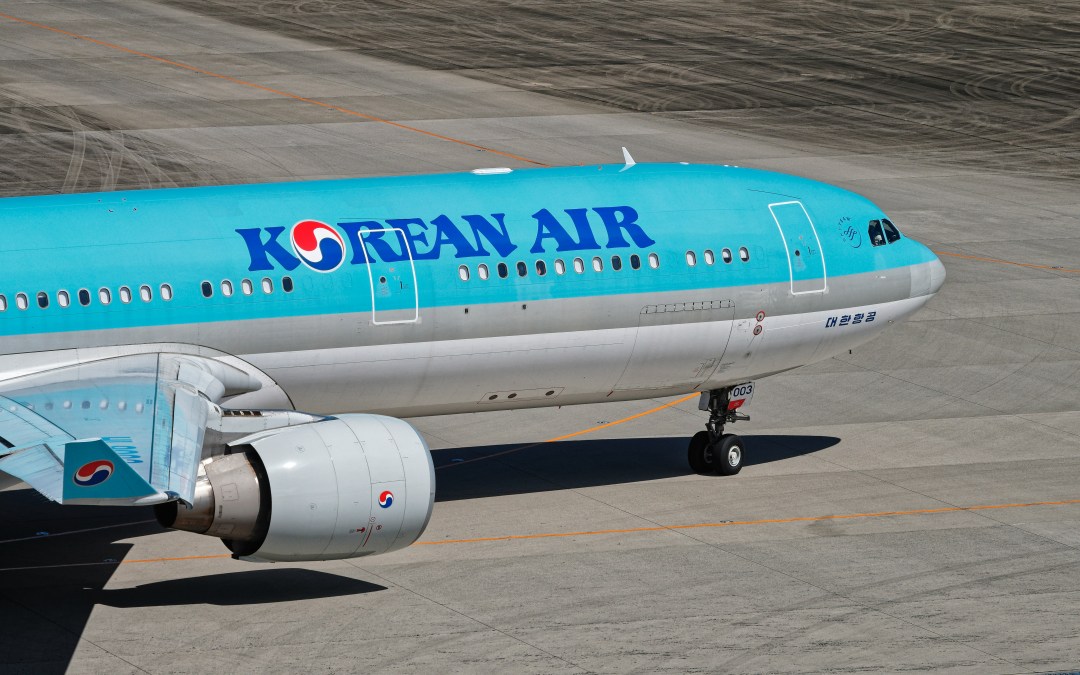
Korean Air have gone live with Ramco Systems software at the heart of their engine maintenance system.
Providing real-time operational data on output, costs, and performance, the system connects with a range of internal and external systems to streamline processes. Additionally, 400 engineers are now managing workflow through the Mechanic Anywhere app. The integration sheds manual processes and reduces turnaround time in an aviation landscape impeded by supply chain issues.
Chan Woo Jung, Senior Vice President and Head of Maintenance & Engineering Division at Korean Air, said:
By partnering with Ramco, we are embracing a digital-first approach that will alllow us to scale with confidence and deliver value, addressing the complexity and precision required in engine maintenance where efficiency is critical.
Korean Air looks to establish a major MRO centre in Asia through its upcoming engine cluster, opening 2027. Their partnership with Ramco supports its goals of becoming a digital and efficient provider of aviation MRO services. Sam Jacob, Executive Vice President & SBU Head – Aviation, Aerospace and Defense, Ramco Systems, said,
It has been an honour to work with Korean Air to digitally transform their engine maintenance operations. Their relentless focus on innovation and process optimiaation, powered by Ramco’s next-generation Aviation Suite, sets a new standard for excellence in the industry. Through real-time visibility, mobile-first workflows and seamless integration, we enable forward-thinking organizations like Korean Air to lead the industry with speed and resilience. With this digital transformation, Korean Air is future-proofing operations for an era of smart and sustainable maintenance, repair and overhaul.
Join us at Aerospace Tech Week 2026.
For more like this, see:




You must be logged in to post a comment.