
by Elsie Clark | Jan 26, 2026 | MRO IT
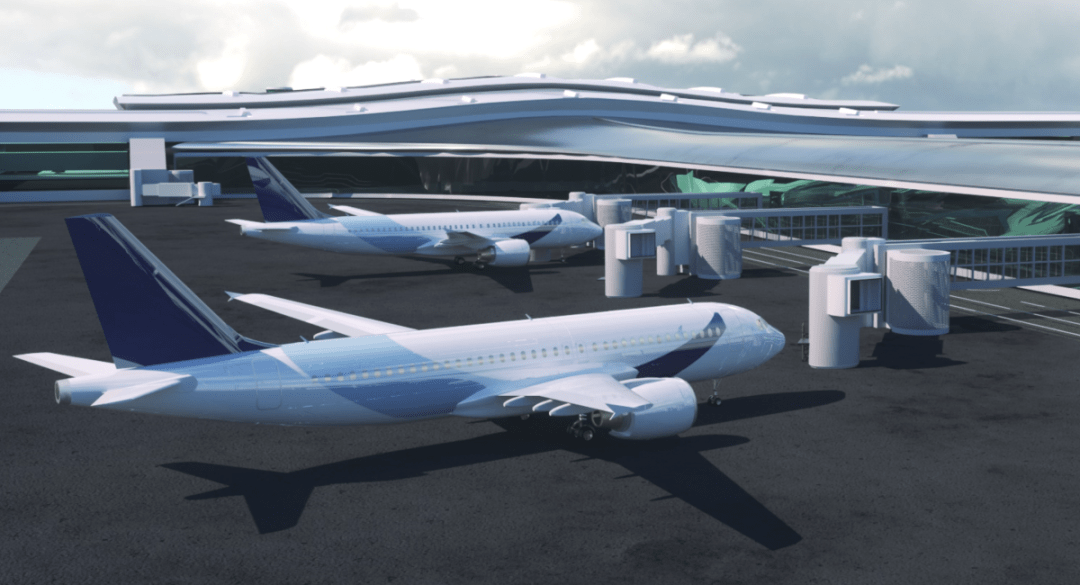
Thai Airways are awaiting approval from the board of directors to construct a US$418 million MRO hub at Utapao in Southeast Thailand.
Work on the so-called ‘smart hangar’ would begin in 2027, with 2030 set as a targeted opening date. The proposed site lies beside U-Tapao Rayong–Pattaya International Airport’s second runway, which is currently under construction. Thai Airways will pay the government, who owe the site, through a revenue-sharing model set out over decades.
The new hangar would fill a critical gap in the Thai MRO market. At present, carriers in the country send most of their aircraft abroad for repairs and maintenance, driving up costs and increasing turnaround time. Thai Airways are currently undertaking a growth transformation strategy that will see their fleet expand to 150 aircraft as it targets US$12 billion in revenue by 2033.
As the aviation industry has taken off across Southeast Asia, MRO has become an increasingly pressing issue. Recent years have seen new facilities emerge in Bali, Indonesia, as well as in Kuala Lumpur and Singapore.
Join us at Aerospace Tech Week 2026 to discuss the future of MRO.
For more like this, see:
by Elsie Clark | Jan 12, 2026 | AI & ML, Innovation, Sustainability
Industry body IATA has named the five risks that most threaten the aviation industry in 2026. With profit margins expected to remain tight at 3.9%, good decision planning and situational awareness will be critical in determining which airlines make it through the year unscathed.
1. Policy fragmentation
Last year saw the aviation industry thrown into chaos by tariffs, and Marie Owens Thomsen, Senior Vice President, Sustainability & Chief Economist, at IATA, reckons trade disruption will continue in the year ahead. However, this time policy fragmentation around the globe will have more impact.
From protectionism to divergence on sustainability and taxation, nations are more inclined than ever to sidestep industry bodies. Owens Thomsen notes:
Such policies raise little money for governments, have little or no impact on emissions, and make air transport more expensive.
2. Supply chain disruptions
This has been an ongoing theme for years now, but unfortunately pressure on supply chains remains high. IATA does not expect delays on aircraft orders to abate until the 2030s, and also highlights that this negatively impacts the pace on sustainable development.
3. Climate change-related disruptions
Rising temperatures are resulting in more extreme weather events. From violent snowstorms to heatwaves, the impact on all industries’ trade and infrastructure cannot be understated. In the years ahead, increased migration from ‘climate refugees’ will place further strain on air transport and immigration authorities.
4. Cyber threats and Artificial Intelligence (AI)
Airlines and airports are increasingly turning to technology to improve efficiency and manage greater passenger numbers. Yet the deployment of third-party tech providers also multiplies the frontiers for cyberattack. As a critical industry that hosts a wealth of sensitive data, the aviation world is especially vulnerable.
As for AI, the benefits could take years to realise, and the software is not infallible. Misinformation and loss of privacy could all damage relationships with passengers.
5. Macro-economic outlook
The weakening of the US dollar will have a significant impact on aviation, where over half of its cost base is invoiced in USD. While lower oil prices will benefit airlines, the world economy in general is not inclined to growth, threatening the aviation industry’s already narrow margins.
Nevertheless, IATA see reasons to be optimistic, with 4% of global GDP still linked to air travel. Additionally, they emphasise that a move towards sustainable aviation could generate far greater change than any economic policy.
Join us at Aerospace Tech Week 2026.
For more like this, see:
by Elsie Clark | Jan 7, 2026 | Sustainability
A study has revealed how aviation could halve its emissions without cutting flights.
As demand for air travel continues to rise, the industry needs to find solutions that can mitigate its climate impact. The global aviation sector’s carbon footprint could as much as triple by 2050 if more is not done to implement sustainable practice. New research led by Prof Stefan Gössling at Linnaeus University in Sweden finds that overall emissions could be halved by getting rid of premium seating, filling flights to the maximum, and flying only the most fuel- and energy-efficient aircraft.
Gössling told The Guardian:
I always thought air transport was already very efficient, and that is also what airlines like to tell people. But, in reality, it’s very inefficient because of the three factors: using old aircraft, transporting people [in premium seats] with lots of space, and often having aircraft that are not really fully loaded.
Analysing 27 million flights from 2023, the researchers endeavoured to highlight notable inefficiencies in sustainability. In 2023, the average load factor for aircraft was 80%. The study recommends increasing this average to 95%. Analysis by region also found that regions such as India and South America were running greater numbers of efficient flights. while North America and Africa journeys were far more carbon inefficient.
Gössling added that the carbon footprint of passengers in first and business class was almost three times that of those in economy, and could be up to thirteen times greater in the most spacious cabins. The research team concluded that improving load factors while running efficient aircraft without premium seating could slash industry emissions by 50-75%, all without cutting any journeys.
The study’s recommendation to fly only economy seating on all flights goes against the industry trend towards premiumisation. In recent years, airlines including American have been going all-out on luxury interior redesigns to win over higher-spend passengers. The industry has been banking on CORSIA and sustainable aviation fuel (SAF) to decarbonise. Linnaeus University’s research identifies much more effective measures, but these are incompatible with customer preferences and airline identities. Sustainability thus remains the elephant in the room in the aviation conversation.
Join us at Aerospace Tech Week 2026 to discuss progress on sustainability and flight efficiency.
For more like this, see:
by Elsie Clark | Nov 10, 2025 | Sustainability
21 airlines will change their environmental claims after the EU found them to be misleading or exaggerated.
An investigation by the EU Commission and the Network of Consumer Protection Cooperation (CPC) Authorities decided that airlines’ descriptions of carbon offsets and sustainable aviation fuel (SAF) gave passengers a false impression that flying was sustainable. Flight emissions ‘calculators’ and vague net-zero emissions targets were also raised as greenwashing practices.
Lufthansa, KLM, and Ryanair are among the airlines who will now revise their claims after reaching an agreement with the EU. The bloc warned that if they did not fall in line with the investigation, sanctions could follow. The 21 airlines must now use the term ‘sustainable aviation fuel’ with appropriate clarifications, and be much clearer with their carbon offsetting claims.
Agustín Reyna, Director General of BEUC, said:
It is excellent news airlines have agreed to stop luring consumers with green promises following our complaint to the European Commission. It was high time airlines stopped painting flying as a sustainable option. Paying ‘green fares’ to plant trees can never guarantee to suck aircraft emissions out of the air.
The EU’s recommendations made clear that sustainability claims and ‘green’ terminology can only be used if backed up by comprehensive targets, strategies, and timelines. Announced on the eve of COP30, the agreement sends a strong message to all airlines, and highlights how much more needs to be done for aviation to make realistic steps towards decarbonisation and overall sustainability.
Join us at Aerospace Tech Week 2026 to discuss how to make the skies sustainable.
For more like this, see:
by ATR Contributor | Sep 30, 2025 | Innovation, Sustainability
In airline operations, tail assignment is often underestimated. At first glance, it seems like a straightforward exercise: matching available aircraft to scheduled flights. But behind this decision lies a highly complex optimisation challenge that impacts costs, reliability, environmental performance, and the passenger experience.
When managed intelligently, tail assignment becomes a strategic lever for operational efficiency and resilience. By assigning the right aircraft to the right flight at the right time, airlines can reduce disruptions, minimise costs, increase the OTP and improve overall performance—all while advancing sustainability objectives.
What is tail assignment and why it matters
Tail assignment is the process of allocating specific aircraft (“tails”) to flights in a schedule. While it may appear as a final step in planning, its consequences are significant. An optimal tail assignment integrates variables such as:
- Maintenance schedules and requirements
- Aircraft fuel efficiency and performance
- Turnaround times and crew pairings
- Passenger bookings and seat configurations
- Operational restrictions (hard and soft)
- Stands and apron distribution at first wave
Misaligned assignments often lead to last-minute swaps, empty ferry flights, crew disruptions, and passenger overbooking issues. The ripple effect is costly—propagating delays across the network and eroding operational performance.
By contrast, a robust tail assignment plan enhances first-wave reliability, minimises irregular operations, and improves fleet utilisation.
The sustainability dimension: Reducing fuel and emissions
In an industry under pressure to decarbonise, tail assignment offers an immediate and practical lever for sustainability. Even within the same fleet, aircraft vary in fuel efficiency. Optimal planning allows airlines to:
– Assign the most efficient aircraft to longer or fuel-intensive routes
– Reduce unnecessary aircraft swaps and avoid suboptimal usage
– Minimise empty repositioning flights
– Contain delay propagation, lowering the fuel penalties of irregular operations
The result is measurable impact: up to 0.5% savings in fuel consumption and CO₂ emissions—an improvement that can translate into millions in annual cost reductions, while also supporting corporate climate commitments.
Smarter overbooking management
Overbooking is a common practice to maximise seat utilization, yet poor alignment with actual aircraft capacity creates denied boardings, compensation costs, and reputational damage. Tail assignment plays a decisive role here.
By matching flights with the aircraft that have the most suitable seat configuration based on expected demand, airlines can reduce overbooking incidents significantly. Small differences—just a few seats between aircraft types—can be the difference between smooth boarding and costly disruptions.
With smarter tail planning, airlines can achieve up to 20% fewer denied boardings, lowering compensation costs while improving passenger satisfaction.
Managing hard and soft constraints
Every schedule must balance two categories of restrictions:
- Hard constraints: non-negotiable rules such as certain maintenance checks, MTOW limits, crew duty limits, or regulatory requirements.
- Soft constraints: preferences or operational efficiencies, such as lack of equipment at certain airports, maintaining crew continuity, or stand allocation preferences.
Optimising tail assignment requires simultaneously respecting all hard constraints while intelligently balancing soft ones. When handled poorly, violations lead to costly chain reactions: aircraft and crew swaps, fuel inefficiencies, propagated delays, and passenger disruptions.
Sophisticated optimisation ensures robust plans that are not only efficient on paper but resilient in practice. Airlines adopting this approach have reported 40% fewer soft constraint violations and 10% fewer crew swaps, strengthening both operational stability and employee satisfaction.
Improving On-Time Performance (OTP)
On-Time Performance (OTP) is a cornerstone of airline reliability, shaping how passengers perceive punctuality and how efficiently operations run throughout the day. Tail assignment has a direct influence on whether flights depart as planned—or whether delays ripple across the network.
One source of disruption arises during the first wave of departures. If two aircraft are parked in adjacent stands with near-simultaneous departure times, their maneuvers can interfere with each other, creating avoidable delays that then propagate across the network. Integrating stand allocation into tail assignment decisions helps minimise these conflicts and strengthens first-wave reliability.
Another common cause of delay propagation comes from tight connections between flights and maintenance activities. When schedules leave insufficient buffer time between a flight’s arrival and the next departure or maintenance task, even a small disruption can snowball into significant knock-on delays. By embedding robustness into tail planning—allowing adequate margins where they matter most—airlines can reduce the likelihood of delay cascades.
Taken together, these optimisations provide a practical pathway to improving OTP, reducing compensation costs, and delivering a more reliable passenger experience.
Quantifiable value
Smarter tail assignment translates directly into measurable business impact through savings. Studies performed by customers and by Cisneria for other airlines demonstrate the following numbers:
- –0.5% Fuel & Emissions
- –20% Passenger Overbookings
- –40% Soft Constraint Violations
- –10% Crew Swaps
- –70% Planning Effort
For airlines with fleets of 100 or 125 aircraft, these results generate over €4M in annual savings. The savings scale with fleet size, demonstrating that tail assignment is more than a mere planning step—it is a lever for both profit and sustainability.
Conclusion
In the face of growing competitive and environmental pressures, airlines cannot afford fragile, reactive planning processes. Tail assignment, when optimised, becomes a high-impact opportunity: reducing costs, improving reliability, enhancing the passenger experience, and contributing to sustainability goals.
Operational leaders—whether in the cockpit, in the operations control center, or in the boardroom—should treat tail assignment not as a technical afterthought but as a strategic lever for efficiency, resilience, and sustainability. By embedding intelligence and robustness into this critical planning step, Daedalus® Tail Assigner enables airlines to unlock millions in annual savings, strengthen OTP, and lay the foundation for greener, more reliable operations.
For a deeper dive into how smarter tail assignment can unlock efficiency, resilience, and sustainability for airlines, we invite you to explore our full white paper. Download the report here.
For more like this, see:



You must be logged in to post a comment.