
by Elsie Clark | Jan 12, 2026 | AI & ML, Innovation, Sustainability
Industry body IATA has named the five risks that most threaten the aviation industry in 2026. With profit margins expected to remain tight at 3.9%, good decision planning and situational awareness will be critical in determining which airlines make it through the year unscathed.
1. Policy fragmentation
Last year saw the aviation industry thrown into chaos by tariffs, and Marie Owens Thomsen, Senior Vice President, Sustainability & Chief Economist, at IATA, reckons trade disruption will continue in the year ahead. However, this time policy fragmentation around the globe will have more impact.
From protectionism to divergence on sustainability and taxation, nations are more inclined than ever to sidestep industry bodies. Owens Thomsen notes:
Such policies raise little money for governments, have little or no impact on emissions, and make air transport more expensive.
2. Supply chain disruptions
This has been an ongoing theme for years now, but unfortunately pressure on supply chains remains high. IATA does not expect delays on aircraft orders to abate until the 2030s, and also highlights that this negatively impacts the pace on sustainable development.
3. Climate change-related disruptions
Rising temperatures are resulting in more extreme weather events. From violent snowstorms to heatwaves, the impact on all industries’ trade and infrastructure cannot be understated. In the years ahead, increased migration from ‘climate refugees’ will place further strain on air transport and immigration authorities.
4. Cyber threats and Artificial Intelligence (AI)
Airlines and airports are increasingly turning to technology to improve efficiency and manage greater passenger numbers. Yet the deployment of third-party tech providers also multiplies the frontiers for cyberattack. As a critical industry that hosts a wealth of sensitive data, the aviation world is especially vulnerable.
As for AI, the benefits could take years to realise, and the software is not infallible. Misinformation and loss of privacy could all damage relationships with passengers.
5. Macro-economic outlook
The weakening of the US dollar will have a significant impact on aviation, where over half of its cost base is invoiced in USD. While lower oil prices will benefit airlines, the world economy in general is not inclined to growth, threatening the aviation industry’s already narrow margins.
Nevertheless, IATA see reasons to be optimistic, with 4% of global GDP still linked to air travel. Additionally, they emphasise that a move towards sustainable aviation could generate far greater change than any economic policy.
Join us at Aerospace Tech Week 2026.
For more like this, see:
by Elsie Clark | Jan 9, 2026 | AI & ML, Innovation
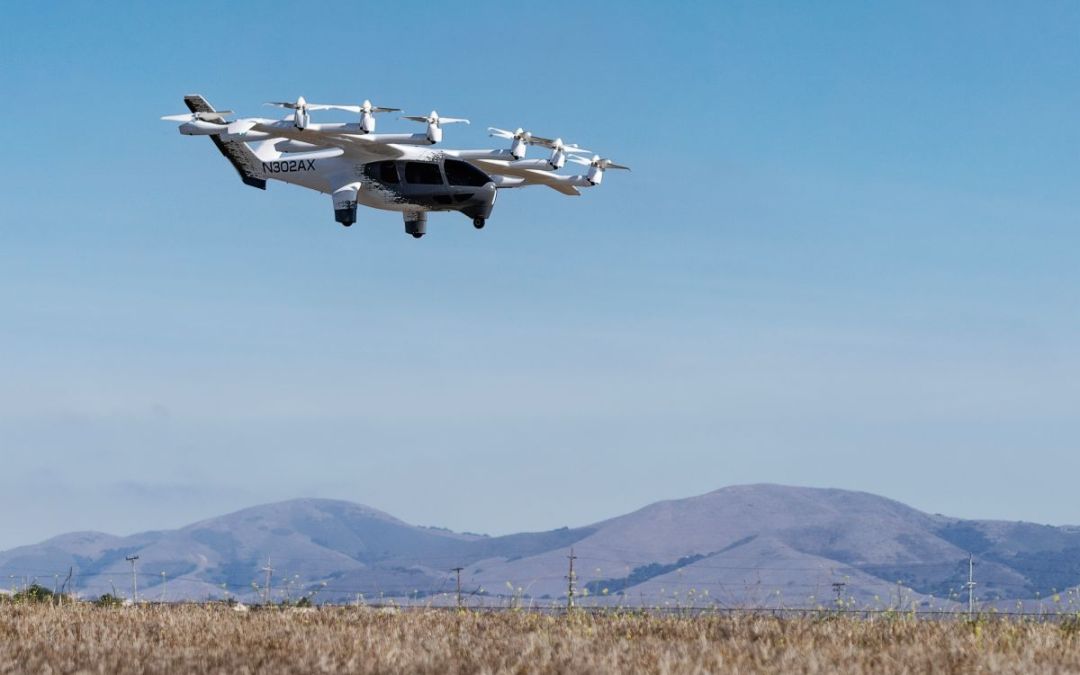
US-based advanced air mobility (AAM) company Archer has announced that it will develop new AI tech for aviation with NVIDIA’s IGX Thor platform. Improving pilot safety, advancing autonomous operation, and ensuring airspace integration will be the key priorities during development.
Archer recently acquired Hawthorne Airport in Los Angeles, California, for the purpose of testing its aircraft and new systems. The company will make use of this base as it advances its collaboration with NVIDIA.
Adam Goldstein, Archer’s Founder and CEO, said:
NVIDIA’s AI compute capabilities and software stack give us the foundation to accelerate toward safer, smarter aircraft systems and modernise how aviation interfaces with the world’s airspace.
The IGX Thor platform has been designed to enhance the safety and situational awareness of onboard computers, ensuring high performance at all times. Archer will build on this foundation and explore advanced uses of:
- Real-time flight path data for improved pilot awareness
- Improved routing and traffic planning
- Autonomous and semi-autonomous flight controls
One of the world’s leading AAM companies, Archer’s Midnight eVTOL is rapidly approaching commercialisation. Air taxi trials in the US and Saudi Arabia, announced at the end of 2025, will bring the aircraft closer to regulatory approval. The company has also signed development agreements with authorities in Japan and South Korea.
While the partnership with NVIDIA will contribute significantly to Archer’s product, the results will be of significant interest to the aviation industry as commercial automation begins to take flight.
Join us at Aerospace Tech Week 2026 to discuss the future of AI in aerospace.
For more like this, see:
by Elsie Clark | Dec 10, 2025 | Avionics, Innovation
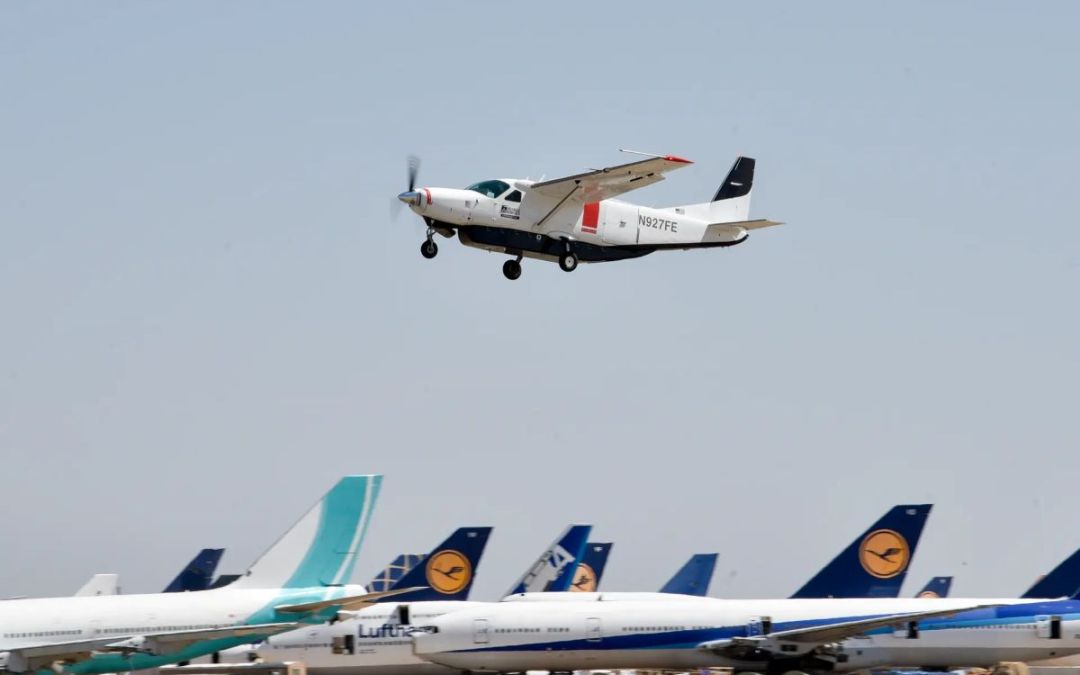
Reliable Robotics has signed a contract with NASA’s Aeronautics Research Mission Directorate (ARMD) to test its Cessna 208B Caravan at airports. Data collected from the flights will help inform the FAA and Standards Development Organizations (SDOs) as they set regulations for uncrewed aircraft systems.
Providing the tech for continuous autopilot engagement through all phases of flight, including auto-taxi, auto-takeoff and auto-landing, Reliable Robotics’ mission is to make flight safer. Designed for cargo operations, the company will use the new agreement with NASA to test interactions with air traffic control and potential contingency scenarios. There will be no pilot onboard during the final flight demonstration.
Robert Rose, CEO and co-founder, Reliable Robotics, said:
This testing campaign comes at a unique moment in time, when safety-enhancing aircraft autonomy is rapidly nearing FAA certification and entry into service for regional air cargo and military use cases. Efforts like this are how we continue to advance the necessary public policy ecosystem. We deeply value the continued partnership with NASA to conduct testing that will advance industry-wide efforts to expand remotely piloted aircraft operations at airports.
After the tests, data will be passed on to NASA, FAA, and SDOs to develop Minimum Operational Performance Standards (MOPS) and Minimum Aviation System Performance Standards (MASPS) for UAS. Demonstrating this technology in real-world environments is essential for proving — and enhancing — their safety in advance of commercial launch.
Join us at Aerospace Tech Week 2026 to discuss the future of uncrewed aircraft systems.
For more like this, see:
by Elsie Clark | Dec 8, 2025 | Innovation
Embraer has launched Smart Planning, an AI tool that will improve operational readiness and inventory management across its supply chain.
New data-driven process will offer the aircraft manufacturer visibility across the production line as it continues its digital transformation journey. AI pioneers Aquarela Analytics assisted on the project, which analysed over two terabytes of data across ten months. The two complementary methodologies — Embraer’s Agile framework and the Data Culture Methodology used by Aquarela Analytics — worked to extract, clean, and map data from Embraer’s operations.
Marcos Santos, CEO of Aquarela Analytics, noted
Throughout the process, we applied all of our expertise in data analysis, platforms, and artificial intelligence algorithms to improve, transform, and integrate Embraer’s operating system. It was a challenging project, where at each stage we deepened and broadened the scope as complexity and results were measured.
By creating this data architecture, Smart Planning has helped the Brazilian aerospace giant reduce operational costs and improve proactive decision-making. Dimas Tomelin, Vice President of Strategy, Digital and Innovation at Embraer, said:
Smart Planning is the most up-to-date data tool developed and integrated to make Embraer’s processes more effective. It consists of an interactive control panel on the materials used in the production process of our aircraft, helping the planning team in the management of purchases and stock levels to have more predictability in case of lack or excess of materials thanks to the use of artificial intelligence and a prediction model.
Ongoing geopolitical disruption, high labour costs, and material shortages have all compounded the aviation industry’s supply chain issues. These problems could cost as much as US$11 billion in 2025, industry body IATA warned earlier this year.
Join us at Aerospace Tech Week 2026 to discuss how digitisation and data can unlock greater supply chain efficiency.
For more like this, see:
by Elsie Clark | Nov 6, 2025 | AI & ML, Innovation
GE Aerospace will support propulsion and testing for Shield AI’s X-BAT.
Under a new Memorandum of Understanding (MoU), GE Aerospace will supply their 110-GE-129 engine to power Shield’s AI-piloted eVTOL fighter jet. Launched last month in Washington DC, the X-BAT operates autonomously using Shield’s Hivemind software. The company says it can perform even in environments with limited communications, whether working in a team or on independently.
Shield AI aircraft engineering senior vice president Armor Harris said:
GE Aerospace’s F110 engine is one of the most successful and reliable fighter engines in history and has the operability characteristics that X-BAT’s VTOL design demands. GE Aerospace has been a great partner, and we are excited by the potential of our combined team.
With over 11 million flight hours, the F110 engine has been tested and developed over four decades. GE Aerospace’s expertise in the fields complements Shield AI’s innovation. The eVTOL business has already been valued at more than US$5 billion as the defence and aerospace industries seek to advance AI-powered solutions.
Earlier this year, Shield announced a partnership with Korea Aerospace Industries to develop AI pilots. GE Aerospace defence and systems president and CEO Amy Gowder said:
We’re excited to pair GE Aerospace’s proven experience in developing and scaling propulsion systems with Shield AI’s vehicle development to move faster from concept to capability.
Join us at Aerospace Tech Week 2026 to discuss the future of AI-powered flight.
For more like this, see:



You must be logged in to post a comment.