
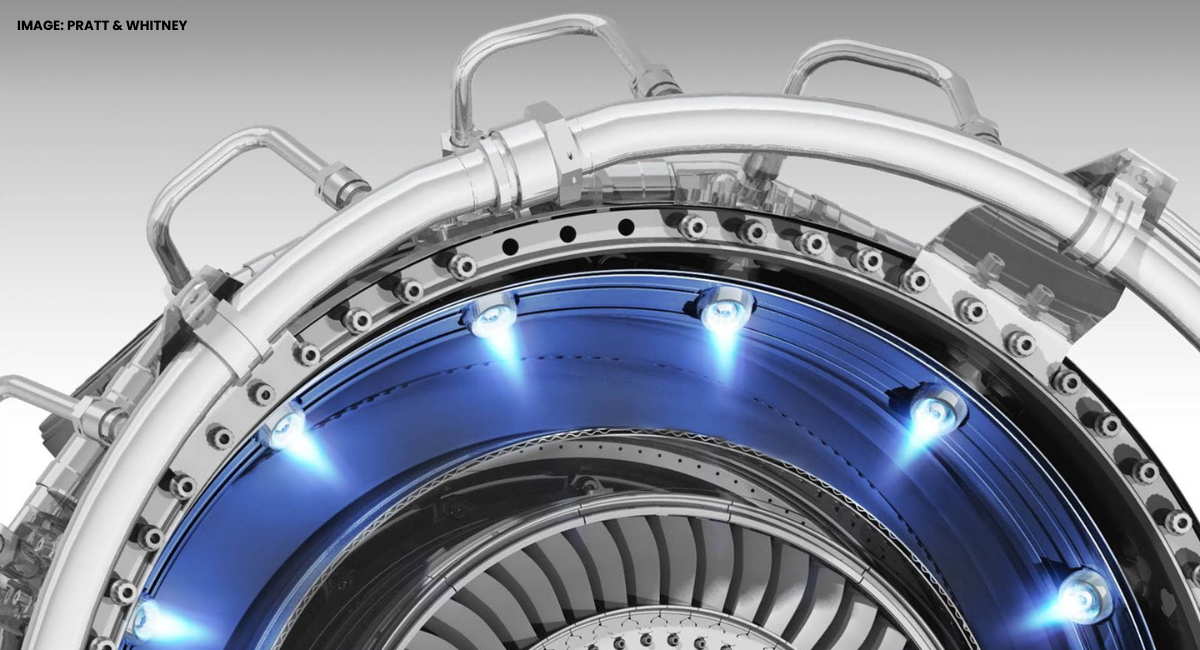
On Wednesday, Pratt & Whitney Canada announced plans to demonstrate hydrogen combustion technology on a PW127XT regional turboprop engine under Canada’s Initiative for Sustainable Aviation Technology (INSAT).
The project, Hydrogen Advanced Design Engine Study (HyADES) is part of a collaboration with Next Hydrogen Solutions Inc.
Next Hydrogen Solutions Inc designs and manufactures water electrolysers which produce clean hydrogen from water and electricity. The company was initially founded in 2007 and is scaling up its technology following a series of successful pilots.
INSAT is a joint industry-government initiative working to accelerate the development of sustainable aviation technologies in Canada. The initiative looks at crossover innovations to help develop hybrid and alternative propulsion, aircraft support infrastructure & operations, aircraft architecture and systems integration, and the transition to alternative fuels.
The first phase of the project will focus on testing the fuel nozzle and combustor rig but will extend to full engine ground testing in the future.
Edward Hoskin, Vice President, Engineering, Pratt & Whitney Canada, said:
“This collaborative project with INSAT enables us to develop key technologies for future hydrogen powered aircraft and complements our wider efforts to advance aviation sustainability through a range of pathways, including continued improvements to engine efficiency, hybrid-electric propulsion and compatibility with sustainable aviation fuel (SAF). While regional aviation represents one of the most promising use cases for hydrogen, the project will also demonstrate the versality of adapting the proven, highly efficient PW127XT turboprop engine to operate with low carbon alternative fuels and continues our legacy of technology leadership in this segment.”
Pratt & Whitney’s other project with INSAT is looking at Turbine Engine Advanced Materials for Efficiency (TEAME). Alongside Derivation Research Laboratory (DRL), this will explore which advanced materials can improve thermal efficiency and reduce fuel consumption and emissions.
For more like this also see:
- MTU Aero Engines completes successful liquid hydrogen test
- Scaling up SAF production with EASA managed EU SAF Clearing House
- IAE V2500 milestone SAF test