
by Jessica Brownlow | Aug 15, 2025 | MRO IT
Supply chain strain. Aircraft on the ground. Rising costs.
The aviation industry is still dealing with the long tail of disruption post-COVID-and effective MRO inventory management may be the key to resilience.
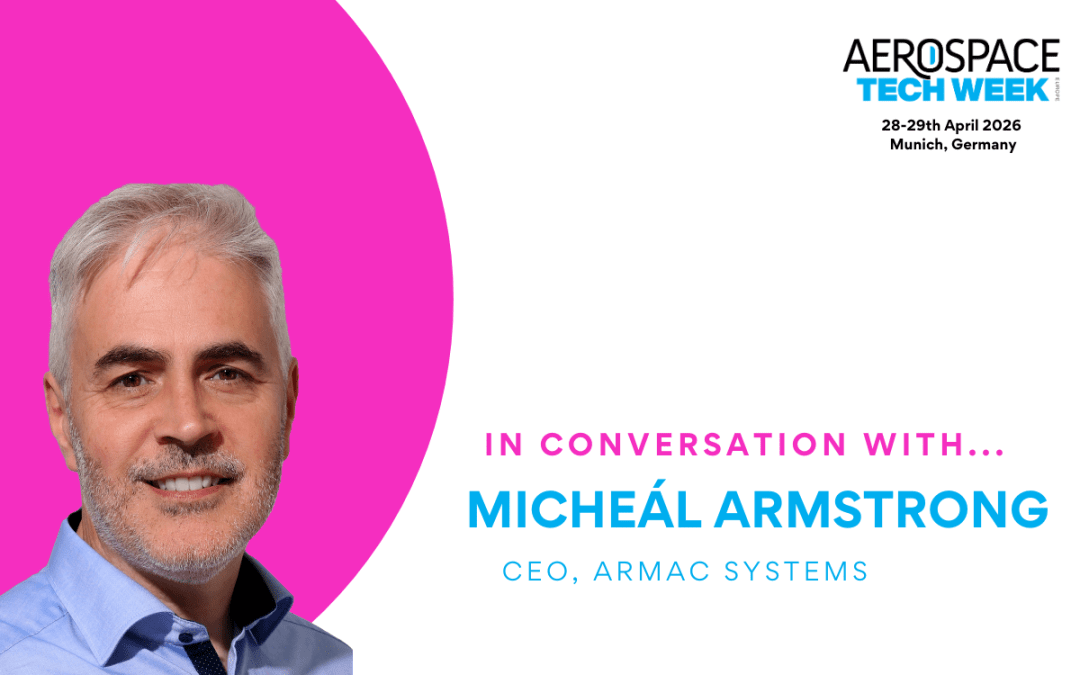
In this conversation, Micheál Armstrong, CEO of Armac Systems, breaks down the challenges airlines are facing today, and how smart use of data, systems, and people can unlock huge gains in efficiency and availability.
“Some parts come back quickly, others might as well be scrapped. You can’t rely on old provisioning models anymore.”
With lead times increasing on both new parts and repairs, airlines are being forced to hold aircraft longer, delay retirements, and extend leases. But forward-thinking organizations are fighting back with smarter planning and more collaborative supplier engagement.
“It’s not just about average lead times anymore. You need real-time insight and supplier-level collaboration.”
From applying engineering strategy to part interchangeability, to making better decisions around upgrades and modifications, Micheál shares how operators are shifting from reactive to proactive.
He also discusses how technology is making this possible:
- Proactive data analysis to detect issues early
- Advanced planning with platforms like ReASSIST
- Using inventory systems as decision-support tools, not just process managers
And the next frontier? AI, machine learning, and data science.
“These algorithms aren’t new-what’s new is we finally have the people, the mindset, and the computing power to apply them.”
He explains how the rise of digital natives, data science teams, and cloud computing is driving real-world adoption of AI in aviation-not just buzzwords, but actual, scalable value.
🎥 Watch the full interview to learn how airlines and MROs can shift from lagging to leading in supply chain resilience and tech adoption.
Questions asked include:
- What’s the current state of the aviation supply chain?
- How are repair and replacement delays affecting operations?
- How can inventory management systems help mitigate risk?
- What role does technology play in improving visibility and planning?
- How is AI transforming decision-making in MRO and parts management?
- What role do events and collaboration play in driving industry innovation?
Join us at Aerospace Tech Week Europe 2026!
Subscribe to our free monthly newsletter here.
For more like this see:
by Jessica Brownlow | Jul 22, 2025 | AI & ML, Avionics, Video
As the aviation industry undergoes a digital transformation, AI and multi-core processing are no longer distant concepts – they’re taking off.
At Aerospace Tech Week, we spoke with Richard Richard Jaenicke, Director of Marketing at Green Hills Software, about the progress, challenges, and future of avionics systems.
“It was about four years ago that we got the first multi-core TSO for avionics… Now, with Airbus and Collins Aerospace joining in, we can say that multi-core has really taken hold.”
Jaenicke highlights two major shifts in the avionics landscape over the past 12 months:
- A growing wave of multi-core certifications
- The emerging role of artificial intelligence and autonomy, especially in experimental and military aircraft
But as he points out, AI brings complexity and risk.
“You end up with a pile of weighted weights… you can’t really validate that they came from the requirements or that they implement them.”
Watch the full interview to hear how Green Hills Software is helping shape the future of safe, certifiable AI in aviation.
Questions asked include:
- How has the avionics landscape progressed in the last 12 months?
- What are the key challenges in using AI/ML in avionics systems?
- How can we ensure the safety and security of AI in flight-critical systems?
- What are some near-term applications of AI in commercial or defense aviation?
- What brings Green Hills Software to Aerospace Tech Week, and how does it support
- innovation?
Join us at Aerospace Tech Week Europe 2026!
Subscribe to our free monthly newsletter here.
For more like this see:
by Jessica Brownlow | Jul 14, 2025 | AI & ML, Innovation, Video
As the industry accelerates its digital evolution, Lufthansa Systems is positioning artificial intelligence (AI) and cloud technology at the core of it’s strategy. At Aerospace Tech Week, Stefanie Neumann, CEO of Lufthansa Systems outlined the company’s tech outlook stating:
“Our strategy is about transforming of the industry, not more, not less. And with that I mean we want to really increase the optimisation capabilities that AI can offer to all of us and make sure that this supports the growing scale that we are all observing.”
The conversation looked in more detail at Lufthansa Systems’ strategic investment in technologies with a view to driving optimisation. Given air traffic is due to double by 2045 and the industry must navigate scarce resources, efficiency and optimisation are essential drivers of progress. Lufthansa Systems is already applying AI in operations and maintenance and is calling on more players across the industry to unlock shared value.
Supporting this, Neumann also emphasised the importance of collaboration across the ecosystem through global partnerships. The goal is to tap into diverse talent pools and foster cross-border innovation.
To learn more watch the full interview below. To hear live from industry experts join us at Aerospace Tech Week 2026 in April!
Questions asked include:
- Where are we seeing the highest levels of investment in aerospace’s digital landscape?
- You recently announced a number of large partnerships. How are these pioneering change in the industry?
- How would you describe Lufthansa Systems’ strategy for the coming 12 months?
Subscribe to our free monthly newsletter here.
For more like this see:
by Jessica Brownlow | Jul 10, 2025 | Innovation
Electric vertical take-off and landing (eVTOL) aircraft company Archer Aviation is attempting to establish air taxi services in Abu Dhabi.
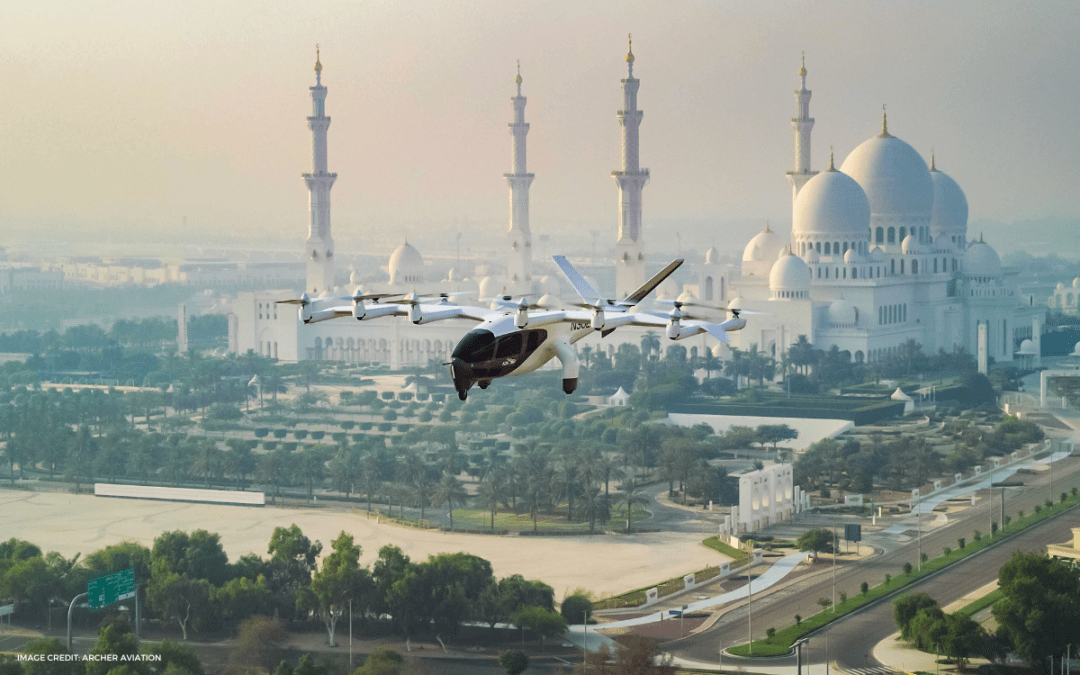
Last week, the company ticked off a new milestone in the expansion of its operations in the Middle East. Archer successfully completed an initial flight of its Midnight aircraft at Al Bateen Executive Airport in Abu Dhabi.
The test helped assess readiness for commercial deployment with a specific focus on the the aircraft’s performance in the UAE. This looked closely at the impact of temperature, humidity, and dust exposure. It also supports the Launch Edition commercialisation programme which aims to establish a pragmatic and repeatable commercialisation playbook to deploy Midnight to dozens of early adopter markets.
In light of this successful test, Archer plans to expand its flight-testing programme for Midnight in the region. Speaking on the news, Adam Goldstein, CEO and Founder of Archer Aviation:
“Our initial test flight operations in the UAE represent a critical milestone as we prepare for our commercial deployment in Abu Dhabi. Testing our aircraft in actual operating conditions in the middle of summer provides us with the data we need to progress our commercial and certification efforts both in the UAE and in the US.”
Highlighting the importance of collaboration in driving the sector’s progress, H.E. Badr Al-Olama, Director General of the Abu Dhabi Investment Office added:
“This flight marks a significant step towards realising Abu Dhabi’s ambition to lead the world in advanced urban air mobility. Through the Smart and Autonomous Vehicles Industry (SAVI) Cluster, we are enabling companies like Archer to test, certify and scale next-generation air mobility solutions, reinforcing our position as a global launchpad for innovation and a hub for transformative technologies.”
The UAE is positioning itself as an early hub for eVTOL deployment. This is a reflection of the growing momentum behind advanced air mobility in the region.
For more like this see:
by Jessica Brownlow | Jul 7, 2025 | AI & ML, Flight Ops IT, Video
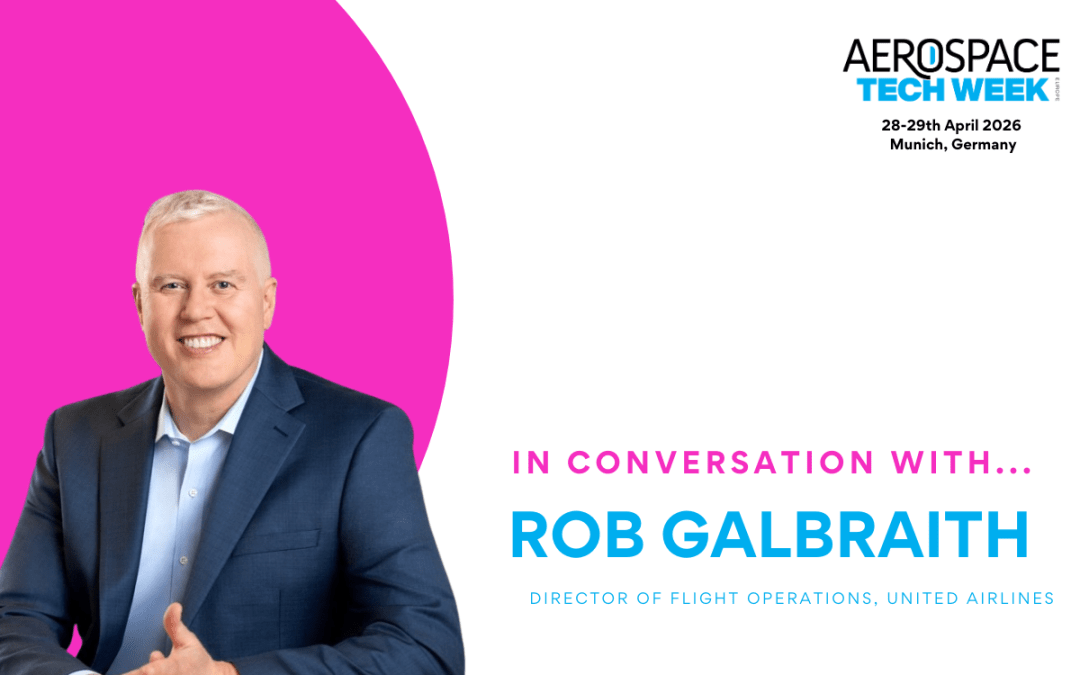
At Aerospace Tech Week, Rob Galbraith, Director of Flight Operations at United Airlines reflected on the airline’s flight operations progress looking at the technology driving change, opportunities for AI/ML integration, and the greatest challenges to seamless real-world operations.
Galbraith picked out the electronic flight bag (EFB) as one of the most impactful areas of progress due to its more flexible regulatory status. This offers flexibility for airlines and developers to innovate and respond to changing demands.
Acknowledging not every aspect of the industry is keeping pace with desired progress, Galbraith described the greatest challenge to achieving seamless flight ops as:
“Working with our training teams to actually train how we expect the pilot to operate. Right now we do a great job with simulators training how we would like to actually fly the airplane, but not operate the airplane. The next step is that we can use it in the simulator and mirror exactly how the crew would use it on the line flying a real flight. And currently that’s not possible in a lot of cases.”
AI and ML also sit at the heart of the industry’s optimisation strategy. Galbraith shared how the technology is being leveraged to help flight crews make better real-time decisions as well as streamline backend processes like updating manuals and ensuring compliance across global regulations.
To learn more watch the full interview below. To hear live from industry experts join us at Aerospace Tech Week 2026 in April!
Questions asked include:
- Which technology do you believe is currently driving the most progress in flight ops?
- Are there any emerging technologies that, although they are still in their infancy, you expect will have a major impact in the future?
- How is United integrating AI & ML into flight ops systems and to what end? Can you share any specific examples?
- What do you understand as the greatest challenge to achieving seamless flight ops, and what’s United’s strategy for overcoming this?
Subscribe to our free monthly newsletter here.
For more like this see:



You must be logged in to post a comment.