Operational and dead satellites, rocket booster stages, and fragments of fractured space hardware right down to flakes of paint moving at speeds up to 17,500 mph – that’s what constitutes ‘space debris’, which is accumulating in the Earth’s orbital space right now.
If you want a quick visual picture of the problem, log onto http://www.privateer.com. It is hosted by Privateer Space, a space debris tracking/solutions company founded by Apple co-founder Steve Wozniak, Ripcord CEO Alex Fielding, and orbital debris specialist Dr. Moriba Jah. Privateer’s rotatable Wayfinder app shows the cloud of satellites and space debris encircling the Earth. It allows users to search for specific spacecraft, and even calculates the probability of collisions through its Crow’s Nest feature.
T. S. Kelso, CelesTrak
Granted, the size and closeness of the objects in orbit are unavoidably exaggerated by Wayfinder’s scale, in order to display their moving locations on a standard computer screen. But their actual speed is visually diminished for the same reason. As YouTube space scientist Joe Scott (Answers with Joe/@joescott) explained in his video, ‘Somebody Is FINALLY Doing Something About Space Junk’, if an observer was floating in space and “the International Space Station flew past you at 17,000 miles per hour…you wouldn’t see it. You wouldn’t hear it. You wouldn’t feel a gust of wind blow off of it…Orbital speeds are ridiculous and there are tens of thousands of objects flying around at that speed.”
At this speed, “even small pieces of debris can do a lot of damage to an active satellite,” said Dr. T.S. Kelso, founder, chief scientist and CTO of CelesTrak (celestrak.org), a popular source of Earth orbital data with almost five million unique users a month. “For example, if I threw a bullet at you (about 22 mph), it might hurt a little but wouldn’t do any real damage. But if we put that in a high-power rifle at 2,237 mph, we know it can do substantial damage. That’s because the energy goes up as the square of the velocity.”
Privateer.com screen shot
If this same bullet was a piece of space debris, it would be traveling much, much faster. “Objects in low-Earth orbit (LEO) go about 17,000 mph, so they have about 56 times as much energy as a high-power rifle bullet and in a head-on collision would have 225 times as much,” Dr. Kelso said. “If large objects collide, they can produce tens of thousands of pieces of debris bullet-size or larger.”
Such collisions have already occurred. Most of them have been unintentional, although some have been caused deliberately as a result of anti-satellite (ASAT) missile tests. For instance, the “Chinese FengYun-1C engagement in January 2007 (where a Chinese ASAT attacked its defunct Fengyun-1C weather satellite) alone increased the trackable space object population by 25%,” said esa.int, the website of the European Space Agency.
Luc Piguet, ClearSpace
To date, “there have been more than 640 confirmed fragmentation events since the beginning of space history,” said Luc Piguet. He is CEO and co-founder of ClearSpace. It has been selected by the European Space Agency to test debris-clearing autonomous spacecraft in orbit by 2025.
“When two objects collide, they produce thousands of new pieces of debris, and these pieces also risk colliding with other objects, producing more and more pieces of debris in a cascading effect,” Piguet explained. “This is called the ‘Kessler Syndrome’. It is named for American scientist Dr. Donald J. Kessler who first raised awareness about this problematic interaction. According to the Kessler Syndrome if nothing is done, a few collisions will suffice to multiply exponentially the number of debris in orbit. It will increase the threats on current space infrastructure and make future space exploration and operation difficult or even impossible.”
Editor’s note: Dr. Kessler first raised this idea in his 1978 paper “Collision Frequency of Artificial Satellites: The Creation of a Debris Belt”, which was published in the Journal of Geophysical Research.
Too Much Space Debris
Just how serious is the current state of space debris? “There are currently around 36,500 debris objects greater than 10 cm (4 inches) in orbit, including failed satellites and used rocket bodies, in addition to approximately 7,500 live satellites,” answered Piguet. “On average, 74 new derelict objects are added to space each year, all of which orbit uncontrollably at 28,000 km/h. If not removed, these objects pose a risk of fragmentation through collisions or explosions.”
Notice that Luc Piguet makes his statement about space debris that is larger in size than 10 cm. Remove this limit, and “NASA estimates report there may be as many as 100 million pieces of debris larger than a millimeter, though many are too small to track from earth,” said Dr. Danielle Wood, assistant professor (joint) of aeronautics and astronautics at MIT.
To make matters worse, “these objects are not communicating anything to the ground, they’re just objects orbiting the Earth,” she said. Despite the efforts of ground-based space tracking systems, “we can’t see them, but we know they’re there because they often hit something and provide evidence of their presence.”
If this number remained stable, then at least the state of space debris would not be getting worse. But this isn’t the case. “In 2022 alone, there were 2,163 objects launched into space from around the world — that’s more than 2010-2016 combined,” said Marshall Smith. He is vice president of Exploration for Voyager Space (voyagerspace.com), a developer of commercial space stations. “This shows great momentum for the overall space economy, but also means the potential for more space debris and junk,” Smith said. “This also means we are at a critical juncture where we need to mitigate the issue now before it becomes too late.”
Dr. Danielle Wood, MIT
Many of these objects were Low Earth Orbit (LEO) communications satellite constellations, like the thousands of LEOs being launched by SpaceX for the Starlink internet broadband system. This being said, “SpaceX satellites are propulsively deorbited within weeks of their end-of-mission-life,” said the company in a February 22, 2022 posting at https://www.spacex.com/updates. “We reserve enough propellant to deorbit from our operational altitude, and it takes roughly four weeks to deorbit.”
Saloua Moutaoufik, Share My Space
Unfortunately, not all satellite operators are following SpaceX’s example. As a result, “with 7,500 satellites in orbit, growing 30% per year in the past four years, Earth orbits are now congested with more than 1,000,000 dangerous pieces of debris, between 1-10cm,” said Saloua Moutaoufik, public relations officer with Share My Space (www.sharemyspace.space), a provider of orbital/space surveillance data. “Only about 3% of these are tracked, which means that all the satellites are threatened by many untracked objects. The decreasing cost to access space is a major driver of the worsening situation.”
Kevin Stadnyk, Obruta
The bottom line: “If the problem of space debris is not properly addressed it could have serious and irreversible implications for future space activities,” said Kevin Stadnyk, CEO of Obruta Space Solutions (www.obruta.com), a start-up focused on developing ‘sustainable’ spacecraft, satellite servicing and space debris removal. “The risk of collisions with debris objects will only increase as more debris objects are created or added with future launches. Such collisions could result in the loss of critical space infrastructure, disruption of space missions and increased danger to astronauts in orbit.”
Vince Hoffman, Lockheed Martin Rotary & Mission Systems
This dire outcome includes the formation of debris clouds due to the Kessler Syndrome becoming reality, Stadnyk warned. “If the amount of space debris in orbit becomes too high, it could limit the ability of countries and private companies to launch new satellites or conduct space missions which will have significant economic implications,” he said. “With this in mind, it is essential that we address the space debris problem to ensure the safety and sustainability of space activities for future generations.”
Graphic from the United Nations Office of Outer Space Affairs showing satellites and debris in orbit. As of 2020, tens of thousands of debris objects are bing monitored. UNOOSA image.
How We Got Here, or ‘The Tragedy of the Commons’
The reason humanity is faced with an ever-increasing space debris problem is due to a human behavior made plain in the ‘Tragedy of the Commons’.
Centuries ago, rural villages would have unsupervised shared pastures — ‘commons’ — where anyone could graze their animals. Unfortunately, these pastures inevitably ended up being overgrazed as villagers added more and more animals to the land with no thought to its limits and ability to regenerate. Eventually, the commons were so overgrazed that they couldn’t support any livestock, and this shared resource was lost to everyone
This destructive consumption of unregulated shared resources recurs so frequently in history that it has become a well-known metaphor for human short-sightedness and selfishness. “The whole idea of the Tragedy of the Commons is that there’s a finite resource, and what happens when you have participants making decisions and utilizing the resource without any sort of coordination and planning,” said Dr. Jah, an associate professor of Aerospace Engineering and Engineering Mechanics at The University of Texas at Austin where he is the holder of the Mrs. Pearlie Dashiell Henderson Centennial Fellowship in Engineering. He is the director for Computational Astronautical Sciences and Technologies (CAST), a group within the Oden Institute for Computational Engineering and Sciences as well as the lead for the Space Security and Safety Program at the Robert Strauss Center for International Security and Law and a space debris expert. “Eventually the resource’s capabilities reach the saturation point and it is unable to continue to provide.”
The growing space debris problem and the increasing dangers it poses to space-based activities is a classic Tragedy of the Commons conundrum. “With space, because these orbital highways are finite, there’s only so much carrying capacity that these orbits have,” Dr. Jah said. “By populating these orbits without coordination and planning by different participants who are making decisions, without knowing the decision-making criteria of others, we will eventually saturate this carrying capacity. Then these orbits will become unusable to provide the services and capabilities that we currently depend upon.”
So how did we get here? Answer: By humanity blithely viewing space as an endlessly infinite region where we could lob up any spacecraft into orbit without fear of it interacting with anything else.
So pervasive is this human prejudice, that it formed the basis of the opening joke in Douglas Adams’ wildly-popular novel, ‘The Hitchhiker’s Guide to the Galaxy’. “Space is big. Really big,” said this book’s opening lines. “You just won’t believe how vastly hugely mind-bogglingly big it is. I mean, you may think it’s a long way down the road to the chemist [in U.S. terms, the local pharmacy], but that’s just peanuts to space.”
It’s this kind of thinking that has guided humanity’s use of space since the first satellite, the USSR’s Sputnik 1, achieved Earth orbit on October 4, 1957. “In the early days of the space era, most countries felt safe launching rockets and operating satellites under the ‘big sky’ concept,” said Vince Hoffman, radar program manager with Lockheed Martin Rotary & Mission Systems. Its Space Fence ground-based radar system (officially designated AN/FSY-3) is being used to find and track objects as small as a marble in low Earth orbit. “According to the theory, space was so vast that one more satellite in orbit had little or no chance of colliding with another,” Hoffman said.
Thousands of satellites and other spacecraft have been launched since then, and many of them remain in orbit today. Sputnik 1 isn’t one of them. Aerodynamic drag caused it to deorbit on January 4, 1958. But other old-timers are still up there, decades after they died. The grandfather of them all is Vanguard 1, the world’s first solar-powered satellite, which was launched from Cape Canaveral on March 17, 1958. “Vanguard 1 was the second U.S. satellite in orbit, following Explorer 1, and remains the oldest artificial object orbiting Earth to this day,” said NASA.gov.
So here’s the problem: Space itself may be infinite, at least as far as we ‘know’. But orbital space around the Earth definitely isn’t, even though many nations and private space companies behave as if it is.
That’s how we got here.
Tech and Thought-Based Strategies Among Possible Solutions
Now that humanity is faced with a growing space debris problem that puts our continued use of orbital space at risk, many conscientious minds in academic, business and government are seeking solutions to this problem.
The answers being pursued include technology and thought-based strategies.
Tech Solutions to Space Debris
One promising technological approach to reducing space debris could be described as ‘garbage collection’. This is where companies such as ClearSpace and Voyager Space come to the fore. “For ClearSpace, the most promising solution is a servicer satellite — a space robot — that will reach the client debris object, inspect it, maneuver around it and capture it using robotic arms,” said Piguet. “It will then lower its altitude and let it disintegrate in the atmosphere.”
To use an automotive metaphor, “we believe that the major piece of the puzzle is to integrate a tow truck service into space operations,” he told ATR. “Space traffic has increased dramatically in the past ten years, but there is still no service available to remove old satellites and rocket bodies. To develop those services, ClearSpace is supported by the European Space Agency, which has commissioned the ClearSpace-1 mission for 2025. The mission will demonstrate the feasibility and effectiveness of space debris removal technologies, paving the way for future missions to remove larger and more complex debris from orbit.”
ClearSpace isn’t alone in its efforts.“Voyager Space is on the forefront of developing systems that can attach and deorbit larger pieces of space junk and debris,” said Smith. “Through the use of Altius’ DogTags grapple fixtures, which are commercially available, universal grappling points are built into satellites to support a variety of grappling approaches, including mechanical, magnetic and electrostatic grappling. They serve a unique purpose of helping preemptively mitigate the growing space debris problem by making it easier to deorbit or relocate defunct satellites.”
Of course, one way to slow the increase in space debris is to find ways to keep existing satellites in service longer – such as extending their ability to maneuver and stay ‘on station’ in orbit. Since fuel is the limiting factor in this regard, building satellites that can be refueled in orbit, and finding ways to attach ‘boosting rockets’ to those that cannot, could extend their lifespans and thus reduce the need to send up replacements over time.
This is why satellite refueling has been pursued by NASA under its Robotic Refueling Mission (RRM), a multi-phased project being conducted at the International Space Station (ISS). A case in point: The October 19-22, 2020 RRM3 mission used the ISS’ Dextre robotic arm to connect “an 11-foot long hose to a designated cryogen port while simultaneously using an inspection tool to verify the hose connection,” said NASA.gov. “RRM3 supplied the hose and robotic tools of a future servicer spacecraft, as well as a piping system representing that of a satellite in need of fueling.”
One company with a practical approach to in-orbit refueling is Orbit Fab (orbitfab.com). This company has developed a Rapidly Attachable Fluid Transfer Interface (RAFTI) for inclusion in new satellites under construction. “RAFTI is an open license TRL 7 cooperative docking and refueling interface that replaces your existing fill and drain valve to enable on-orbit and ground fueling,” said orbitfab.com
Here’s how it works: Once a satellite has been equipped with a RAFTI prior to flight and is now in orbit, it can be refueled by one of Orbit Fab’s flying tankers. “Our fuel shuttles deliver fuel directly to your RAFTI-equipped spacecraft — anytime, any orbit, any spacecraft,” said orbitfab.com.
James Bultitude, Orbit Fab
Orbit Fab’s first spacecraft, Tanker-001 Tenzing, was launched on a SpaceX Falcon 9 rocket on June 30th 2021. This mission tested fuel storage tanks, fueling ports, thrusters, rendezvous and docking systems, and other key technologies to enable in-space refueling. Tanker-001 Tenzing is now in a sun-synchronous orbit and is carrying high-test peroxide (HTP) fuel.
By 2025, the company hopes to support RAFTI-equipped geosynchronous satellites with 100 kg Hydrazine deliveries at a cost of $20 million each. “Our technology roadmap includes traditional chemical propellants like Hydrazine, electric propulsion fuels like Xenon and Krypton, and ‘green’ propellants like HTP,” said James Bultitude, Orbit Fab’s CTO, in an August 30, 2022 news release.
This being said, these tech solutions are ‘fixes’ for the space debris problem, rather than specific solutions that prevent space debris from happening in the first place.
To make such prevention possible, “Every new object launched to LEO should have a realistic method for recovery, relocation, or a way to deorbit, in order to begin to control the proliferation of space debris,” Smith said. But that’s not all: “The industry needs some regulation and to adopt tools that currently exist to aid in the removal and deorbit of items that have ceased to function or are no longer needed in space,” he observed. “There’s also the vast amount of space debris that has already been generated in space that needs to be continually tracked and eventually removed. However, we are hopeful that if government and industry works together, we can slow the rate at which additional space debris is generated and eventually start to remove debris, making space a safer place to work and conduct business.”
Thought-Based Solutions
This brings us to the second overarching solution to space debris: Thought-based strategies such as the development of best practices for responsible use of orbital space, regulatory requirements, government-funded research, official certification of companies who use space responsibly, and international treaties. Just as they already do in areas such as air traffic control, national governments and their satellite industries (users, builders, launchers, servicers and trackers) need to cooperatively regulate/manage the ‘Commons’ of Earth orbital space to address this issue on a unified global basis, because this is a unitary global problem.
OneWeb’s DogTags grappling points made by Voyager Space. Voyager Space image.
As unpopular as such a notion will be to many ‘free enterprise’-centric business people and like-minded politicians, such global coordination is a must. This is because a Tragedy of the Commons is unfolding in Earth’s orbital space right now — and getting harder to solve the longer it is allowed to continue.
Douglas Loverro
The good news is that countries such as the United States are starting to take such steps. For instance, “the FCC has begun to mandate deorbiting provisions in its U.S. satellite licenses,” said Douglas Loverro, president of Loverro Consulting. “So are LEO companies such as Starlink, OneWeb and Project Kuiper. “They are going ahead and planning the deorbit of their satellites at the end of life, which is something, by the way, that Iridium never did.”
That’s not all: “The U.S. government has a National Space Council chaired by the U.S. Vice President with representatives from our government agencies who are concerned with space, and they’re reviewing these kinds of issues and eagerly checking to see what needs to be improved to make the space debris issue better,” said Dr. Wood. “Across multiple federal administrations, there have been policy documents highlighting how important it is to address space debris and to provide research funding for it, and the fact that it needs to be addressed more. The U.S. Space Force is also playing a key role because they have excellent sensors to track objects in space, and so they have, by default, become a key player in actually making announcements about [when] two satellites hitting each other or a satellite getting hit by debris.”
For his part, Loverro would like to see the U.S.’ efforts match those of the European Union. “The EU is funding some work to actually remove debris,” he said. “They may even become a regular paying client for those commercial companies who plan to remove space debris from orbit, but that’s not 100% certain yet.”
Loverro also wants governments “to start creating norms about debris removal from space,” he said. “In fact, Dr. John Plumb, the assistant secretary of defense for space policy was just on the stage out here at the National Space Symposium saying we lack progress on norms and space. He was talking a lot about the defense side of it, but this is just as much needed in the commercial space sector.”
MIT’s Dr. Wood and Privateer’s Dr. Jah are part of a team that is helping to develop a Space Sustainability Rating (SSR) for spacecraft and rockets. Launched by the World Economic Forum in 2016, “The Space Sustainability Rating is a tiered scoring system that takes a series of metrics based on models previously published by agencies and academic institutes that serve to quantify and measure sustainability decisions taken by operators,” said the SSR initiative’s website at spacesustainabilityrating.org. It is driven by “our desire to work collaboratively with all space actors to help reduce the risk of space debris, on-orbit collisions and unsustainable space operations.”
Under the nonprofit SSR process, companies voluntarily pay 10,000 Swiss Francs (about U.S.$11,275) to have their space vehicles rated for their levels of sustainability, “following a checklist of items that we developed, which are items that should help reduce production of debris or collisions,” said Dr. Wood. “It has to do with how they share data, how they respond to collision avoidance requests, how easy their space vehicles are to operate and observe from the Earth and how they handle end-of-life management.”
Having an SSR can be helpful to governments and space companies in many ways, said the SSR’s website. “Public concern about the state of the orbital environment is increasing, and the Space Sustainability Rating (SSR) offers an independent, transparent and data-driven solution to tackle the proliferation of space debris,” it advised. “Performing an SSR rating provides your organization with the most accurate assessment of where your mission stands on sustainability, and which adjustments can be made to gradually and durably enhance its scorecard. It also offers an impactful tool of reference to publicly and transparently communicate on your organization’s space sustainability and debris mitigation efforts to investors, insurers and the general public.”
These are just some of the thought-based approaches to reducing current space debris and preventing more of it in the future. For instance, “Guidelines which aim to limit the creation of new space debris objects and reduce the risk of collisions between large objects in orbit are being developed to encourage responsible design and operation of space missions,” said Stadnyk. “Over 50 companies and government organizations are developing missions to actively remove space debris from orbit using methods such as capturing debris objects with nets, harpoons, or robotic arms in order to deorbit them. Monitoring solutions are being implemented to improve space situational awareness and track the location of objects in orbit more accurately. This includes the development of both ground-based and space-based sensors to track the movement of all space objects. Lastly, there are also many efforts to raise public awareness about space debris and encourage governments and companies to adhere to responsible space behavior.”
Still, given the need to coordinate space debris removal/prevention on a global scale, the idea of an internationally-ratified approach to this problem — in other words, a Space Debris Treaty — seems unavoidable. Given the uneven track record of the world’s fractious national governments on similarly vital global issues, achieving this kind of agreement will not be easy. But it can be done, as has been proven by the 1987 Montreal Protocol on Substances That Deplete the Ozone Layer that has phased out the use of chlorofluorocarbons (CFCs).
If and when such a global space debris treaty conference comes to pass, Dr. Jah recommends including delegates from indigenous communities who have lived sustainably with their environments for centuries. “I define sustainability as humanity’s ability to use a resource in perpetuity,” he said. “Many indigenous populations accept that they are living in an existential crisis, and the only way through it is to have a successful conversation with the environment or else they don’t make it. So what I’m proposing is that governments listen to the voices of their indigenous populations and invite these folks to the table. After all, the Aborigines have a history of 60,000 years of surviving in very harsh environments in Australia.”
Dr. Moriba Jah, University of Texas, Austin
Dr. Jah describes his approach to this problem as ‘TEK solutions to space debris’. “TEK is Traditional Ecological Knowledge and the basis of my inspiration for space environmentalism,” he explained. “TEK tenets regard all things as being interconnected and embracing stewardship (attunement) as a path to achieve sustainability.”
Time for an Attitude Adjustment
Beyond all of the options outlined above for mitigating space debris, the one that likely matters most — and that can be implemented right now at no cost — is to stop treating orbital space as an infinite resource. Because it isn’t.
“We need to change our attitudes about space being a ‘big place’ and essentially using it as another dumping ground,” concluded Dr. Kelso. “Earth orbit is just like any environment humans operate in — such as the land, sea and air. All can be polluted by not thinking ahead and it is far more difficult and costly to clean up than it is to prevent the pollution in the first place. If the problem of space debris is not properly managed, it is possible that it will impede the use of Earth orbit, particularly for human missions.”
If you play any part in the wiring of aircraft — whether as a manufacturer, installer or technician — then the acronym EWIS matters to you. The reason: EWIS stands for ‘Electrical Wiring InterConnect System’ or ‘Electrical Wiring InterConnection System.’ In either usage, EWIS represents a unified approach to aircraft wiring design and layout that encompasses all wires and wired devices that are installed in aircraft for transmitting electrical energy.
EWIS embraces “the wiring throughout the aircraft and its interaction with other systems,” observed Christopher Wollbrink. He is an engineer at Lectromec, which specializes in aircraft wiring system testing, assessment and certification. Its ISO 17025:2017 accredited lab is capable of doing most of the EWIS testing needed to verify component airworthiness, perform system-level tests, and determine long-term component reliability of aircraft wiring systems.
Christopher Wollbrink Lectromec
Why EWIS?
The impetus for developing EWIS as an overarching, unified approach to aircraft wiring and certification came from the 1996 TWA flight explosion of a Boeing 747 and the 1998 fire aboard Swissair flight 111 on a McDonnell Douglas MD-11, both of which resulted in the losses of the aircraft, passengers and crew. The rules governing EWIS are codified in the FAA’s Federal Aviation Regulations (FAR) Part 25, Subpart H — “Certification of Electrical Wiring Interconnection Systems on Transport Category Airplanes” — which were issued on December 4, 2007.
According to the National Transportation Safety Board’s official investigation report, “the probable cause of the TWA flight 800 accident was an explosion of the center wing fuel tank (CWT), resulting from ignition of the flammable fuel/air mixture in the tank. The source of ignition energy for the explosion could not be determined with certainty, but, of the sources evaluated by the investigation, the most likely was a short circuit outside of the CWT that allowed excessive voltage to enter it through electrical wiring associated with the fuel quantity indication system.”
Meanwhile, the Transportation Safety Board of Canada determined that the Swissair flight 111 fire “most likely started from a wire arcing event … A segment of in-flight entertainment network (IFEN) power supply unit cable exhibited a region of resolidified copper on one wire that was caused by an arcing event. This resolidified copper was determined to be located near manufacturing station 383, in the area where the fire most likely originated.”
Prior to these tragedies, aircraft wiring wasn’t seen as a potential source of serious in-flight incidents, which led to it being under-prioritized in comparison to avionics and other complex aircraft components and systems. Today, the EWIS approach ensures that wiring gets its due.
The Importance of EWIS
In a physical sense, EWIS is the central nervous system of an aircraft. It conveys information about
altitude, attitude, flight speed, and many other data points from sensor equipment to pilots. EWIS also allows them to fly the aircraft by conveying their commands to engines, rudders, ailerons and elevators.
An EWIS whose wires have degraded over time may not be able to function safely. This is why Lectromec performs degradation analysis testing on aircraft EWIS components and systems to identify current EWIS conditions and predict their remaining reliable service lives for up to 20 years.
“Wire failure effects are examined analytically, through simulation and, when necessary, through testing,” said Wollbrink. “This is done to generate data that EWIS engineers need for physical separation and verification of EWIS to aircraft component separation. We have an on-staff FAA DER (Designated Engineering Representative) and have worked on several aircraft certifications and STC projects performing wiring system testing and analysis.”
“The advent of EWIS as a maintenance approach has really highlighted wire material failures more accurately,” said J. Grant Lawton, an application engineer at W.L. Gore & Associates (Gore). It is a material science company specializing mostly in fluoropolymer and polytetrafluoroethylene products used in EWIS assemblies, cables and wires. “Before the EWIS approach came along, there was not a maintenance code for what actually happened to wires,” he said. “The codes typically used were related to connectors, contacts or other hardware and not the wire or cable when it was actually the problem.”
A case in point: in the pre-EWIS days, polyimide-insulated wire was widely used in aircraft. Unfortunately, polyimide wires tend to degrade in humid environments, to the extent that “the failure was so vast and widespread it could not be missed,” Lawton said.
According to a Lectromec white paper entitled, “Should Polyimide Insulated Wire be Trusted”, “In the early ‘90s, the threat posed by polyimide was well-established and began to become a feared wire for use on aircraft. This is reflected in the ban the Navy placed on installing polyimide wire for new aircraft applications in 1992.”
“With these defective materials identified, the entire industry worked over years to remove and replace all the polyimide insulated wire and cable,” said Lawton. “Had EWIS been in place, the problem would have been identified far sooner.”
W.L. Gore specializes in fluoropolymer and polytetrafluoroethylene products used in EWIS assemblies, cables and wires. W.L. Gore image.
Trends in EWIS Design
Aviation technology is undergoing major changes due to technological progress in materials and aircraft design, the ongoing miniaturization of electronics, and the increased collection of sensor data for preventative maintenance and more autonomous flight operations, among others.
EWIS design is part of this change process, as manufacturers tailor these systems to meet the trends shaping aviation in general. TE Connectivity manufactures advanced wire and connectors for aircraft EWIS, as well as the tubing and sleeving that connects them.
According to Matthew McAlonis, engineering fellow, aerospace at TE Connectivity (TE), there are two main trends that are driving the development of EWIS.
The first of this is the passenger experience. “Today, passengers expect comfort and uninterrupted and seamless connectivity to internet, social media and in-flight entertainment,” said McAlonis. “For example, connecting passengers requires building aircraft with ‘back-end’ systems that support wired and wireless interfaces so passengers can use their own devices, regardless of operating system. They also must support higher bandwidth, requiring use of high-speed cables and wiring, including fiber optic cables that enable long-distance gigahertz speeds to enable content such as streaming video.”
The second trend affecting EWIS design is the development of electric vertical takeoff and landing (eVTOL) aircraft, many of which are being developed for ‘air taxi’ applications. “Designing practical urban-air/advanced-air mobility (UAM/AAM) air taxis or electric-powered vertical-takeoff-and-landing (eVTOL) vehicles poses a new and complex set of challenges,” McAlonis continued. “Wire and cabling for these vehicles will require additional testing for mass proliferation. At TE, we are innovating on existing technologies through shape and weight optimization of components and cable assemblies.”
“There is a trend for ‘More Electric Aircraft’ which generally seeks to shift power, control and sensor systems to electrical power, and signal means in place of hydraulic, pneumatic or mechanical power transmission is expanding the use of wire and cable on aircraft,” Lawton agreed. But this is just one aspect of the electrical revolution that is driving EWIS design. For instance, “new technologies in controls, navigation, communications, entertainment and cockpit displays come with the need for high-speed data interconnects,” he said. “Vision systems, situational awareness, glass cockpits and better radars all bring new challenges needing better data cables — and since there are many more cables there is sensitivity to size and weight.”
Wiring manufacturers like TE Connectivity say their products can help provide passengers with uninterrupted, seamless connectivity to internet, social media and in-flight entertainment. TE Connectivity images.
Lectromec’s Wollbrink also sees the demand for high-speed data as influencing EWIS design. The challenge: “The need for higher speed data transfers requires tighter controls on product, fabrication and installation,” he said. “Cables need to be lightweight and robust to handle the stresses of being on an aircraft. Cables will also need to shield from unwanted signals from other devices to maintain signal integrity.”
The fact that eVTOLs will need high voltage (HV) systems to transfer power from their batteries to their electric motors is also affecting EWIS design. “With all-electric aircraft (AEA), the propulsion systems are running on voltages two-three times what we have historically seen on aircraft,” said Wollbrink. “It does not sound like much, but the industry wants the same package, weight, and longevity of these HV components as existing lower voltage systems. This has created a need for new designs, new materials and new ways to test and verify components.”
Challenges for EWIS Manufacturers
Collectively, the trends outlined above pose many challenges to EWIS manufacturers, as do customer requests in other areas. Here’s what they’re up against.
For TE Connectivity, many of their EWIS challenges are nothing new. For example, “customers are always looking for lightweight, toughened wire and cable constructions that offer improved resistance to chaffing and other forms of insulation damage, yet still meet the mechanical and electrical performance of wire and cable constructions that have been used by industry over many decades,” said Robert Moore, senior principal engineer at TE Connectivity.
As well, new EWIS products and materials always require certification in design, manufacturing, testing and application/use. “While industry demands have created an appetite for innovation, due diligence with the proper evaluation, testing and approvals cannot be ignored,” Moore continued.
Lectromec 1: This image is from an analysis of voltage transients for a high voltage system and the performance level of the EWIS components. Lectromec image.
To move things along, TE engineers participate on standards committees supporting the aerospace industry, to get EWIS products with improved properties included in these specifications and approved for future platforms. “One example is the abrasion resistant XL-EFTE jacket used on our 55OTE family of cables that is now included in NEMA WC27500 as a jacket option,” said Moore.
Lectromec 2: Lectromec says finding new ways of testing and verifying their products is crucial. Shown here is a lab ASM D2671 flame test of heat shrink tubing. Lectromec image.
Gore’s solution to ever-evolving EWIS market demands is to produce wire and cables that offer multiple attributes, so there is less need for a ‘special’ high performance version, a ‘special’ small size version, and yet another ‘special’ lightweight version. “Gore has also used EWIS information from a specific platform to design a high abrasion-resistant wire product to help improve aircraft availability and reduce maintenance costs,” Lawton said. “That effort is improving wire and cable for the entire industry.”
Over at Lectromec, the development of eVTOL systems is motivating the company to put “extra effort into our lab development for HV systems,” said Wollbrink. To meet this demand, Lectromec’s lab has been upgraded using new technologies and assessment capabilities.
At the same time, Lectromec’s team has been performing research to expand their knowledge base. “With the push for aircraft electronics and HV systems, we have had to increase our power capacity, increase our capabilities around partial discharge assessment, and have a fuller understanding of the new power systems that impact the EWIS, and failure modes like electrical arcing faults,” Wollbrink said.
The Struggle to Get New Products to Market
Developing, certifying and getting new EWIS products is particularly challenging in the current high-pressure market environment. “New materials need to be tested and qualified,” Moore said. “Acceptance by an OEM then leads to that OEM sponsoring slash sheets into existing specifications referenced/used by the aerospace industry and qualification by TE to those documents.”
Robert Moore, TE Connectivity
“On the connector side, it is developing backshell accessories that make shield terminations during harnessing simpler and provide methodologies for improving EMI performance,” TE’s McAlonis said. All this has to be achieved while qualified personnel are in short supply: “In terms of talent, the industry needs more material science engineers that can evaluate and recommend new materials, and create proprietary formulations that can be evaluated by development engineering on products, such as wire and cable, heat shrinkable tubing, and P-clamp bushings, which are used in the aerospace market,” he continued. “Lastly, while the supply chain picture is improving, the lingering effects of shortages in commodity metals and resin materials has had an impact on manufacturing and time to market.”
Gore is facing challenges within the wiring ecosystem in creating new categories of industry specifications for next generation high performance cable. “Navigating standards for wire and cable products requires attention to detail and collaboration with customers and competitors to agree on effective and fair requirements,” said Lawton. “With that said, standards organizations such as SAE, EIA, ARINC and governmental agencies like NavAir, AFRL and FAA have a highly cooperative spirit that depends on voluntary participation.”
In contrast to the statements above, Lectromec does not have “any specific challenges with getting our products to market,” Wollbrink said. “We have been fortunate to be a voice of wiring system technologies for the last 40 years and as such, we are finding that a lot of the market is coming to us seeking our test capabilities and our experience for their platforms.”
Looking Ahead
To wrap up this look at EWIS trends and challenges, ATR magazine asked our experts what new products their companies are bringing to market now, and what they have planned for the future.
When it comes to new EWIS products, “one of TE’s most recent advancements is our lighter-weight, faster-to-install composite P-Clamps that mechanically bracket together wires, cables, or hoses and then fastens them securely to an anchor point — such as a screw or a bolt,” said McAlonis. According to him, the TE P-Clamp lock and mounting features give engineers more flexibility in configuring electrical and fluid systems. “The new design can significantly reduce installation time, up to 80% per clamp depending on the size, and potentially save hundreds of hours per aircraft build,” he stated. “Plus, the new P-Clamp reduces injury from repetitive motion, which can alleviate the physical difficulties of installing legacy-style metal P-Clamps.”
In fact, no tools are required for TE’s new P-Clamps, which are made of lightweight, aerospace-grade polyetheretherketone (PEEK) polymer. TE P-Clamps are available in 10 sizes, covering the same application range as standard AS21919 P-Clamps.
At W.L. Gore & Associates, their eyes are firmly on the future of EWIS. In this data-driven age, “system health monitoring will allow the aircraft to diagnose physical and electrical health in real time,” said Lawton. “From a wire and cable perspective, better quality materials and quality manufacturing will improve reliability on the front end.” As well, the adoption of data-based systems needing more and more bandwidth “are leading to different failure modes that we would call ‘Electro-Dynamic’,” he said, “meaning signal failure can happen at higher frequencies that would not be seen at low frequency or DC conditions. These are trickier to diagnose and require the EWIS to be evaluated in the frequency domain to ensure the cable connector and components are all working in ‘spec’.”
As for Lectromec? Looking forward, Wollbrink predicts that the major advances in EWIS technology will be in HV components and protection. “The wire and cable technologies of yesteryear are insufficient for high-voltage systems,” he said.
The technologies and lessons learned from other industries with high-voltage systems have played a role in the development of new wiring system technologies for aircraft, noted Wollbrink. Much of the knowledge in this area has been developed by the electric car sector. “Unfortunately, this also means that many of the technologies being implemented in aircraft are automotive-grade components,” he said. “This level of component reliability is insufficient for the requirements of the aerospace sector.” As a result, this sector will have to build on that work to develop EWIS and electrical power sources optimized for aviation.
This all being said, the future looks bright for EWIS development and improvements.
TE Connectivity offers a family of P-clamps that are lightweight and durable. TE Connectivity image.
“We are at the beginning of an exciting recovery in commercial air, where we see tremendous opportunities to further innovate with customers in in-flight entertainment, power and propulsion, and flight control in avionics,” offered McAlonis. “We are also on the cusp of fundamental change in air travel over the coming decade. With an increasing focus on sustainability, the aviation innovators of today are responding with design engineering advances that aim for zero carbon goals. We look forward to collaborating with pioneers and established players in the industry and aligning product roadmaps for high voltage, high speed, thermal management, and rugged fiber optics.”
On January 19, 2023, a 19-seat Dornier 228 aircraft equipped with a ZeroAvia hydrogen-electric engine on its left wing and a Honeywell TPE-331 stock engine on its right flew successfully at ZeroAvia’s R&D facility at Cotswold Airport in Gloucestershire, U.K. The 10-minute flight included a takeoff, a full pattern circuit and landing.
The ZeroAvia hydrogen-electric engine was powered by two hydrogen fuel cell stacks and hydrogen tanks inside the Dornier’s cabin. Lithium-ion battery packs onboard provided peak power support during takeoff, plus redundant power for safe testing. In a commercial configuration, storage elsewhere in the aircraft would be used for the hydrogen system components and the seats restored.
The January 19, 2023, test flight used the largest ZeroAvia hydrogen-electric engine flown so far, which the company plans to submit for certification by the end of this year. The test flight proved that hydrogen-fueled aircraft are on their way to becoming a viable commercial reality.
Ellen Ebner Boeing
“At this point, the aircraft industry is making significant progress in the development of functional hydrogen-powered aircraft,” said Alex Ivanenko, general manager of VTOL and new segments at ZeroAvia, and formerly CEO and founder at the hydrogen fuel cell stack innovator HyPoint, which ZeroAvia acquired in October 2022. “Many major aircraft manufacturers have committed funds and resources to develop hydrogen-powered aircraft, and the number of projects involving hydrogen fuel cell technology has grown significantly in the last two years. There is still a lot of work to be done, however, and significant challenges remain before the industry can move from concept designs to fully operational aircraft.”
Boeing’s hydrogen-powered Phantom Eye is a liquid hydrogen-fueled, high-altitude and long-endurance unmanned aircraft system for persistent intelligence, surveillance and reconnaissance and communications missions. The demonstrator aircraft is capable of maintaining its altitude for up to four days while carrying a 450-pound payload. Boeing image.
Ivanenko’s assessment is echoed by Ellen Ebner, Boeing’s director of sustainability and future mobility. “The aircraft industry is in the beginning stages of creating a hydrogen-powered aircraft suitable for regional missions,” she said. “Commercial aircraft have a long development timeline, and the added challenge of fully developing and certifying hydrogen aircraft energy and propulsion systems means there is a great deal of uncertainty on entry-into-service for a hydrogen aircraft. Furthermore, the aircraft need to fly economically-viable missions and use economically-viable green (cleanly produced) hydrogen.”
ZeroAvia tested its hydrogen-electric engine, powered by two hydrogen fuel cell stacks and hydrogen tanks inside this Dornier 228’s cabin in January 2023. ZeroAvia image.
Two Approaches to Hydrogen Power
ZeroAvia’s hydrogen fuel cell system is one of two ways being considered in the quest for clean hydrogen-powered aircraft.
Alex Ivanenko ZeroAvia
The first approach consumes hydrogen to produce electricity, and then uses that energy to power electric aircraft engines. There are two ways to do this. “The first model involves replacing battery electric systems for novel aircraft with hydrogen fuel cells — LTPEM FC or turbo air-cooled HTPEM FC — which are capable of providing a more reliable and lighter weight source of energy than batteries,” said Ivanenko. “The second model involves replacing existing combustion engines with hydrogen-electric propulsion systems including electric motor, fuel cell and hydrogen storage. This model is becoming increasingly popular as it is more efficient, quieter and cleaner than conventional engines.”
Airbus rendering of a blended-wing body type aircraft. In this concept, the liquid hydrogen storage tanks are stored underneath the wings. Two hybrid-hydrogen turbofan engines provide thrust. Airbus images.
The second approach uses hydrogen as a combustion-based replacement for kerosene ‘JET A-1’ aviation fuel. Both options are being investigated by Airbus under its ZEROe (Zero Emissions) initiative, first unveiled in September 2020. At its ZEROe web page (https://www.airbus.com/en/innovation/zero-emission/hydrogen/zeroe), Airbus is proposing three kinds of hydrogen-fueled aircraft concepts, which would use both direct hydrogen combustion and hydrogen fuel cells.
Glenn LLewellyn Airbus
The first ZEROe aircraft version would resemble a conventional low-wing Airbus twinjet but use two hybrid-hydrogen turbofan engines to provide thrust; with liquid hydrogen storage and its distribution system being located behind the rear pressure bulkhead (RPB). The second concept aircraft, with a high-wing, T-tail turboprop layout, would feature two hybrid-hydrogen turboprop engines with eight-bladed propellers to provide thrust, also with the storage/distribution located behind the RPB.
The third proposed ZEROe aircraft would employ a ‘Blended-Wing Body’ (BWB) with a very wide fuselage being part of the lift system. “The exceptionally wide interior opens up multiple options for hydrogen storage and distribution,” said the Airbus website. “Here, the liquid hydrogen storage tanks are stored underneath the wings. Two hybrid-hydrogen turbofan engines provide thrust.”
Airbus’ goal in pursuing its ZEROe initiative is to have viable zero emission hydrogen-powered aircraft in commercial service by 2035. “Real demonstrators recently announced by Airbus — including direct hydrogen combustion (gas turbine) and hydrogen fuel cells — will form a key part of this evaluation phase,” according to information provided by the company. “Airbus’ final decision on an actual aircraft configuration will be made when the technology’s maturity reaches an adequate level. We expect the technology to achieve this level in the next two to four years; around the 2024-2025 timeframe.”
As part of its ZEROe testing initiative, Airbus is reconfiguring its A380 MSN1 test aircraft — the first-ever A380 to roll off the production line — to conduct in-flight tests of a GE Passport turbofan engine modified to use liquid-hydrogen fuel.
A fascinating tour inside this ‘ZEROe demonstrator’ can be viewed online at http://www.airbus.com/en/newsroom/stories/2022-02-the-zeroe-demonstrator-has-arrived. “Our plan is to take this aircraft and modify it into a hydrogen propulsion flight laboratory,” said video tour host Glenn Llewellyn, Airbus vice-president, zero-emission aircraft. “Our ambition is to take this aircraft and add a stub in between the two rear doors at the upper level. That stub will have on the end of it, a hydrogen-powered gas turbine, and inside the aircraft there will be hydrogen storage and hydrogen distribution, which will feed this engine with hydrogen.”
Reconfiguring MSN1, whose original purpose was to put the A380’s own functions through their paces, is no small deal. It will include installing four hermetically sealed liquid hydrogen tanks at the rear of MSN1’s lower main deck, plus a distribution system to feed the hybrid hydrogen engine on its mounting stub.
“There will be a huge amount of instrumentation and sensors around the hydrogen storage distribution and hydrogen engine,” Llewellyn said in the video. The resulting flight test data will be studied by Airbus engineers on the ground, as well as being relayed to an onboard flight test station in real-time.
The fact that Boeing has not revealed definitive plans to build hydrogen-powered aircraft does not mean that the company isn’t taking this subject seriously. It is, and Boeing’s activities in this area include addressing the challenges associated with making hydrogen propulsion commercially feasible. Shown here is a Boeing-converted Diamond DA20 as it conducted the world’s first crewed flight using fuel cells powered by hydrogen about 15 years ago. Boeing image.
Changes will also be made to MSN1’s cockpit to manage and monitor the hydrogen propulsion system in flight. It will include a throttle “to change the amount of power at which the hydrogen engine will be operated at,” said Llewellyn. “On top of that, there will be a display which will allow the pilots to monitor the different key parameters of the system during ground and flight operations.”
Boeing has not released its plans for achieving hydrogen-powered flight to the same extent that Airbus has. What the company will say is that “Boeing is developing future flight concepts to understand the potential of new technologies and products to contribute to net zero emissions by 2050,” said Ebner. “Our technology programs generate models and data that we use to evaluate future flight concepts — candidates for future flight demonstration or potential products. Over the years ahead, we will continue to mature technologies to create the building blocks for a future air transportation system that may include products of many types and energy carriers.”
Challenges to be Overcome
“Designing a hydrogen-powered aircraft and its operations bring significant technical challenges related to creating the aircraft itself, fueling and servicing hydrogen-powered aircraft, and sourcing green hydrogen; that is, hydrogen produced using renewable energy to reduce lifecycle carbon emissions,” said Ebner. For instance, commercial planes must be radically redesigned to use this propulsion system because hydrogen requires more space and cryogenic conditions for on-aircraft storage. “Hydrogen has a low boiling point and must be chilled at -423 degrees Fahrenheit (-253°C),” she said.
As well, hydrogen takes up to four times the storage space used by jet fuel to deliver the same speed and range, even though it weighs less than half as much per unit of energy. Add the need to contain super-chilled liquid hydrogen in a safe way, and the practice of using wing fuel tanks may well be over.
Meanwhile, “there are challenges containing hydrogen throughout the fuel systems;” insulation engineering challenges also have to be resolved to protect hydrogen from heat during flight,” said Ebner. “Due to their small size, hydrogen molecules can leak through minute pores of welded seams and be absorbed into metal, leaking or making metal brittle in cryogenic conditions.”
“Beyond storage, hydrogen has to be put to use on the airplane,” she added. “That means reliably combusting it in airborne turbines, or developing much higher performance fuel cells and electric powertrains than exists today. Aircraft designs need to take these factors into account: accommodating hydrogen energy systems can impact flight physics and the ability to serve useful missions.”
Then there’s the issue of onsite hydrogen fuel storage and delivery to aircraft. That’s a subject that Prof. Josef Kallo has given much thought to. He is CEO of H2FLY, a Stuttgart-based company whose HY4 four-seat airplane powered by hydrogen fuel cells first flew on September 29, 2016. Somewhat resembling a glider, the HY4 uses a unique design with a two-seat passenger pod on each wing, and a single electric engine top-mounted on the wing’s center point.
H2FLY’s focus is on providing the powertrain for hydrogen-fueled aircraft. It has just announced a partnership with Stuttgart Airport to build the Hydrogen Aviation Center for aircraft development and flight testing at that location, which will be managed by H2FLY. Finding ways to fuel hydrogen-powered aircraft efficiently and safely will be part of that process.
Josef Kallo H2FLY
“Commercial aircraft operations require a high level of fuel system loading and unloading, and fast turn-times between cycles,” said Kallo. “The reliability of the fuel system is thus safety critical. Moreover, hydrogen tanks will have to be reused much more often for commercial flight than in space travel. Today, hydrogen tanks are repurposed fewer than 10 times in spacecraft. By contrast, commercial aircraft reuse traditional jet fuel tanks more than 1,000 times.”
Airbus concept drawing of a hydrogen production and storage facility. Airbus image.
As part of its ZEROe initiative efforts, Airbus is looking at the logistics of storing hydrogen at airports and the best ways to transfer it safely yet efficiently to aircraft. “Deployment of infrastructure adapted to the aviation transition to hydrogen is mandatory,” said Karine Guenan, Airbus’ vice president of Zero Emission Ecosystem. “‘Hydrogen Hubs at Airports’ is a key part of the route to hydrogen deployment for aviation. Airbus is now collaborating with airports that are planning a stepped approach including using hydrogen to decarbonize all airport-associated ground transport — heavy goods logistics, buses, and tow trucks — in the 2020 to 2030 timeframe.”
Be Ready to Dispel Hydrogen Myths
A word to the wise — aircraft manufacturers, aircraft operators and airports alike need to be prepared to dispel Hindenburg-inspired myths about exploding hydrogen aircraft, which will inevitably be spread in the media and on the web. Although “hydrogen has to be proven to be every bit as safe and practical as traditional jet fuel when properly stored and handled,” Kallo said, the conspiracy-crazed machine that is social media will likely spread overblown fears as this new form of aircraft propulsion is about to go mainstream.
Karine Guenan Airbus
To justifiably address the fear of hydrogen among reasonably minded citizens (there appears to be nothing that can be done about the lunatic fringe), “an alternative set of airworthiness requirements will need to be established by governments,” said Kallo. “Equipment will also have to be subject to rigorous qualification testing to prove that new designs are capable.”
Certification Will Take Time
For safety reasons, the radical newness of hydrogen-powered aircraft will have to be carefully assessed and examined by regulators before such aircraft are allowed to enter commercial service.
This is not good news for those wanting to deploy this technology as soon as it is ready. “One of the biggest challenges associated with creating hydrogen-powered aircraft and servicing those aircraft is certification,” Ivanenko said. “The certification process for hydrogen-powered aircraft is lengthy and costly, and there is no existing framework for certification due to the relatively new nature of the technology. Additionally, there are currently no established procedures for servicing them, but because these aircraft are based on fuel cells and electric motors, they will definitely require less and cheaper service than combustion engines or turbines.”
Of course, none of the zero emissions associated with hydrogen-powered aircraft will matter if the hydrogen fueling these aircraft doesn’t come from non-polluting sources. This is one of the concerns associated with the electric car rollout. If the power they use is generated by coal-fired plants, such cars are not actually ‘greener’ than their gas-guzzling counterparts.
For its part, Airbus believes in hydrogen’s potential to fuel its future aircraft,” said Guenan. “The challenge today is to support its long-term scale-up to ensure there is enough low-carbon hydrogen available to fuel the aviation industry’s needs.”
How Close Are We to the Goal?
Having seen how much progress is being made towards practical hydrogen-powered commercial aircraft, an obvious question remains: How close are we to achieving this goal?
According to ZeroAvia’s Alex Ivanenko, “we are still a few years away from seeing a commercial airline offering scheduled services with hydrogen-powered aircraft. A number of aircraft manufacturers are developing prototype planes and powertrains powered by hydrogen fuel cells, including ZeroAvia, Piasecki Aircraft Corporation, and Airbus. However, there are still several technological challenges — none of them fundamental — that must be overcome. So I expect that the first hydrogen-powered commercial aircraft could enter service in the late 2020s.”
Since the launch of its ZEROe campaign in September 2020, Airbus has expressed its view that the technologies required to power a zero-emission aircraft will be mature enough for a target entry-into-service date by 2035. Moreover, the company believes that most technologies required for a zero-emission aircraft are emerging already in other industries and Airbus has been working on this for some time already, so it isn’t starting from scratch. Technology demonstrators will be developed over the next five to six years and a full-scale aircraft prototype should be developed by the late 2020s.
According to H2FLY’s Prof. Josef Kallo, it isn’t technology that will decide when hydrogen-powered commercial aircraft will enter service, but money and regulations.
On the money front, the fact that there are currently about “ten-thousands of planes flying that provide commercial transportation capacity” means that the cost of replacing them isn’t seriously prohibitive, as compared to replacing millions of gasoline-powered carts/trucks with electric models. “The investment to move to hydrogen-powered aircraft would be hundreds of billions of dollars, but on a global basis it could be done,” said Kallo. “We can have this done in 10 years.”
Getting hydrogen-powered aircraft certified is another matter entirely. “As an engineer, I can tell you that it’s not the technology but the regulatory work that will slow things down,” he said. To speed things up will require substantial political will on the part of governments and regulators everywhere, which could happen if the push to cut emissions becomes more urgent as climate change gets worse.
“Yes, there is a risk associated with hydrogen-powered aircraft technology, but the risk technologically is small,” concluded Kallo. “We just have to invest a lot of head-start money to get this technology to the same level of reliability and efficiency as the internal combustion engine, but without that engine’s emissions and noise levels.”
Airbus set a goal to develop the world’s first zero-emission commercial aircraft by 2035. The multi-year demonstrator program has officially been launched with the objective to test a variety of hydrogen technologies both on the ground and in the air. Shown here is the hydrogen propulsion flight laboratory they are creating from A380 serial number 1.
The bottom line: Hydrogen-powered commercial aircraft are within the realm of practical, doable reality. The ‘how’ of getting them into service appears to be entirely doable. It’s just a matter of ‘when’.
The global in-flight entertainment and connectivity (IFC) market in aircraft is big, and poised to get bigger. According to a December 2022 report released by Stratview Research, this market is projected to reach a value of $6.3 billion globally in 2027, which amounts to a 16.7 percent compound annual growth rate (CAGR) between 2022 and 2027.
For the companies that build satellite communications (SATCOM) antennas for aircraft, this is very good news. But what really matters to them is the number of new planes being built during this time period that will need onboard SATCOM antennas.
Bill Milroy is CTO and co-founder, ThinKom Solutions, Inc. (ThinKom), a provider of ultra-low-profile broadband antenna solutions for commercial, business, government, and military aviation applications. “Airbus and Boeing delivered more than 1,100 aircraft in 2022 and are projected to deliver more than 1,900 in 2027,” he said. “With more than 90 percent expected to be delivered to airlines with in-flight connectivity hardware installed at the factory, that market alone is more than 1,700 aircraft per year needing SATCOM antennas by 2027, and growing.”
SmartSky’s HPB 4 antenna. SmartSky image.
The Necessity of Connectivity
The growth of the aviation SATCOM antenna market isn’t just a factor of more aircraft being built. It is also an indication of how vital connectivity has become to the flying public. Passengers now expect to be able to stay connected no matter where they are. Although they will grudgingly tolerate little bags of peanuts and crowded seats as the cost of cheap commercial air travel, they won’t accept being cut off from the web.
Matt Landel, Astronics
“More and more aircraft are installing IFC capabilities every day, and commercial airline passengers are seeking consistent, easy web access across the entirety of airline fleets,” said Milroy. “Passengers have come to expect at-home connectivity speeds and experience in the sky, which requires a robust connectivity ecosystem from the satellite to the onboard hardware.”
Bill Milroy ThinKom Solutions
“The aviation SATCOM market continues to grow as passengers and operators no longer see connectivity as an option, but as a requirement,” agreed Matt Landel. He is director of applied technology at Astronics Connectivity Systems and Certification (Astronics CSC), which offers SATCOM antenna, terminal, installation design and certification services and field support to aviation customers. “This is particularly true for aircraft that fly intercontinental routes, across oceans and remote regions where other connectivity options are either non-existent or very limited.”
For commercial flights over the continental United States, some of this demand for constant connectivity can be met using air-to-ground (ATG) communications from providers such as SmartSky Networks. This company uses the unlicensed 2.4GHz spectrum band plus 4G/5G technologies to provide ATG transmission links between aircraft and ground stations. To receive/send ATG signals, the aircraft must be equipped with a SmartSky Flagship aircraft base radio and either a SmartSky
Flagship Full-Duplex Quad or High-Performance Blade hull-mounted antenna.
Greg Otto, VP of sales and marketing at ThinKom Solutions, shows their Ka1717 antenna offering at a recent event. ThinKom image.
“Our network is designed to move a large amount of data to and from aircraft using a beam-forming technology which provides dedicated bandwidth to each aircraft,” said Sean Reilly, vice president of air transport management and digital solutions at Smart Sky Networks. Riley describes ATG connectivity as being “complementary” to aircraft SATCOM connectivity, and filling a gap in this form of communications. “The problem with SATCOM is that the throughput going off the airplane is very small,” he said. “It’s usually just designed to make a request to say ‘I need this video content’, and then it streams the request back down through that pipe. In contrast, SmartSky has a large throughput coming off the aircraft as well, much like you would have at home. This allows it to bolster the connectivity being provided when over the SmartSky coverage area, and improve the connectivity experience for everyone in the aircraft using applications where high speed data is needed both to and from the aircraft.”
The Demands of Constant Connectivity
Supporting airborne demands for constant connectivity poses a number of challenges to aviation SATCOM antenna manufacturers.
For example, the more popular and diverse that aviation SATCOM becomes — not just in the commercial world, but across all kinds of aircraft — the more that antenna manufacturers have to do to satisfy the entire market.
“As more and more aircraft get online, it becomes critical to support a broader range of demands from end users,” said Milroy. “At one end of the spectrum, this means scaling our ThinAir antenna solutions to support smaller aircraft, including business jets or smaller regional aircraft. The new ThinKom Ka1717 is a compelling offering in that segment.”
“At the other end of the aviation connectivity market, we see a demand for ever higher amounts of bandwidth to support hundreds of users online on a jumbo jet,” he continued. “That requires not just access to more spectrum from satellites, but also making more efficient use of that spectrum to control bandwidth costs. Our patented Variable Inclination Continuous Transverse Stub (VICTS) architecture delivers high performance and broad frequency support while requiring substantially less processing power than electronically steered antennas (ESAs).”
Other Market Trends
The demand for always-on in-flight connectivity is just one of the trends driving the aviation SATCOM antenna industry these days.
For instance, new faster, lighter, and smaller electronic technologies are being adopted by this industry, as they are by communications equipment manufacturers in general. This requires new products and production processes to be developed, but it comes with a payoff: “The performance, size, cost and ease of installing/servicing aviation SATCOM antennas are all improving,” said Landel. “Advances in electronics and RF components are allowing for more compact installations and improved performance, limited only by the physics of capturing and transmitting the energy required to move data at the desired speeds.”
In-aircraft network architectures are also leveraging these advances to provide dynamic allocation of satellite bandwidth aloft, resulting in better overall service for SATCOM customers.
“Where once bandwidth from a satellite was distributed to and shared by users on a continental basis, now GEO/HTS (Geosynchronous Earth Orbit/High Throughput Satellite) and LEO/MEO Low Earth Orbit/Medium Earth Orbit) beams can distribute bandwidth into much smaller geographic areas,” Landel noted. “Meanwhile, advances in modulation and satellite capabilities have dramatically increased the bandwidth that can be passed through an individual satellite, with modern satellites often now supporting tens, hundreds, and even thousands of individual beams down to the earth.”
That’s not all. The ARINC-791/792 standards that govern the adaptor plates used to attach SATCOM antennas to aircraft have been improved to provide common specifications for this equipment across manufacturers. These improvements are making it easier for aircraft manufacturers to install SATCOM antennas in the factory. Meanwhile, SATCOM antennas for business aircraft “are driving towards lower cost and more easily installed systems with less impact to the aerodynamic performance or aesthetics of these high-performance aircraft,” Landel said.
Of course, keeping up with such technological advances requires responsiveness and hard work by companies such as Astronics CSC. It also requires product variety, which is why the company now sells modern in-aircraft Wi-Fi 6E distribution networks, a range of single and dual-band satellite modems, turnkey satellite terminals, and SATCOM antenna mounting/protection equipment – because things can get frigid and windy on top of a 787 at 30,000 feet.
Controlling costs for airlines offering SATCOM IFC is another trend high on the industry’s priority list. One way to do this is by maximizing equipment reliability and uptime through smart design and rugged components, Milroy said. To this end, ThinKom’s “ThinAir platform has more than 33million hours of proven service on commercial aircraft, and an enviable MTBF (mean time between failures) record.”
Getting the most performance from an aircraft’s SATCOM link is yet another trend, but it is not an easy one to address. Here’s the problem: “Not only are passengers expecting broadband speeds while flying, but more and more they’re expecting that to be free,” said Milroy. “Of course, nothing in life is free, which means we need to do everything we can to deliver the most efficient satellite communications network available, helping to reduce costs for airlines and network operators. Thankfully, the high spectral efficiency of ThinKom’s VICTS solution allows providers to squeeze more bits into each link.”
Ever-Changing Space Tech
If all of these trends aren’t enough for aviation SATCOM antenna makers to cope with, SATCOM technology itself is becoming more diverse as satellite manufacturers and operators find new ways to connect from space. The downside: It’s up to the antenna makers to deal with the fallout of these innovations.
“We’re seeing a strong push into multi-orbit solutions, with non-geostationary constellations entering service,” said Milroy. “As access to more and more satellite constellations is becoming available, there’s a need for more and more terminals to be interoperable — to work on different frequency bands, different orbits, with different types of constellations.”
This progress puts ThinKom into a difficult position. Although they want to support as many satellite systems as possible, it is economically unwise to support them all, especially when some are bound not to pan out over time.
“Being a SATCOM antenna manufacturer, we, of course, need to follow the market realistically,” Milroy observed. “So we are developing agnostic, open architecture solutions we believe will support future needs as they appear on the market, rather than waiting to see what the market demands and hoping to catch up.”
The same dilemma is facing Astronics CSC. “There are a variety of satellite, network, and technology promises being offered, all with various time frames and different levels of maturity,” said Landel. “Establishing approaches for IFC equipment that provides for agnostic network operation, commonality, and future-proof abilities to grow are required.”
To cope with the pace of change, Astronics has developed and demonstrated solutions to various emerging technologies over the past five years. “Leveraging our extensive experience with existing technologies and relationships with major satellite networks, Astronics products provide a future-proofed path to deploying these emerging technologies,” Landel said.
Looking Ahead
One thing is certain. The demand for constant, consistent connectivity in aircraft is bound to keep growing, and become more difficult to provision as 4K and other bandwidth-hungry applications become commonplace to users. This will compel satellite makers to find more pathways to move these signals around, and aviation SATCOM antenna makers with even more service/technical demands to address.
To satisfy all of these demands successfully, “the next generation of SATCOM solutions will need to address multi-frequency, multi-orbit, multi-link networks seamlessly,” said Milroy. “We feel especially bullish on the development of solutions using the significant untapped bandwidth in both Q-band and V-band over the next decade, while still maintaining support for the Ku-band and Ka-band systems that drive the in-flight connectivity world today.”
“Now multi-frequency capability is complex and comes with additional hardware and weight requirements,” he added. “But we are confident that ThinKom can continue to maintain its market position as we develop solutions in these areas.”
Astronics also expects continued growth in emerging SATCOM and connectivity technologies, and more challenges to be addressed as these systems come into service. But Bill Milroy isn’t worried. “Working with our partners, Astronics provides agnostic and future-proof solutions to the commercial, business, and government customers that are looking to add or increase the IFC footprint of their aircraft fleets,” he declared. “Whether it be size, thermal, cost, performance, or ease of installation, Astronics’ proven ability to provide the best solution to its customers will support this growth over the next 5-10 years.”
Meanwhile, SmartSky Networks’ Sean Reilly sees this ongoing growth as backing the business case for ATG-connected IFC. As demand for faster connection speeds and more devices being supported per aircraft goes up, adding ground-based connectivity to SATCOM can only improve service to airline and business passengers.
“That’s why we at SmartSky will continue to advance our technology to meet the quantity of devices that will have to be dealt with,” Reilly said. “After all, you’ve got to make sure you’ve got that data throughput to support those different devices in the air.”
Embedded systems have multiple functionalities in the aerospace industry and can be basic or highly complex. One thing is certain, this technology is vital for mission-critical tasks, reliability and safety. Aerospace Tech Review spoke to subject matter experts at Rapita, CoreAVI and TTTech to learn about the latest developments in embedded systems technology.
As the world’s aircraft become more sophisticated and data-driven, embedded avionics systems that integrate computer hardware and software to manage specific onboard functions are becoming more common. This is why the trends and advances that are occurring in the embedded avionics systems market are of great importance to the entire aviation industry, and worth monitoring by anyone whose job touches upon aircraft construction, operations and maintenance.
To get a better perspective on this topic, Aerospace Tech Review conducted an “ATR Roundtable” with experts in the embedded systems industry. They are Nick Bowles, head of marketing with Rapita Systems (rapitasystems.com), Neil Stroud, vice president of business development and marketing with CoreAVI Inc. (www.coreavi.com), and Kurt Doppelbauer, vice president strategic sales & business development, Business Unit Aerospace, TTTech (www.tttech.com).
Aerospace Tech Review: Let’s start with you telling us about your company’s work in embedded avionics systems.
Nick Bowles: We provide tools (Rapita Verification Suite) and services to the embedded avionics industry that help with verifying software, as per DO-178C guidelines. (Editor’s note: DO-178C, Software Considerations in Airborne Systems and Equipment Certification is the primary document used by the FAA, EASA and Transport Canada to approve commercial software-based aerospace systems.)
Neil Stroud: CoreAVI is focused on the safety domain delivering open standards-based certified software drivers and libraries. They are based on VulkanSC and OpenGL SC that enable companies to develop and deploy the safest graphics and compute applications up to DO-178C DAL A levels.
CoreAVI enables our customers to efficiently scale their massive safety critical software investment and ROI through open APIs (application programming interfaces) accelerating certification cycles and time to revenue whilst maintaining the highest levels of safety. We are people innovating safety in an autonomous world.
Kurt Doppelbauer: TTTech Aerospace provides high-performance deterministic embedded network platform solutions, certified and certifiable to level A DO-178/DO-254. Our products have completed over 1 billion flight hours in Level A safety-critical applications like fly-by-wire, power systems, avionics, engine controls and environmental control systems.
We offer a complete integrated network platform solution, from chip IP, ASICs, on-board hardware to configuration and qualified verification tools that enable simpler system integration and reconfiguration, the set-up of deterministic networks (ARINC 664 part 7 / AFDX, TTEthernet, TTP) that enable the design and integration of advanced integrated aircraft systems that are used by worldwide industry market leaders and their systems suppliers in their large commercial programs. We are also well prepared to serve modernization initiatives with the IEEE 802.1-based TSN standards to support mixed-criticality system needs both on compute level and on the networking side.
Aerospace Tech Review: What trends are influencing the development of embedded avionics systems in terms of the products your company produces, and the market in general?
Bowles: While Agile software development methodologies have been widely used in many industries for a number of years, it is only recently that embedded avionics have started to embrace this approach.
It is an accepted principle in embedded systems development that detecting errors late in the development lifecycle means they are significantly more expensive to fix than if detected earlier. With this in mind, Agile methodologies, where testing happens earlier, and defects are identified and resolved sooner, confer obvious benefits to cost and time-sensitive avionics projects. By emphasizing an iterative, incremental and rapidly evolving approach to development, Agile also enables early communication and feedback from project stakeholders.
TTTech’s Kurt Dopplebauer stressed that products need to be able to accommodate different form factors and network requirements so they can be used for a wide range of applications and systems. Shown here is the TTESwitch Module A664 Pro used in the aerospace industry. TTTech says this switch module is versatile and suitable for different Ethernet-based avionics platforms, not only for current avionic platforms, but also for retrofit use cases. TTTech image.
Stroud: Performance requirements, safety, consolidation and scalability are all key trends that are heavily influencing embedded avionics systems.
Bowles: Rapid turnover and change monitoring are crucial in Agile workflows. To support our customers that want to move to an Agile development philosophy, we have developed the Rapita Verification Suite (RVS) to enable a quick testing cycle and integrate with our customers’ existing development environments and toolchains, including source code and requirements management, issue tracking and continuous integration software. This improves the efficiency of software development, verification, and problem resolution processes.
RVS supports rapid turnover by allowing automated generation of test templates and test vectors for boundary values. It also supports change monitoring by integrating with a customer’s configuration management, requirements management and continuous integration software, including dedicated plugins for Jenkins and Atlassian Bamboo.
As the industry moves towards adopting Agile development methodologies, tool features such as integration with CI tools including Jenkins (pictured) support rapid change monitoring and automated testing.
Doppelbauer: There are three key trends we see in the market. Firstly, the trend towards more integrated systems that reduce size, weight, power and cost (SWaP-C), allowing for easier handling of equipment and lowering total lifecycle cost. Secondly, the need for substantially higher data transfer rates (versus ARINC 429 or CAN/ARINC 825) as modern avionics systems gather and process a lot more data than their predecessors to handle current needs as well as future upgradability and technology insertion. And thirdly, the need for versatility i.e. products have to be able to accommodate different form factors and network requirements so they can be used for a wide range of applications and systems as well as on different aircraft and rotorcraft programs.
Agile methodologies, where testing happens earlier and defects are identified and resolved sooner, confer obvious benefits to cost and time-sensitive avionics projects, according to Nick Bowles at Rapita. Rapita image.
We also see the need to support a more Agile development workflow, which has been common in other industries for many years. The same principles apply to integrated modular avionics (IMA) that enable the continuous integration of applications and services into very complex networked architectures. TTTech Aerospace supports customers in mastering architectural complexity with its strong background in networking technology and tools supporting the Software Defined Networking paradigm in highly regulated environments.
Aerospace Tech Review: What are your customers asking for, when it comes to advances in embedded avionics systems, and why?
Stroud: Customers are asking for multiple things to help them solve their challenges. Firstly, accelerated delivery schedules to enable them to certify and deploy more quickly against tight project timelines. From a technology point of view, as well as safe graphics applications such as PFDs, safe computers and safe AI are becoming increasingly important. This requires deterministic execution of neural nets. Support of mixed criticality on single platforms is becoming more pervasive requiring virtualization support.
Bowles: Over the last few years, our customers have been increasingly asking for a comprehensive verification and certification solution that enables the use of multicore processors in embedded avionics systems. While multicore platforms offer improved SwaP (size, weight and power) characteristics and longer-term supply security, their behavior is non-deterministic due to the presence of interference channels. These interference channels, often caused by inter-core competition for shared resources, can impact software execution times and cause timing deadlines to be missed, making the certification of their use in embedded avionics systems challenging.
Designing and certifying multicore hardware and software are key considerations for all major avionics suppliers as we move forward as an industry. Certification guidelines for multicore processors have recently been formalized via “A(M)C 20-193”, which sets out a series of objectives that must be met when developing multi core-based embedded avionics systems. These objectives supplement DO-178C guidance.
Interference, which affects timing behavior for multicore software, can result from contention on shared resources used by different cores in a multicore system
Doppelbauer: Our customers want certifiable, cost-efficient, versatile and high-performance solutions that simplify system setup and maintenance. We have built our aerospace product portfolio on open standards compatibility, reliability and certifiability to the highest standards.
In view of the demand for these high performance, scalable and modular network platforms and supporting products, customers are asking for solution partners that help them build, integrate, test, verify, and certify the systems.
Aerospace Tech Review: What is your company doing to meet these demands, in terms of new products/services and upgrades?
Bowles: To meet the demands of the aerospace and defense avionics industry for a unified solution to address A(M)C 20-193 guidance, Rapita has produced a unique solution – MACH178. MACH178 is an end-to-end solution that supports the certification of multicore DO-178C systems and includes certification artifacts, software tools, engineering services and qualification support. The solution is being used by multiple avionics developers across the globe, including Bell, who are leveraging the benefits of modern multicore processors to meet the demands of their next-generation Invictus 360 rotorcraft.
Interference can result from resources used by different cores in a multicore system. Rapita image.
Stroud: CoreAVI continues to develop stack support based on Vulkan SC and OpenGL SC for an increasing number of GPUs including AMD, Intel, Arm, NXP and more to offer developers ‘port of choice’ for their particular designs. Our product features for both high performance safe graphics and safe compute are being continually augmented. Our certification strategy continues at pace offering up to DO-178C DAL A. More details can be seen at http://www.coreavi.com
Doppelbauer: This year, we have introduced the TTE-Switch Module A664 Pro. It is the world’s first 1 Gbit/s, fully ARINC 664 part 7/AFDX compatible, TTEthernet switch module for the aerospace market. It is certifiable to the highest aerospace safety standards (DAL A) and can be used at the core of a wide range of certifiable on-board Ethernet networks in fixed wing aircraft, business jets, rotorcrafts, advanced air mobility and UAVs (uncrewed aerial vehicles).
The TTE-Switch Module A664 Pro offers high-performance data transfer with speeds of up to 1 Gbit/s that are needed in modern avionics networks. It allows customers to develop their own flight switch for multiple aircraft/rotorcraft and levels of determinism of Ethernet, including “best-effort” Ethernet (IEEE 802.3), ARINC 664 part 7and time-triggered Ethernet (SAE AS6802). This reduces obsolescence and supplier management costs.
The switch module’s small size, weight and power needs allow it to be used in avionics switches with different form factors such as ARINC 600, 3U VPX, 6U VPX or as a standalone line replaceable unit (LRU). When building such a switch, the TTE-Switch Module A664 Pro covers the complex electronics certification for hardware, software, chip and for the systems aspect, offering a simplified way to reach a complete switch certification.
The TTE-Switch Module A664 Pro can be used in applications requiring the highest aerospace safety standards (DAL A) in DO-178C / DO-254. In the future, there will be additional applications, e.g., in the field of urban air mobility (UAM), where DAL A certification will also be a prerequisite.
Aerospace Tech Review: Finally, what new advances/trends in embedded avionics systems do you foresee in the years ahead?
Bowles: One trend influencing the development of embedded avionics systems is the increased adoption of GPUs for safety-critical functions.
Using GPUs for safety-critical avionics systems raises a number of challenges. For example, GPU Compiler translations and libraries are unlikely to be designed to have predictable behavior, and compiler optimizations are less likely to be documented. Another challenge is that GPU threads and cores may be shared among multiple partitions in parallel.
Rapita is involved in ground-breaking work to enable GPU verification for high-criticality avionics systems, including defining a certification approach with a major European OEM. Building on this research, as well as a close partnership with CoreAVI, Rapita plan to develop off-the-shelf solutions for structural code coverage and black-box timing analysis in the future.
As emerging technologies such as eVTOL systems and the use of AI and machine learning become more popular in the coming years, we look forward to working with industry to provide and develop solutions that support the certification of systems using these technologies.
Stroud: We foresee trends such as increasing levels of safety across a broader range of platforms. Also, we expect to see higher levels of platform integration and consolidation with more functions residing on common hardware. Finally, mass deployment of safe AI will be required across a huge range of applications as we drive towards autonomous operation
Doppelbauer: More automation and autonomy are driving the ever increasing need for processing power and upgradability fielded in shorter time cycles, while at the same time raising the bar for the levels of integrity of the overall system. Thus, the integration of constantly changing and augmented functions, as well as verifying and certifying them, requires specific architectures for networked hardware and software platforms that are enabled and orchestrated by powerful software development and verification environments.
One key element is the underlying network integration platform which the industries have agreed to abstract via Software Defined Networks. The decoupling of the application from the hardware and the network is the fundamental paradigm in a software defined environment that is required to enable a continuous integration development process and to validate/verify the different planes independently from each other. In a market where Zero Trust, endorsing concepts such as Micro Segmentation and Least Functionality, is a fundamental requirement for a system’s cyber resilience, ensuring these principles at design level is the only way to master that complexity. TTTech Aerospace foresees new, deeply vertically integrated platforms that allow development of mixed-criticality applications decoupled from the physical world, i.e. the actual compute hardware as well as the physical network. This will allow to develop new applications as well as reuse existing code more rapidly, while meeting the needs for innovation in a contested environment.




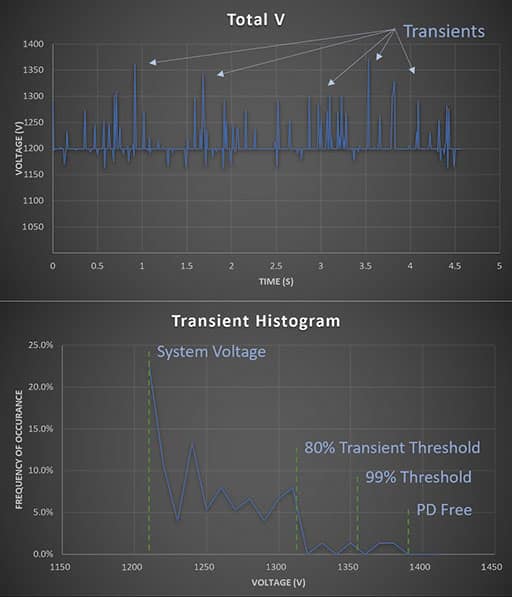


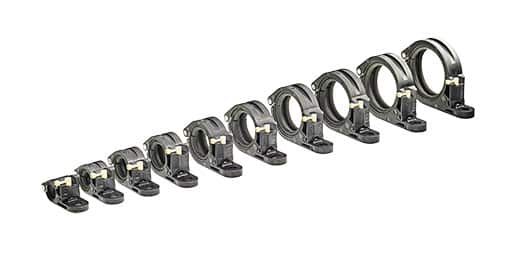


You must be logged in to post a comment.