
by ATR Contributor | Sep 30, 2025 | Innovation, Sustainability
In airline operations, tail assignment is often underestimated. At first glance, it seems like a straightforward exercise: matching available aircraft to scheduled flights. But behind this decision lies a highly complex optimisation challenge that impacts costs, reliability, environmental performance, and the passenger experience.
When managed intelligently, tail assignment becomes a strategic lever for operational efficiency and resilience. By assigning the right aircraft to the right flight at the right time, airlines can reduce disruptions, minimise costs, increase the OTP and improve overall performance—all while advancing sustainability objectives.
What is tail assignment and why it matters
Tail assignment is the process of allocating specific aircraft (“tails”) to flights in a schedule. While it may appear as a final step in planning, its consequences are significant. An optimal tail assignment integrates variables such as:
- Maintenance schedules and requirements
- Aircraft fuel efficiency and performance
- Turnaround times and crew pairings
- Passenger bookings and seat configurations
- Operational restrictions (hard and soft)
- Stands and apron distribution at first wave
Misaligned assignments often lead to last-minute swaps, empty ferry flights, crew disruptions, and passenger overbooking issues. The ripple effect is costly—propagating delays across the network and eroding operational performance.
By contrast, a robust tail assignment plan enhances first-wave reliability, minimises irregular operations, and improves fleet utilisation.
The sustainability dimension: Reducing fuel and emissions
In an industry under pressure to decarbonise, tail assignment offers an immediate and practical lever for sustainability. Even within the same fleet, aircraft vary in fuel efficiency. Optimal planning allows airlines to:
– Assign the most efficient aircraft to longer or fuel-intensive routes
– Reduce unnecessary aircraft swaps and avoid suboptimal usage
– Minimise empty repositioning flights
– Contain delay propagation, lowering the fuel penalties of irregular operations
The result is measurable impact: up to 0.5% savings in fuel consumption and CO₂ emissions—an improvement that can translate into millions in annual cost reductions, while also supporting corporate climate commitments.
Smarter overbooking management
Overbooking is a common practice to maximise seat utilization, yet poor alignment with actual aircraft capacity creates denied boardings, compensation costs, and reputational damage. Tail assignment plays a decisive role here.
By matching flights with the aircraft that have the most suitable seat configuration based on expected demand, airlines can reduce overbooking incidents significantly. Small differences—just a few seats between aircraft types—can be the difference between smooth boarding and costly disruptions.
With smarter tail planning, airlines can achieve up to 20% fewer denied boardings, lowering compensation costs while improving passenger satisfaction.
Managing hard and soft constraints
Every schedule must balance two categories of restrictions:
- Hard constraints: non-negotiable rules such as certain maintenance checks, MTOW limits, crew duty limits, or regulatory requirements.
- Soft constraints: preferences or operational efficiencies, such as lack of equipment at certain airports, maintaining crew continuity, or stand allocation preferences.
Optimising tail assignment requires simultaneously respecting all hard constraints while intelligently balancing soft ones. When handled poorly, violations lead to costly chain reactions: aircraft and crew swaps, fuel inefficiencies, propagated delays, and passenger disruptions.
Sophisticated optimisation ensures robust plans that are not only efficient on paper but resilient in practice. Airlines adopting this approach have reported 40% fewer soft constraint violations and 10% fewer crew swaps, strengthening both operational stability and employee satisfaction.
Improving On-Time Performance (OTP)
On-Time Performance (OTP) is a cornerstone of airline reliability, shaping how passengers perceive punctuality and how efficiently operations run throughout the day. Tail assignment has a direct influence on whether flights depart as planned—or whether delays ripple across the network.
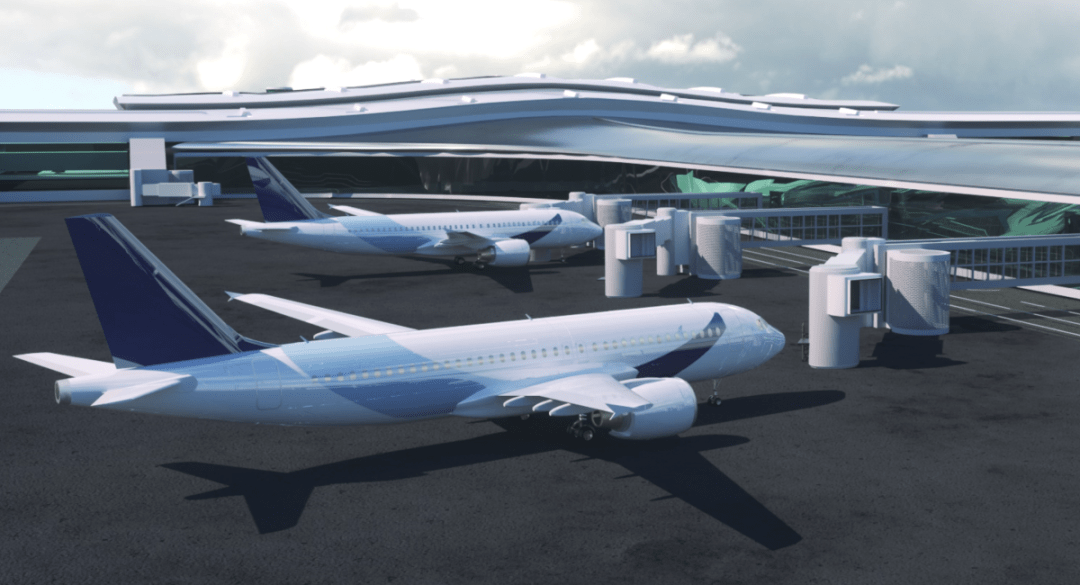
One source of disruption arises during the first wave of departures. If two aircraft are parked in adjacent stands with near-simultaneous departure times, their maneuvers can interfere with each other, creating avoidable delays that then propagate across the network. Integrating stand allocation into tail assignment decisions helps minimise these conflicts and strengthens first-wave reliability.
Another common cause of delay propagation comes from tight connections between flights and maintenance activities. When schedules leave insufficient buffer time between a flight’s arrival and the next departure or maintenance task, even a small disruption can snowball into significant knock-on delays. By embedding robustness into tail planning—allowing adequate margins where they matter most—airlines can reduce the likelihood of delay cascades.
Taken together, these optimisations provide a practical pathway to improving OTP, reducing compensation costs, and delivering a more reliable passenger experience.
Quantifiable value
Smarter tail assignment translates directly into measurable business impact through savings. Studies performed by customers and by Cisneria for other airlines demonstrate the following numbers:
- –0.5% Fuel & Emissions
- –20% Passenger Overbookings
- –40% Soft Constraint Violations
- –10% Crew Swaps
- –70% Planning Effort
For airlines with fleets of 100 or 125 aircraft, these results generate over €4M in annual savings. The savings scale with fleet size, demonstrating that tail assignment is more than a mere planning step—it is a lever for both profit and sustainability.
Conclusion
In the face of growing competitive and environmental pressures, airlines cannot afford fragile, reactive planning processes. Tail assignment, when optimised, becomes a high-impact opportunity: reducing costs, improving reliability, enhancing the passenger experience, and contributing to sustainability goals.
Operational leaders—whether in the cockpit, in the operations control center, or in the boardroom—should treat tail assignment not as a technical afterthought but as a strategic lever for efficiency, resilience, and sustainability. By embedding intelligence and robustness into this critical planning step, Daedalus® Tail Assigner enables airlines to unlock millions in annual savings, strengthen OTP, and lay the foundation for greener, more reliable operations.
For a deeper dive into how smarter tail assignment can unlock efficiency, resilience, and sustainability for airlines, we invite you to explore our full white paper. Download the report here.
For more like this, see:
by ATR Contributor | Aug 1, 2025 | Sustainability
As the aviation industry faces mounting pressure to decarbonize, OEMs are stepping up with bold innovation, practical design shifts, and deeper collaboration than ever before.
In this interview, Rebina Pozole, Head of Sustainability at Deutsche Aircraft, shares how the company is tackling sustainability challenges through smarter aircraft design, fuel experimentation, and strategic partnerships-with the D328eco aircraft leading the charge.
“We’ve always reduced fuel for economic reasons-now we’re doing it for environmental ones.”
Pozole explains that while long-term innovation is crucial, OEMs have a responsibility to pursue near-term, feasible solutions. For Deutsche Aircraft, this includes improving aerodynamics, weight, and engine efficiency while also testing alternative fuel types like hydrogen, batteries, and more sustainable hydrocarbon use.
“There aren’t that many energy carriers we can use in aviation. We need to explore realistic alternatives-and SAF is one of them.”
She highlights two tracks of experimentation:
- Applied tech testing, like flights using zero-aromatics synthetic fuels
- Research-based experimentation, exploring what may be possible in the future
One major milestone? The upcoming D328eco, scheduled for entry into service in late 2027:
“We’re on track. Seeing the aircraft take shape in the hangar-it’s really exciting.”
Pozole also dives into the critical need for deep, technical collaboration between OEMs, fuel producers, and other ecosystem players:
“It’s not just cooperation for the sake of it. We need to understand each other’s technical and business constraints-something we never had to do before.”
Looking ahead, Deutsche Aircraft is actively forming strategic partnerships with SAF producers to ensure their aircraft can fly with 100% PTL zero-aromatics fuel once it’s commercially available.
Questions asked include:
- What role do OEMs play in the aviation industry’s sustainability journey?
- How is aircraft design being optimized to reduce climate impact?
- What are the key challenges in experimenting with new technologies and fuels?
- Can you tell us about the progress of the D328eco?
- How vital is collaboration in meeting sustainability goals?
- Are there any exciting partnerships on the horizon?
Join us at Aerospace Tech Week Europe 2026!
Subscribe to our free monthly newsletter here.
For more like this see:
by ATR Contributor | Apr 22, 2025 | Innovation
Article by PhysicsX
The aerospace industry has always been defined by ambition — the drive to push boundaries, conquer complexity, and redefine what’s possible in the sky and beyond. Yet even the most visionary ideas can be grounded by real-world constraints: slow simulations, siloed workflows, and the inability to fully capitalize on hard-earned knowledge. These bottlenecks don’t just delay time to market — they limit potential.
Today, a new force is catalyzing a transformation: engineering powered by artificial intelligence (AI). From real-time simulation to autonomous design intelligence, AI is augmenting human capability and redefining the blueprint for aerospace innovation.
What’s holding hardware innovation back?
Despite incredible technological advances, the aerospace sector remains encumbered by traditional engineering challenges.
Slow, expensive simulations
Traditional simulation methods like computational fluid dynamics (CFD), finite element analysis (FEA), and computational electromagnetics (CEM) are powerful, but slow and compute-intensive. Engineers are often forced to make trade-offs between simulation fidelity and speed, limiting the scope of design exploration.
Instead of testing thousands of design variations, teams may only evaluate a handful, relying heavily on intuition and past experience. This results in safe, incremental gains — rarely disruptive leaps.
Fragmented, siloed workflows
Most engineering organizations operate with disconnected toolchains and departmental silos. Design teams, simulation experts, and manufacturing engineers often use incompatible software, complicating collaboration and slowing handoffs. This fragmentation obscures how early-stage decisions impact downstream factors: cost, manufacturability, performance, and even the end-user experience.
Lost knowledge, repeated effort
Each project often starts with a clean slate, with minimal reuse of insights, data, or simulations from previous programs. Valuable knowledge is siloed, or worse, lost when people move on. This leads to repeated work and stifles organizational learning and long-term innovation potential.
AI-powered engineering: a new chapter for aerospace
Once seen as a futuristic concept, AI is now making a tangible impact across the entire aerospace product lifecycle.
Real-time physics, real-world fidelity
AI is revolutionizing simulation speed and accuracy. Machine learning (ML) models trained on high-fidelity simulation data can now predict fluid dynamics, structural stress, or thermal behavior in milliseconds instead of hours or days.
Take the collaboration between PhysicsX and Leonardo Helicopters, highlighted in General Catalyst’s 2025 report, An Ambitious Agenda for European AI: by replacing costly bespoke sensors with AI-driven virtual replicas, engineers can predict helicopter dynamics across various flight scenarios, significantly reducing certification time and cutting costs and time to market.
This seismic leap enables engineers to iterate at lightning speed, unlocking far larger design spaces and uncovering high-performance, unconventional configurations that were previously out of reach.
Intelligent, unified workflows
AI is also breaking down the barriers between disciplines. By embedding intelligence into design tools and creating integrated AI ecosystems, organizations can connect the dots across simulation, optimization, manufacturing, and even in-service performance.
This unified approach reduces manual handoffs and allows engineering teams to co-design with immediate feedback on aerodynamics, weight, manufacturability, and cost. With AI handling routine optimization tasks, engineers are free to focus on creativity, problem-solving, and innovation.
Capturing knowledge, compounding innovation
AI learns. Every project adds to a growing knowledge base that ML models can access, adapt, and build on. This enables true knowledge reuse, turning past lessons into future advantages.
Over time, AI systems become smarter, more predictive, and more valuable. Instead of reinventing the wheel, companies can scale their expertise across programs, teams, and product lines.
The expanding frontier: AI in action
Let’s explore some examples of how AI is unlocking transformative impact from design to deployment:
- Design exploration: At the earliest stages of product development, AI is empowering engineers to break free from traditional constraints and explore vastly broader, more complex design spaces. With deep learning models trained on historical simulation and performance data, teams can rapidly evaluate countless design alternatives, optimize geometry for performance and manufacturability, and iterate in near real-time. The result is not only faster development, but also smarter, more innovative, and production-ready designs that meet mission requirements without the bottlenecks of conventional workflows.
- Autonomous flight systems: AI-trained neural networks are powering next-gen intelligent autopilot systems, capable of handling complex flight scenarios and enabling advanced autonomy in both commercial and defense sectors.
- Predictive maintenance: By analyzing sensor data from aircraft systems, AI can identify anomalies before they become failures, reducing downtime, improving safety, and slashing maintenance costs.
- Smart manufacturing: AI-enabled quality assurance systems are making production lines more agile and accurate, adapting in real time to changing requirements and detecting defects before they hit assembly.
- Advanced air traffic management: AI is being deployed to navigate the rising complexity of modern airspace, helping optimize traffic flows in an environment crowded with drones, eVTOLs, and commercial jets.
The global market size for AI in aerospace and defense is expected to exceed USD 65.43 billion by 2034. This growth reflects a powerful shift: companies are no longer treating AI as a bolt-on feature but are embedding it into their strategies as a foundational enabler of innovation and resilience. From slashing development timelines to reducing operational risk and enabling smarter, faster decision-making, AI is driving measurable impact and reshaping the competitive landscape of the industry.
What comes next?
We are entering a new era of AI-powered engineering, where the traditional limitations of simulation speed, workflow inefficiency, and knowledge loss are no longer acceptable constraints.
Organizations that harness AI at scale won’t just design faster, they’ll design better. They’ll build digital twins that evolve in real time, simulate performance under any condition, and optimize not just for today’s needs but for tomorrow’s possibilities.
Over the next decade, we’ll see engineering teams shift from time-intensive, sequential design cycles to continuous, intelligent co-creation, where AI acts as a design partner rather than just a tool.
Conclusion
The aerospace industry has always operated at the edge of what’s possible. But with AI, that edge is getting sharper. By weaving it throughout the engineering lifecycle, organizations can accelerate iteration, enhance decision-making, and drive breakthrough innovations. Perhaps most importantly, they can capture and amplify institutional knowledge, transforming past experience into future advantage.
As airspace becomes more crowded, missions more complex, and timelines more aggressive, AI will be a key differentiator, empowering aerospace businesses to remain agile, competitive, and resilient in the face of emerging challenges.
Image: Interface of Ai.rplane — PhysicsX’s public technology demonstrator built on their latest Large Geometry Model (LGM-Aero).



You must be logged in to post a comment.