
by Elsie Clark | Feb 17, 2026 | MRO IT
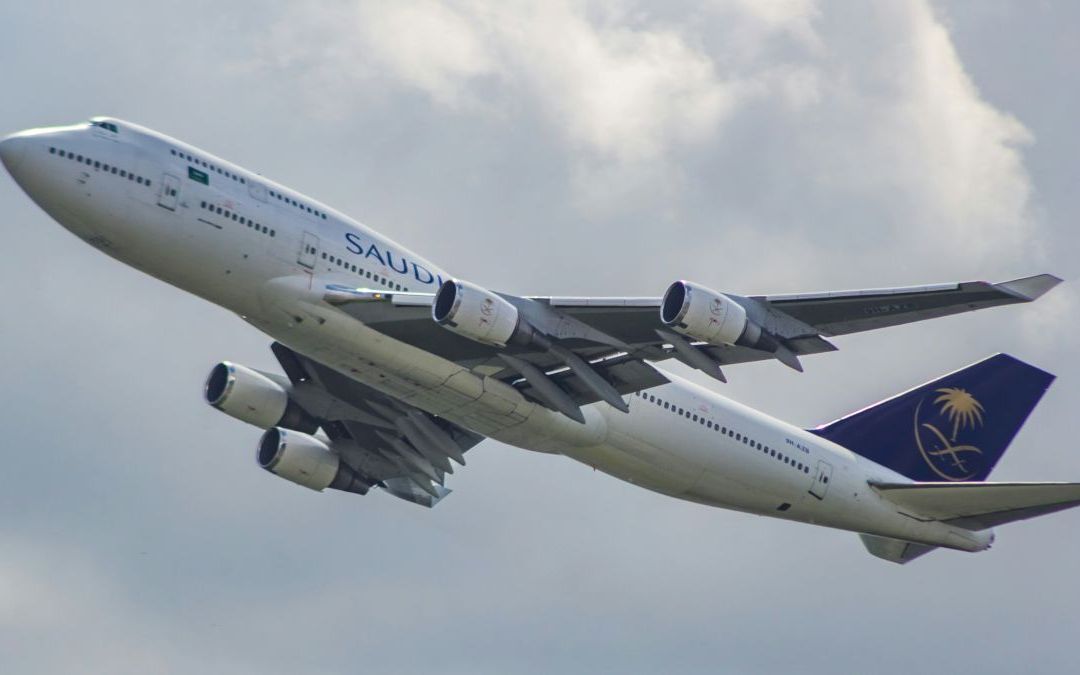
Saudia have selected aviation software and information services provider Veryon to support corrective action across their fleet.
Using AI and natural language processing, Veryon Defect Analysis can group related defect reports to highlight recurring maintenance problems and support proactive decision-making. As Saudi Arabia’s national carrier, Saudia has undergone significant expansion in recent years, aviation being a core component of the Kingdom’s Vision 2030 economic development strategy. Veryon’s solution will support its fleet of 160 aircraft, enabling continuous data analysis across the airline’s multiple business units.
Bethany Little, Chief Executive Officer at Veryon, said:
When an airline is scaling at the pace Saudia is, prescriptive health technology is a must-have and can dramatically improve reliability and an operation’s bottom line. Serving over 25% of the worldwide commercial fleet, Defect Analysis is the market-leading provider of prescriptive health maintenance solutions in the aviation technology market.
Veryon’s existing partners in the aviation industry include Airbus, Honeywell, and Lockheed Martin. The supply chain backlog shows no signs of clearing anytime soon, accelerating the adoption of prescriptive and predictive analytics. Having real-time data on hand can ensure airlines get the most out of ageing fleets. However, prioritising investment in these tools isn’t always easy, and must be matched by parallel investments in upskilling the digital skills of the workforce.
Join us at Aerospace Tech Week 2026 to discuss these issues.
For more like this, see:
by Elsie Clark | Feb 10, 2026 | MRO IT
Under a long-term agreement, Embraer will equip Virgin Australia’s fleet of E2s with its AHEAD (Aircraft Health Analysis and Diagnosis) system. AHEAD is designed to help airlines begin a predictive maintenance programme, providing critical information for identifying problem areas before they escalate.
Collecting data inflight and on-the-ground, AHEAD facilitates real-time monitoring of essential aircraft structures. This includes APUs, avionics, flight controls, and hydraulics. Improved sustainable performance is another advantage, as AHEAD limits avoidable fuel burn due to maintenance issues. Overall, the predictive maintenance software can reduce downtime and optimise fleet availability.
Virgin Australia Regional Airlines Executive General Manager, Nathan Miller said:
Our E2 jets are a game-changer, delivering a more reliable, efficient and comfortable experience for our customers. The AHEAD tool will help us stay in front of maintenance issues, ensuring we are getting the very best out of our new aircraft and helping us strengthen operational performance across our network.
Virgin Australia already run two E2 jets and have placed firm orders for eight more. Carlos Naufel, President and CEO, Embraer Services & Support, added:
This agreement with Virgin Australia underscores Embraer’s commitment to driving digital innovation in aviation. By integrating the AHEAD platform into the E2 fleet, we are enabling predictive maintenance that reduces unscheduled downtime, optimizes operational efficiency, and lowers maintenance costs. These capabilities help Virgin Australia maximize fleet availability and improve overall operational performance.
Join us at Aerospace Tech Week 2026 to discuss the future of MRO.
For more like this, see:
by Elsie Clark | Oct 22, 2025 | AI & ML, Innovation, MRO IT
Back in April, our Aerospace Tech Review Awards 2025 honoured a range of cutting-edge startups, speakers, and collaborations across the aerospace industry. Most Disruptive Startup went to AIXI, an innovative data and analytics company that is giving aviation MRO data a much-need upgrade.
To learn more, we sat down on video call with AIXI’s CEO, Cameron Byrd. With aviation continuing to depend on legacy systems, AIXI’s data-cleaning AI represents a significant advancement. Information that might previously have been buried in spreadsheets or hidden behind reference numbers can be brought to the fore through AIXI’s industry-specific large-language model (ILM).
It’s impossible to extract reliable information from maintenance data without cleaning it first. That’s where everyone’s failing, and where AIXI focuses.
Byrd believes airlines’ extensive maintenance data backlogs airlines represent an untapped ‘gold mine’ that could be leveraged far more effectively. AIXI’s ILM extracts, cleans, and standardises this data, while additional tools can identify repeat defects by aircraft or by fleet. The startup’s ultimate goal is to provide the aviation industry with strong data foundations, which they can build upon for true prescriptive and predictive maintenance.
With an accuracy rate of over 95%, the AIXI model can review 3,000 records a day and save 15,000 hours of labour. Real-world use cases have demonstrated these high-performance capabilities: AIXI have been working with Southwest Airlines since 2022, and upon installation immediately freed up five full-time employees.
Southwest also tried to have humans verify the results of the autocoder. And what happened was the autocoder would beat the humans.
AIXI is currently tailored to manage Boeing 737s, but in the future Byrd hopes to refine the ILM so it can be applied to more aircraft records. He also hopes to build an industry-specific chatbot tool, where engineers can input questions on maintenance procedures or the number of delays due to certain causes, and receive accurate answers based on the airline’s data.
When it comes to MRO, AI is a transformative tool that will become essential to the running of the aviation industry. Byrd concludes:
AI is the way to unlock the power of data, because if you know the history of your fleet, you can predict the future of your fleet.
🎥 Watch the full interview to get the full lowdown on AIXI’s game-changing technology, and why they won Most Disruptive Startup at the ATR Awards 2025.
Questions asked include:
- Aviation is known for being dependent on legacy tools and methods. What systems have traditionally been used to aggregate MRO data? What are the challenges that come with using these?
- How is AIXI disrupting this field? Tell me more about your AI-powered solutions and how they are a game-changer for MRO.
- What are your plans for the future? How would you like to grow your business/develop the product?
- How do you see use of AI changing aerospace and aviation over the next decade?
Join us at Aerospace Tech Week 2026, where our Startup World Cup will gather the most innovative new businesses from across the industry.
For more like this, see:
by Elsie Clark | Oct 15, 2025 | MRO IT
A new report from IATA and Oliver Wyman, Reviving the Commercial Aircraft Supply Chain, forecasts that supply chain challenges could cost airlines more than US$11 billion in 2025.
This is largely due to the slow pace of aircraft production, which has been exacerbated by ever-increasing demand for air travel. In 2024, passenger demand rose by 10.4%, exceeding the capacity expansion of 8.7%, while the worldwide commercial backlog of aircraft reached historic high of 17,000.
Geopolitical instability, material shortages, and labour availability have compounded these supply chain challenges, forcing airlines to keep older aircraft in service for longer. This results in higher fuel costs, maintenance costs, engine leasing costs, and surplus inventory holding costs. According to IATA, these bottlenecks combined will cost airlines US$11 billion in 2025.
The report offers several suggestions for the aerospace industry to mitigate these problems. Willie Walsh, IATA’s Director General, commented:
Airlines depend on a reliable supply chain to operate and grow their fleets efficiently. Now we have unprecedented waits for aircraft, engines and parts and unpredictable delivery schedules. […]
There is no simple solution to resolving this problem, but there are several actions that could provide some relief. To start, opening the aftermarket would help by giving airlines greater choice and access to parts and services. In parallel, greater transparency on the state of the supply chain would give airlines the data they need to plan around blockages while helping OEMs to ease underlying bottlenecks.
Additionally, the report recommends that the industry improve its use of data, including accelerating predictive maintenance and data sharing to reduce downtime and optimise existing inventory.
Matthew Poitras, Partner in Oliver Wyman’s Transportation and Advanced Industrials practice, added:
Today’s aircraft fleet is larger, more advanced, and more fuel efficient than ever before. However, supply chain challenges are impacting airlines and OEMs alike. We see an opportunity to catalyse an improvement in supply chain performance that will benefit everyone, but this will require collective steps to reshape the structure of the aerospace industry and work together on transparency and talent.
Join us at Aerospace Tech Week 2026, where our dedicated supply chain track will discuss how the industry can build resilience and mitigate disruption.
For more like this, see:
by Elsie Clark | Oct 1, 2025 | Innovation, MRO IT
Predictive maintenance using artificial intelligence (AI) and big data is a hot topic in aerospace, as airlines, airports, and engineers all strive to reduce downtime and optimise infrastructure efficiency.
For many, however, implementing predictive maintenance technology remains stuck in the development stages. In an exclusive interview, Kaire Kalve, Head of Supply Chain at Magnetic Group, told Aerospace Tech Review what needs to change for successful predictive MRO adoption.
Different parties and operators all have their own data, so the key challenge here is actually trust.
Kalve discusses why mutual incentives are critical to breaking down barriers across the industry and eliminating data silos. If this isn’t done, predictive maintenance is slow to implement and less effective: the more data you can feed a model, the more accurate it will be.
The key here is operators. They should take the initiative as they have the most valuable data.
Industrywide collaboration will be essential to realising the benefits of predictive maintenance, and events such as Aerospace Tech Week play an important role in developing new partnerships.
The future of maintenance is truly collaborative and based on transparent agreements for data sharing.
🎥Watch the video below to hear Kaire’s full insights on collaboration in predictive maintenance.
Questions asked include:
- Predictive maintenance is widely discussed, but we’re yet to see its widespread implementation. What’s holding the industry back?
- Predictive maintenance relies heavily on data. Who in the industry has the most important data, so to speak?
- Why are events such as Aerospace Tech Week so important?
For more like this, see:





You must be logged in to post a comment.