
by Elsie Clark | Jan 29, 2026 | Innovation
This interview is taken from our sister site, World Aviation Festival.
Handling 87 million passengers every year, Dallas Fort Worth International (DFW) is the third-busiest airport in the world. At the same time, for three consecutive years, Airports Council International (ACI) has recognised DFW as one of the best large airports in North America. So how does the Texan airport achieve its high customer service scores while processing such huge traveller numbers?
Paul Puopolo, DFW’s Chief Technology and Innovation Officer, believes tech investment has been instrumental to improving airport processes and enhancing the traveller experience.
We began our innovation journey about six years ago, and one of the things that we did was we looked at customer needs. On the innovation side, our team really tries to take a human-centric approach.
Among the security measures Puopolo has overseen are streamlined security, a private 5G network, biometrics, and artificial intelligence (AI) systems. DFW’s new Terminal F, currently in construction, also represents an opportunity to rethink airport design. When complete, the US$1.6 billion project will boast self-service bag drops, e-gates, and sensors for managing passenger flow.
When we build new infrastructure, we want to make sure it’s a little bit more flexible. So as customer needs change, we can change. We don’t want to end up being like a mall that nobody goes to anymore.
Advanced air mobility (AAM) is one such consideration. A ‘when, not if’ evolution for the industry, Puopolo is watching sandbox initiatives in the Middle East to see how eVTOLs and air taxis could be incorporated at DFW once they receive FAA certification. He currently forecasts that AAM services could go live in 2028, but for this to be possible DFW needs to prepare now.
We believe air taxis are coming to the airport, and being a feeder route is important to us. But for that to happen, we have to make our infrastructure investments two to three years ahead.
🎥 Watch the interview to hear Paul Puopolo’s full thoughts on AAM integration, tech, and innovation.
Questions asked include:
- What role do you think innovation has played in boosting your customer service rating?
- What are your plans for Terminal F from a tech perspective?
- How can airports implement designs that are tech-forward but also sustainable and long-lasting?
- How do you see air taxis being integrated at DFW in the future?
Join us at Aerospace Tech Week 2026 to discuss the future of advanced air mobility (AAM).
For more like this, see:
by Elsie Clark | Dec 4, 2025 | Innovation
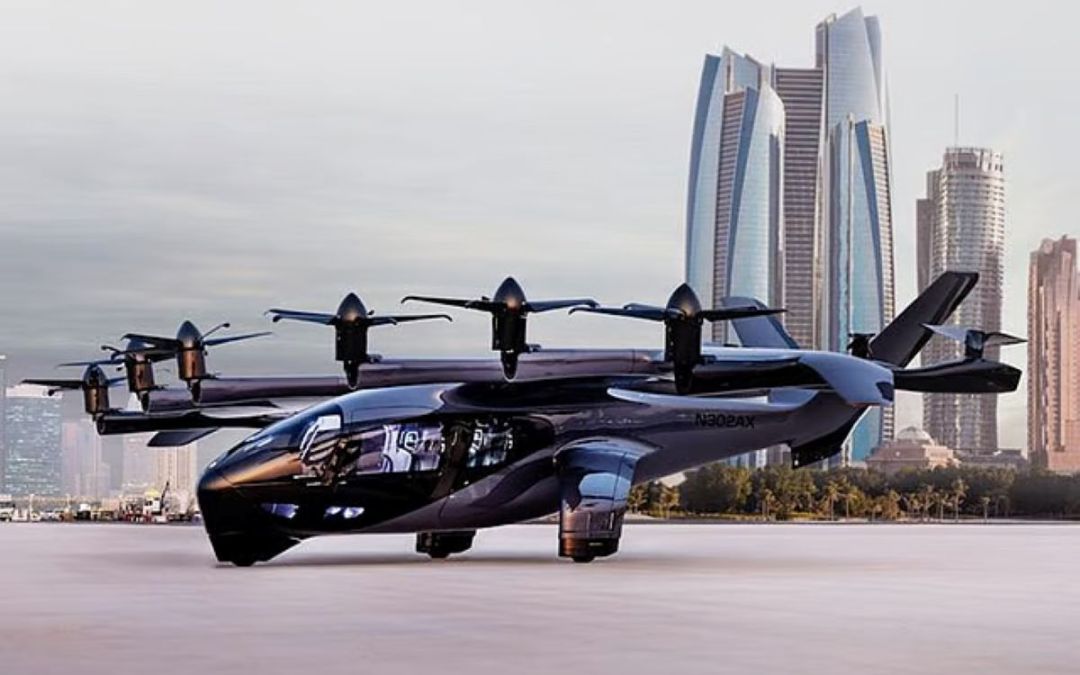
Archer Aviation has revealed plans for its vertiport network across Miami, as the eVTOL company hopes to launch its Midnight air taxis across the Floridian city in 2026.
The plans call for the redevelopment of existing heliports alongside the construction of new purpose-built vertiports. Designed to carry four passengers, Archer says that the Midnight aircraft is ideal for 10- to 20-minute journeys across Miami. The integration of a fully-fledged air taxi network will relieve congestion on the ground safely and efficiently, the company adds.
Miami’s three airports — Miami International, Fort Lauderdale-Hollywood International, and Palm Beach International — will be redeveloped to host air taxi landing and take-off points. In the city itself, investment firm Dragon Global and real estate developer Related Ross will partner with Archer to build new vertiports serving the Magic City Innovation District and the West Palm Beach development respectively.
Bob Zangrillo, founder of Dragon Global and a partner in the Magic City Innovation District, said;
The Magic City Innovation District was designed as a next-generation hub for technology, culture, and mobility.
By partnering with Archer to integrate an entirely new layer of transportation, [we are embracing] an air mobility network that connects our district with the broader region and advances a multimodal, future-ready transportation ecosystem for South Florida.
Hard Rock Stadium has asserted its readiness to adapt existing helipads for eVTOLs. Home to the Miami Dolphins NFL team, a Formula 1 Grand Prix, and the Miami Open, the stadium is one of the world’s leading sports venues and welcomes millions of visitors each year. Apogee Golf Club, another internationally-renowned sporting venue, also said they were willing to redesign a heliport to accommodate eVTOLs.
The Miami plans represent another stage in Archer’s global commercialisation effort. The company signed a deal with Korean Air earlier this year, and recent partnerships at Dubai Airshow will see eVTOLs flying in Abu Dhabi and Saudi Arabia.
Francis Suarez, the Mayor of Miami, added:
Miami has never been afraid to bet on the future. We’re a city that attracts visionaries, embraces breakthrough technology, and turns bold ideas into real impact.
For years, I have worked with Archer as they have advanced a vision for an air-taxi network that will elevate Miami’s position as a global capital for innovation and mobility. What they are building is not just transformational transportation; it embodies the Miami mindset: we lead, we innovate, and we redefine what is possible.
Join us at Aerospace Tech Week 2026 to discuss the future of advanced air mobility (AAM).
For more like this, see:


You must be logged in to post a comment.