
by Elsie Clark | Oct 2, 2025 | Innovation
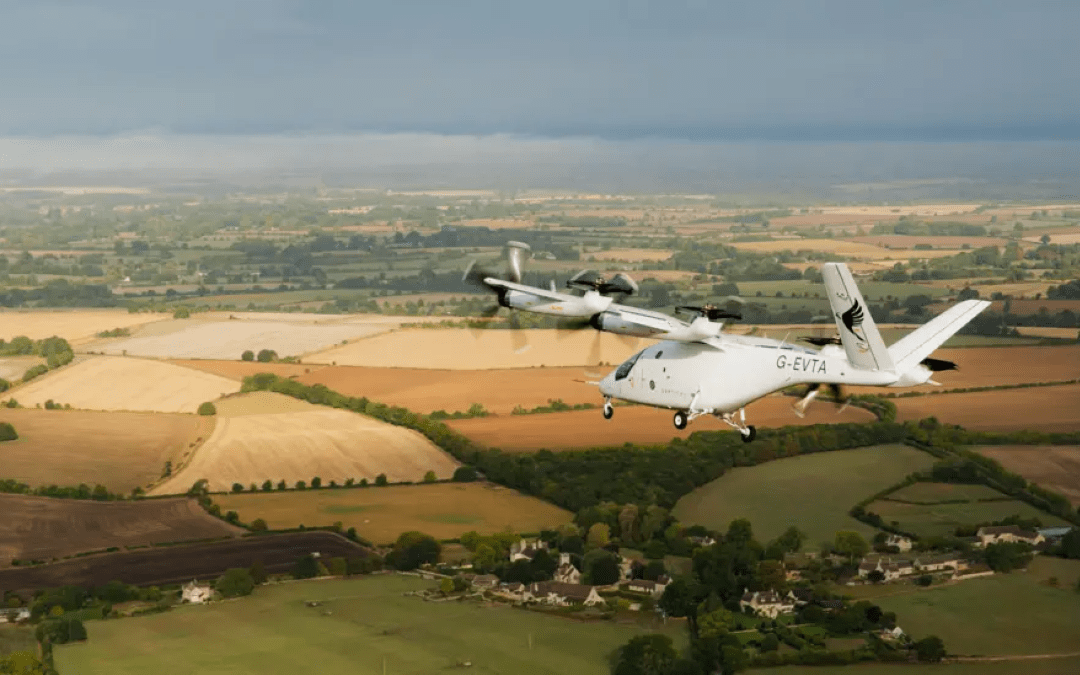
The OxCam Advanced Air Mobility (AAM) Corridor will test electric vertical take-off and landing (eVTOL) tech in the UK for the first time.
The project will last six months and aims to prove the viability of an air taxi service between Oxford and Cambridge. The cities, home to internationally-renowned universities, are significant economic and research hubs. However, travelling between them currently takes two-and-a-half hours by train.
An East-West rail link is currently in development, as UK Chancellor Rachel Reeves aims to strengthen ties between Oxford and Cambridge through initiatives she says will be worth £78bn to the UK economy by 2035.
If successful, an air taxi corridor serving the two cities would boost connectivity even further. Laura Peacock, head of innovation at Oxfordshire County Council said:
This is a chance to demonstrate how innovation can be harnessed not just for economic growth, but for real societal and positive environmental impact.
Announcement of the project came shortly after the UK Civil Aviation Authority (CAA) published its eVTOL development model. This framework is designed to make air taxi travel a reality in the country as early as 2029.
The OxCam AAM Corridor is a joint project between Skyports, Bristow Helicopters, NATS, Vertical Aerospace, and Oxfordshire County Council. A planned ‘A to A’ piloted eVTOL demonstration at Skyports’ Bicester Vertiport next year will see Vertical Aerospace’s VX4 prototype take to the skies. When it takes place, it will be the first piloted passenger flight of its kind in the UK.
Cities such as Dubai and San Francisco, who bill themselves as innovation hubs, have already freed up regulation to facilitate eVTOL testing. The Oxford-Cambridge project represents a significant step in the UK’s position in AAM, as it races to keep pace with international tech developments.
Join us at Aerospace Tech Week 2026 to discuss the future of Advanced Air Mobility.
For more like this, see:
by Elsie Clark | Sep 25, 2025 | Innovation
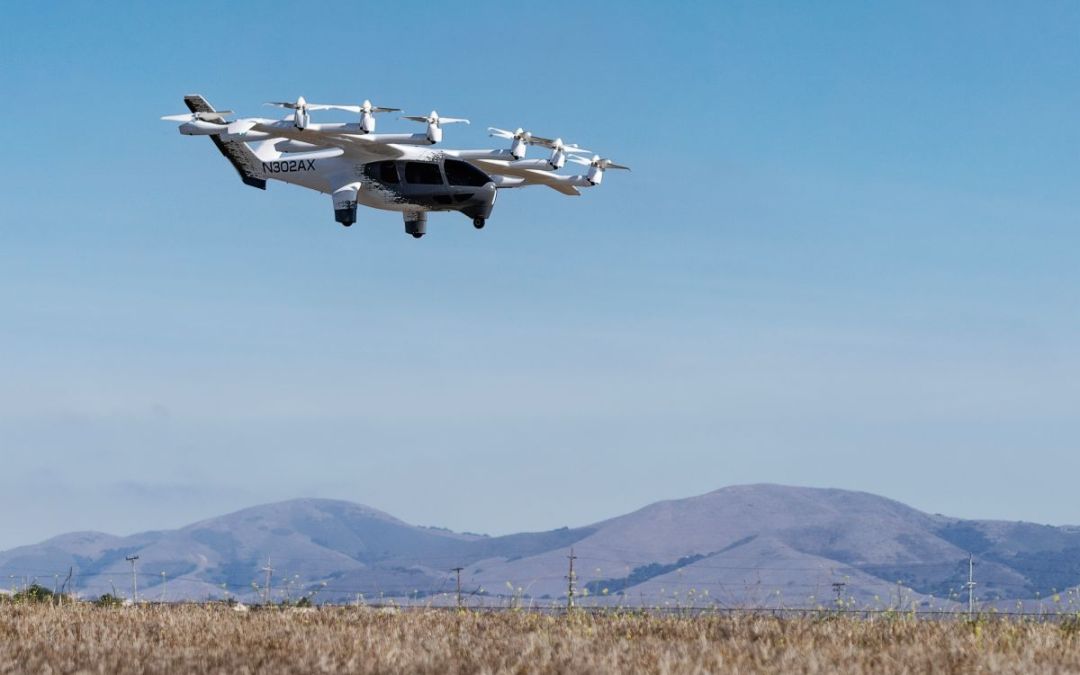
Archer Aviation Inc’s Midnight electric vertical takeoff and landing (eVTOL) craft flew at 7,000 feet during a recent test in California. This announcement comes as the company seeks FAA certification to deploy its air taxis in the US.
Archer’s expansion programme is testing the limits of eVTOLs, as research suggests higher-altitude capabilities will be needed. While most air taxis are designed to fly between 1,500 and 4,000 feet, they may need to operate at higher altitudes in densely populated areas and high-elevation cities.
Adam Goldstein, Archer’s founder and CEO, said:
I’m proud of the team for consistently proving Midnight’s performance capabilities while maintaining the highest safety standards. Our test pilots will continue to safely and methodically test Midnight’s speed, duration, and mission profiles to prepare for early commercial operations.
While FAA approval pends, Archer secured fast-track approval for operating its air taxis in the United Arab Emirates (UAE) in May 2025. Typically, private aircraft in the UAE need to be certified by the FAA, EASA, or Transport Canada. However, the UAE’s General Civil Aviation Authority (GCAA) has signed a strategic partnership with Archer to bypass these regulations and accelerate the commercial future of eVTOLs in the Arabian Gulf.
Aviation Week Network forecasts that 1,000 eVTOL vehicle deliveries will take place in 2030, more conservative figures than stated elsewhere. Overcoming certification and infrastructure hurdles will be key to the dream of advanced air mobility (AAM) becoming a reality. Archer’s current run of tests hope to demonstrate the technical capabilities of its aircraft and acclerate the critical regulatory approvals process.
Join us at Aerospace Tech Week to discuss the future of AAM.
For more like this, see:
by Elsie Clark | Sep 11, 2025 | Innovation
A new global survey of executives has highlighted key findings as the aerospace industry prepares for Industry 5.0
The Future Ready Skies Study 2025 from Tata Consultancy Services (TCS) surveyed over 300 European and North American executives across the aerospace value chain. The results revealed how the industry is planning for the next decade as key trends, including artificial intelligence (AI), digital twins, and advanced air mobility (AAM), dramatically reshape the supply chain.
Mixed progress on aerospace automation
While automation remains a priority, executive predict that 60% of their operations will still require human involvement in the next five to seven years. From a maintenance, repair, and operations (MRO) perspective, only 2% of providers believed their service would be autonomous by 2030, while more than half expected to be using predictive analytics and digitally assisted diagnostics. Around a third of MRO experts predict that they will see a return on investment (ROI) in tech within the next three years.
Trust in delegating supply decisions agentic AI remains mixed. While 6% of respondents said they were already deploying agentic AI in this area, 37% said regulatory, compliance, or trust issues prevented them from doing so, and a further 45% said they needed more transparency and control before implementing such a solution.
AI was nevertheless rated as the technology with the greatest potential to reshape aerospace factories by 2035, followed by digital twins, robotics and cobotics, quantum computing, and edge computing.
Commercial AAM set for takeoff
As more AAM projects reach the commercialisation phase, the TCS study illustrated that aerospace executives are committed to developing the sector. 88% of respondents said they had implemented a strategy for engaging the AAM market, with 16% of those executives already engaged in developing projects, and 54% actively building a product or platform for AAM.
The results of the survey emphasised several priorities for the aerospace industry moving forward: achieving a digital transformation, creating the infrastructure for AAM, and building resilient supply chains.
Join us at Aerospace Tech Week 2026, where our expert panels, speakers, and workshops will be discussing all these challenges and more.
For more like this, see:


You must be logged in to post a comment.