
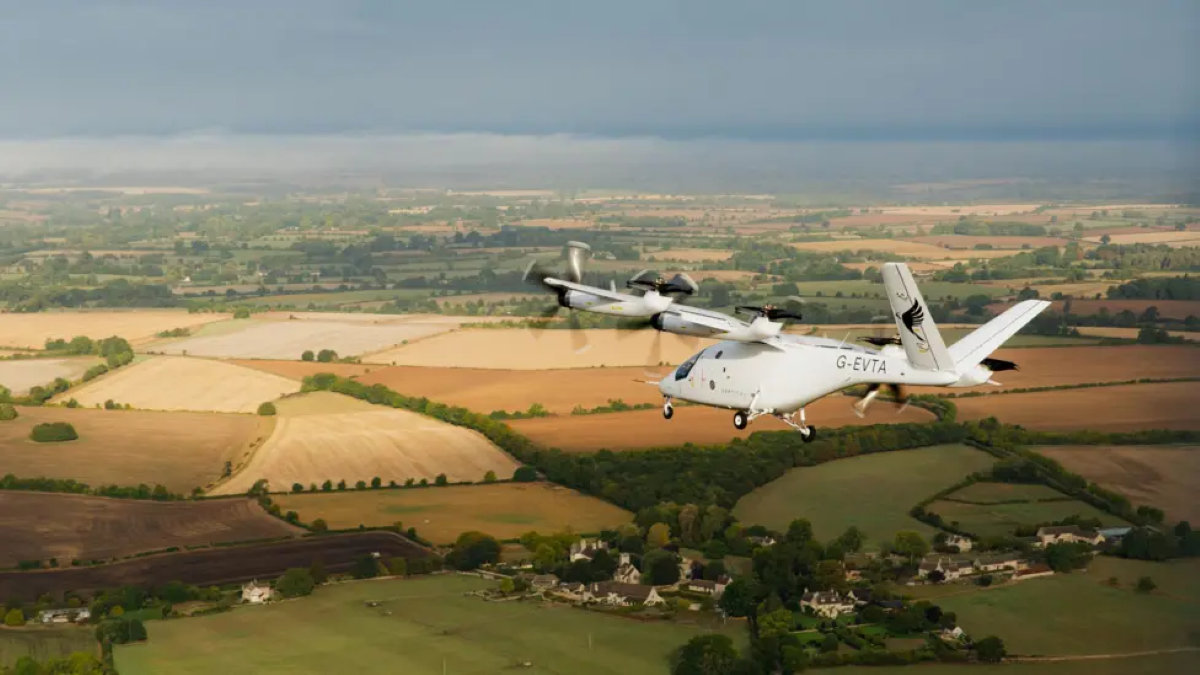
The OxCam Advanced Air Mobility (AAM) Corridor will test electric vertical take-off and landing (eVTOL) tech in the UK for the first time.
The project will last six months and aims to prove the viability of an air taxi service between Oxford and Cambridge. The cities, home to internationally-renowned universities, are significant economic and research hubs. However, travelling between them currently takes two-and-a-half hours by train.
An East-West rail link is currently in development, as UK Chancellor Rachel Reeves aims to strengthen ties between Oxford and Cambridge through initiatives she says will be worth £78bn to the UK economy by 2035.
If successful, an air taxi corridor serving the two cities would boost connectivity even further. Laura Peacock, head of innovation at Oxfordshire County Council said:
This is a chance to demonstrate how innovation can be harnessed not just for economic growth, but for real societal and positive environmental impact.
Announcement of the project came shortly after the UK Civil Aviation Authority (CAA) published its eVTOL development model. This framework is designed to make air taxi travel a reality in the country as early as 2029.
The OxCam AAM Corridor is a joint project between Skyports, Bristow Helicopters, NATS, Vertical Aerospace, and Oxfordshire County Council. A planned ‘A to A’ piloted eVTOL demonstration at Skyports’ Bicester Vertiport next year will see Vertical Aerospace’s VX4 prototype take to the skies. When it takes place, it will be the first piloted passenger flight of its kind in the UK.
Cities such as Dubai and San Francisco, who bill themselves as innovation hubs, have already freed up regulation to facilitate eVTOL testing. The Oxford-Cambridge project represents a significant step in the UK’s position in AAM, as it races to keep pace with international tech developments.
Join us at Aerospace Tech Week 2026 to discuss the future of Advanced Air Mobility.
For more like this, see: