
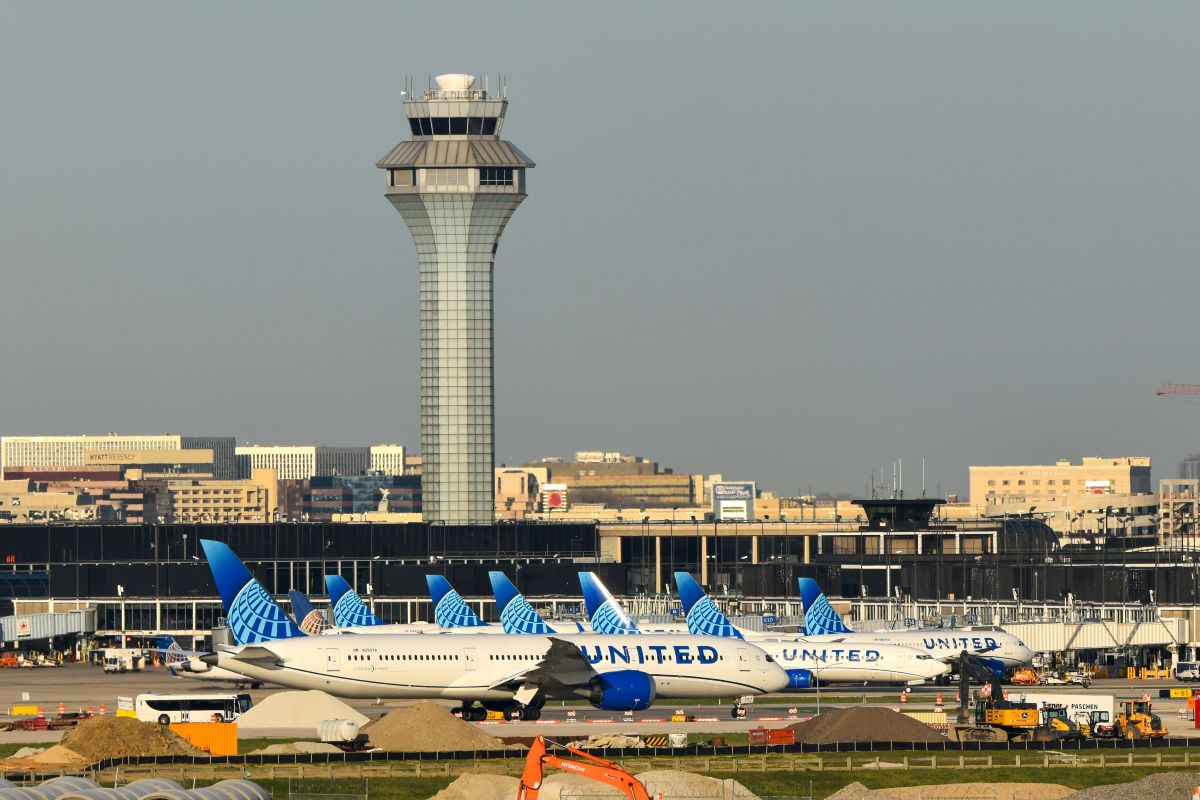
A taxiing Boeing 737 clipped a parked Boeing 767 at Chicago O’Hare International Airport on Friday 16 October.
Both planes belonged to United Airlines. As the 737, carrying 113 passengers and five crew members, passed the 767, which held no passengers, its wing clipped the other plane’s horizontal stabiliser. No one was injured, and a full inspection found no significant damage to either aircraft.
The light impact was reportedly not felt by the 737’s passengers, who were held on the aircraft for just under an hour before deplaning as usual.
The incident is yet another in a series that have affected US airport management as it struggles with a shortage of air traffic control (ATC) staff. On 1 October, at LaGuardia airport two regional Delta jets collided at a taxiway intersection. The crash, which resulted from one plane’s wing hitting the nose and cockpit of the other, injured one flight attendant.
Moreover, September saw another minor collision between United aircraft, this time at San Francisco airport. The incident mirrored another close call for United from May, where one aircraft clipped the tail of another standing stationary.
As of early 2025, the Federal Aviation Administration (FAA) was reporting ATC staff shortages of around 5,000. This year’s rapid recruitment drive has raised concerns about overwork of ATC instructors. Additionally, the US government shutdown, entering its 19th day at the time of writing, has exacerbated these problems.
The recent collision of the United planes thankfully resulted in neither casualties nor serious damages. However, that such accidents are happening at all emphasises that positioning, awareness, and communication require continual investment and improvement.
Join us at Aerospace Tech Week 2026 to discuss the future of ATC, flight ops, and safety.
For more like this, see: