
Sustainability
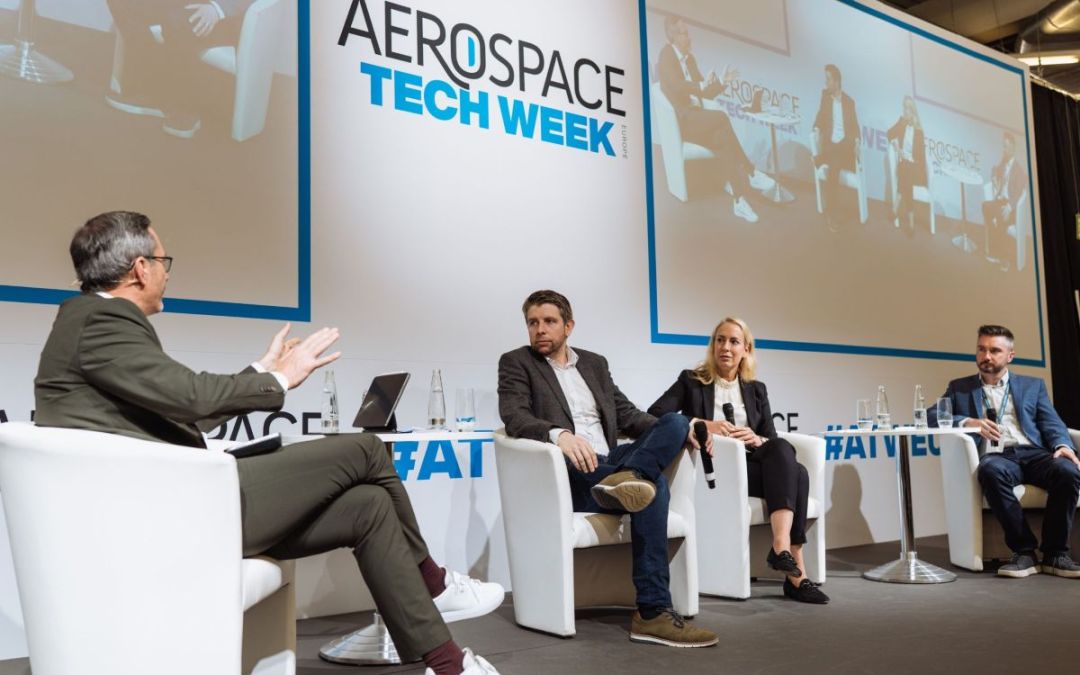
First look at the agenda for Aerospace Tech Week 2026
Aerospace Tech Week (ATW) have unveiled the agenda for the next edition of the event, taking place in November. This year the conference will be held in London for the first time, bringing together innovators across the industry while highlighting the UK's dynamic...

Breakthrough SAF process could radically simplify production
Oak Ridge National Laboratory (ORNL) have developed a new process that could significantly cut the cost of sustainable aviation fuel (SAF) production. The US-based research team have found a method of turning ethanol into jet fuel components in a single step,...

UK moves from strategy to implementation of Jet Zero
The UK's 'Jet Zero' taskforce have published their first annual report after the government introduced sustainable aviation fuel (SAF) targets at the beginning of 2025. The mandate sets guidelines for achieving 10% SAF blending by 2030. Supported by a Revenue...
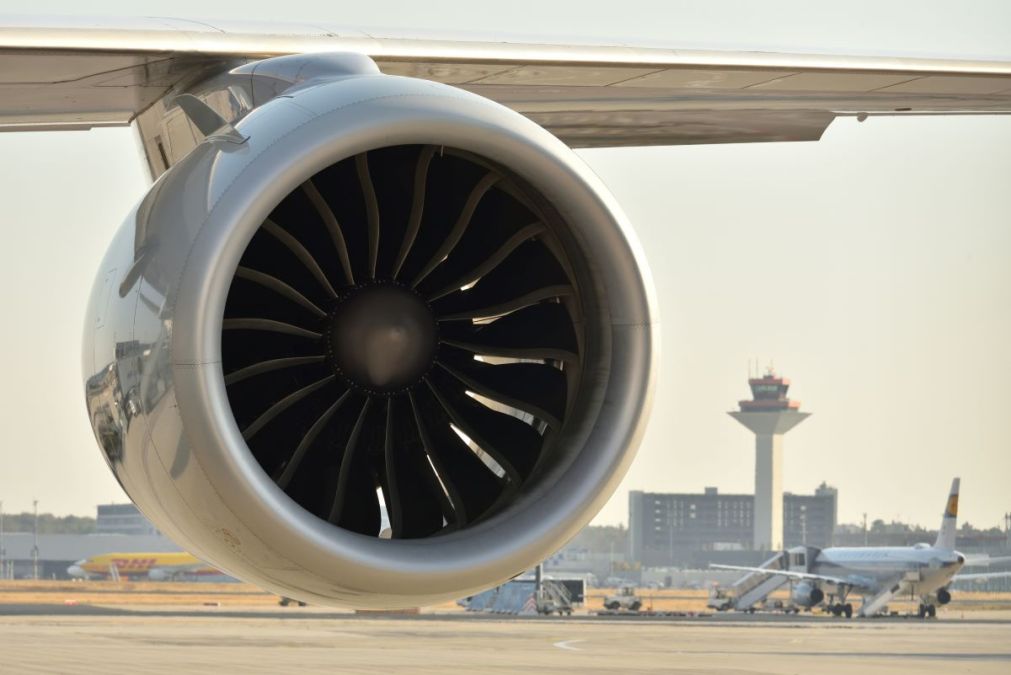
Equilibrion and Rolls Royce to develop nuclear-powered SAF production
Equilibrion and Rolls Royce have signed a memorandum of understanding (MoU) to develop British sustainable aviation fuel (SAF) production through nuclear power. The Rolls Royce small modular reactor (SMR) can support the deployment of cost-effective, sustainable...

Aerospace Tech Week confirms partnership with ADS Group
Aerospace Tech Week, the premier international exhibition and conference for the aerospace technology community, is proud to announce a new partnership with ADS Group as the event prepares to launch its inaugural UK edition in London. The move to the UK marks an...

IATA reveals the five key risks shaping aviation in 2026
Industry body IATA has named the five risks that most threaten the aviation industry in 2026. With profit margins expected to remain tight at 3.9%, good decision planning and situational awareness will be critical in determining which airlines make it through the year...

Inside IAG’s sustainability journey with Jonathon Counsell
Boasting more than 600 aircraft that fly to over 250 destinations, the International Airlines Group (IAG) manages some of Europe's best-known airlines, including British Airways, Iberia, and Vueling. But how can the group manage an effective sustainability strategy...

Study reveals how aviation could halve emissions without cutting journeys
A study has revealed how aviation could halve its emissions without cutting flights. As demand for air travel continues to rise, the industry needs to find solutions that can mitigate its climate impact. The global aviation sector's carbon footprint could as much as...
SAF production rate to slow, complicating airline sustainability plans
IATA has published its latest sustainable aviation fuel (SAF) production figures and issued a stark warning as the industry looks set to miss key targets. SAF production has doubled from 2024, reaching 1.9 million tonnes (Mt) by the end of 2025, according to IATA....

How Estuaire deploy data to reduce aviation’s carbon emissions
The aviation industry produces 868 megatonnes (Mt) of carbon dioxide every year, making it one of the highest-polluting industries on the planet. And while enthusiasm for sustainability is high, making air travel zero-carbon is a complex challenge, especially as...
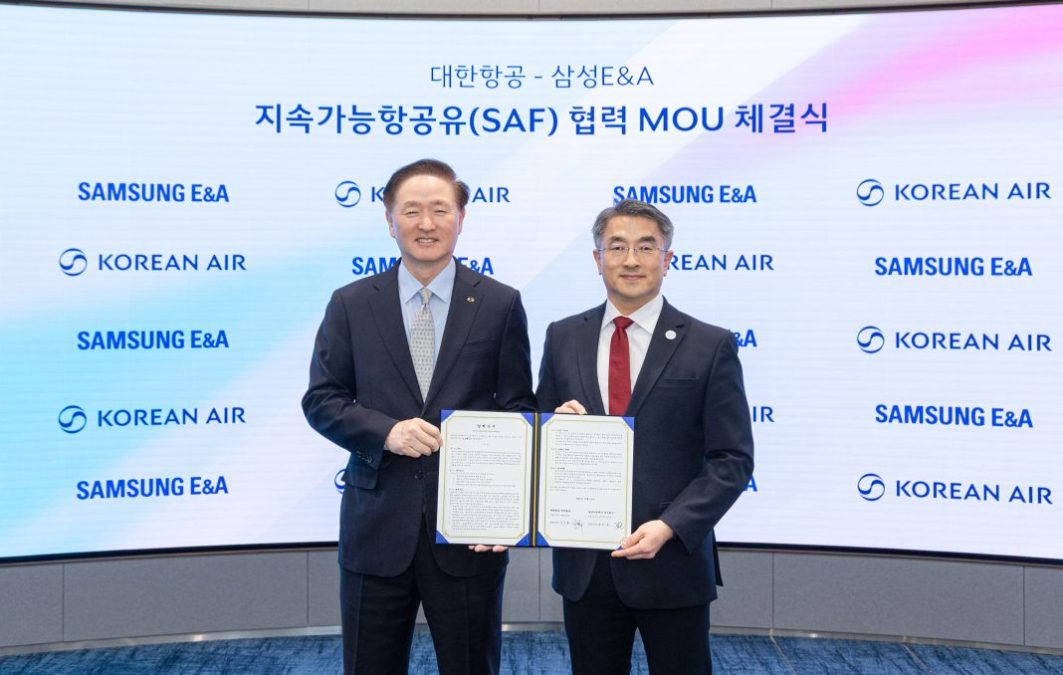
Korean Air and Samsung sign MoU for SAF development
Korean Air and Samsung E&A have signed a Memorandum of Understanding (MoU) to develop a sustainable aviation fuel (SAF) supply chain in the US. The airline and the engineering firm's announcement forms part of their commitment to accelerate sustainable energy...
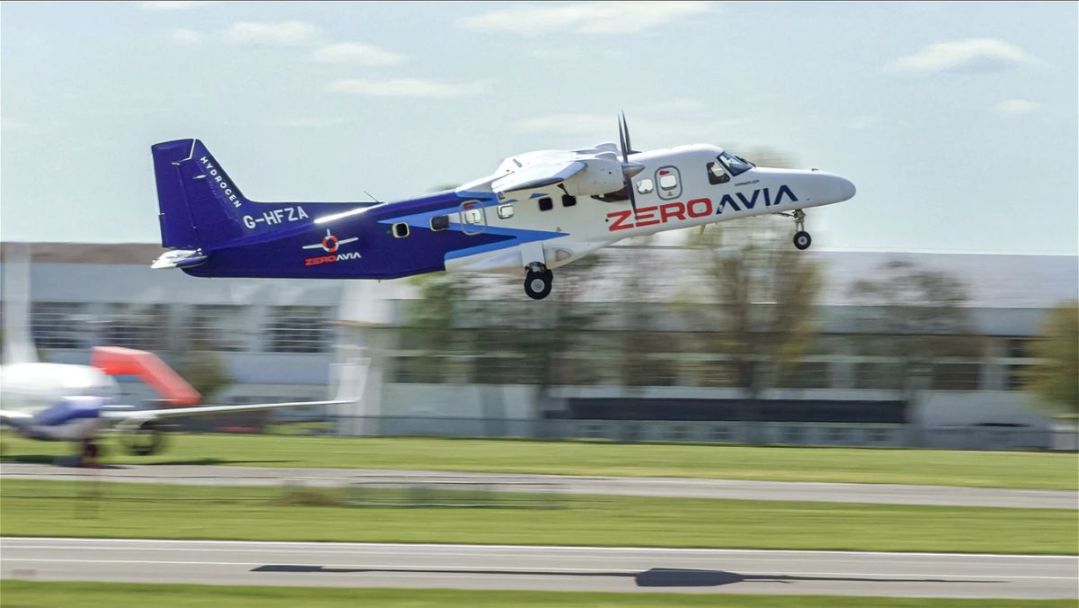
EU to fund ZeroAvia hydrogen-electric engine retrofit in Norway
The EU's Innovation Fund has approved ZeroAvia's application for €21.4 million (US$24.5 million) in funding to advance their hydrogen-electric engines. The money will go towards a new project in Norway that will see 15 Cessna Caravan planes with ZeroAvia’s ZA600...


Honeywell develop SAF produced from biomass feedstocks
Honeywell have pioneered a new production process that turns agricultural and forestry waste into sustainable aviation fuel (SAF). Under the UOP (Universal Oil Products) Biocrude Upgrading process, inexpensive biomass feedstocks such as wood chips and sawmill dust are...

EASA says European aviation on track to meet 2030 SAF target
The European Union Aviation Safety Agency (EASA) says that the industry is on track to achieve its target of 6% sustainable aviation fuel (SAF) by 2030. The ReFuelEU Aviation Annual Technical Report found that 0.6% of Europe's supplied aviation fuel for 2024 was SAF....

Stockholm Arlanda introduce curved air traffic approaches concept
Swedavia are the first in Europe to introduce a curved air traffic approaches concept at Stockholm Arlanda Airport. The Established on RNP (EoR) concept makes it easier for aircraft to approach on a curve, thereby increasing capacity, sustainability, and efficiency....

AI innovation for sustainable aviation up by 20%
According to the latest patent data, innovation in AI for sustainable aviation and aerospace tech has increased by 20% over the past five years. The Inside Green Innovation: Progress Report from Appleyard Lees found that global patent filings in the sector went up...

Australian SAF blending facility begins operations
Wagner Sustainable Fuels has launched its new operations facility in Toowoomba, Australia. Developed in partnership with Boeing and FlyORO, the dedicated terminal will blend sustainable aviation fuel (SAF). As Australia's first Roundtable of Sustainable Biomaterials...

Unlocking airline efficiency through smarter tail assignment
In airline operations, tail assignment is often underestimated. At first glance, it seems like a straightforward exercise: matching available aircraft to scheduled flights. But behind this decision lies a highly complex optimisation challenge that impacts costs,...
SAF production set to fall 100 million tonnes short of targets, IATA warns
The International Air Transport Association (IATA) has published a global feedstock assessment for sustainable aviation fuel (SAF), finding that production potential is 100 million tonnes (Mt) short of what is required by 2050. The report estimates that the aviation...

Inside KLM’s zero-emission aviation strategy
According to the IEA, aviation is responsible for around 2.5% of the world's carbon emissions. To make the industry more sustainable and accelerate a net-zero future, airlines need to plot a realistic roadmap for emissions reduction. In this exclusive interview,...