
by Elsie Clark | Mar 16, 2026 | MRO IT
The US-Israel attack on Iran has not only caused the cancellation and diversion of tens of thousands of flights: maintenance, repair, and operations (MRO) will also be significantly disrupted.
Iran’s ongoing retaliatory strikes on Gulf states, including Bahrain, Qatar, and the United Arab Emirates (UAE) have constrained supply chains and forced the implementation of emergency risk strategies. As airlines evacuate their fleets out of conflict zones, MRO activity is MENA is now reconsolidating around Saudi Arabia and Turkey. The risk of greater damage to aircraft is leading to an increase in MRO activity, while in the long term the war will exacerbate existing supply chain issues.
MRO demand spikes due to conflict
In the short term, the conflict has led to many airlines relocating their fleets away from the Gulf states. Strikes on sites such as Dubai International Airport have further put expensive MRO facilities at risk. And with many thousands of flights cancelled, more aircraft are on the ground than usual, necessitating a pivot to preservation and storage maintenance.
At the same time, aircraft in the air require more thorough inspection and maintenance than usual. With a higher risk of contact with foreign object debris (FOD), regulators are shortening prescribed maintenance cycles to make sure aircraft remain undamaged. And as flight paths are diverted around the conflict zone, aircraft are taking longer routes than they might do normally. This places extra strain on engines and could bring expensive shop visits forward. Inspections on avionics hardware are also stepping up as incidences of spoofing and GPS disruption continue in and around the warring countries.
Conflict exacerbates supply chain issues
Aviation and aerospace logistics have already been hard hit by the pandemic and other geopolitical events. The closure of the Strait of Hormuz during the current US-Israel-Iran conflict will worsen matters further, disrupting the import and export of critical MRO materials. Transportation via non-maritime means is also surging in price: air cargo costs have gone up by as much as 400%.
MROs will be forced to rely on stockpiles, and in some cases may even be unable to secure the parts needed at a reasonable price. Costs are set to go up, and with the situation remaining uncertain and unstable, it can’t be guaranteed that projects will complete on time.
World leaders are negotiating to end the conflict and reopen the Strait of Hormuz. However, even if the conflict lasts no more than a few weeks, the aftershocks will be felt for months down the line, especially in MRO. Higher prices and extended backlogs can be predicted in an aviation industry that is already suffering from lengthy delays and turbulence across the supply chain.
Join us at Aerospace Tech Week 2026.
For more like this, see:
by Elsie Clark | Mar 4, 2026 | AI & ML, Avionics, Connectivity, Flight Ops IT, Innovation, MRO IT, Sustainability
Aerospace Tech Week, the premier international exhibition and conference for the aerospace technology community, is proud to announce a new partnership with ADS Group as the event prepares to launch its inaugural UK edition in London.
The move to the UK marks an exciting new chapter for Aerospace Tech Week, which has established itself as the event for senior executives and technical leaders across the aviation and aerospace sectors. The United Kingdom provides a natural home for the show’s next evolution. World-class engineering, global-leading MRO capability, pioneering sustainability research, and an unmatched supply chain make this industry a cornerstone of British economic and industrial strength. It deserves an event that reflects that ambition.
To mark this milestone, Aerospace Tech Week is delighted to partner with ADS Group, the UK’s leading trade association representing the aerospace, defence, security and space sectors. ADS supports over 1,800 member companies across the UK, championing their interests, enabling business growth, and advocating for the policies and investment that keep British industry globally competitive. The partnership will help ensure that Aerospace Tech Week’s London edition is deeply connected to the UK industry community from day one.
Daniel Boyle, General Manager at Aerospace Tech Week said:
Aerospace Tech Week brings together the leaders shaping the future of aviation technology, so partnering with ADS is a natural fit. As the UK’s leading trade association for aerospace, defence, security and space, ADS represents a powerful network of innovators and industry stakeholders. We are delighted to be working together to strengthen engagement across the ecosystem and ensure Aerospace Tech Week continues to provide real value, meaningful connections and forward-looking insight for the industry.
Balaji Srimoolanathan, Aerospace Director at ADS Group said:
We are pleased to partner with Aerospace Tech Week as it launches its first UK edition, and to have another opportunity to showcase the innovation, ambition and global competitiveness of the UK’s aerospace, defence, security and space industries. Aerospace Tech Week provides an important platform for industrial collaboration across the entire ecosystem. With more than 1,800 member companies spanning the full breadth of the supply chain, we are committed to forming partnerships that connect industry with new opportunities, new technologies and new international relationships. We look forward to supporting a successful inaugural event and ensuring the UK’s world leading expertise is front and centre as the sector continues to innovate, export and grow.
Aerospace Tech Week’s inaugural UK edition will bring together airlines, MROs, ANSPs, OEMs and their partners to explore the latest developments across avionics, connected aircraft, MRO IT, flight operations technology, cybersecurity, sustainability and more.
For further information, to register, or to enquire about exhibition and sponsorship opportunities, click here.
About Aerospace Tech Week | 11 – 12 November 2026, Excel London
Aerospace Tech Week is a conference and exhibition focused on driving innovation and technology advancements in the aerospace sector. Bringing together senior executives and technical leaders, ATW connects the whole value chain of aerospace to discuss, connect, and collaborate on emerging trends, challenges, and opportunities.
In 2026, the event will reunite its community of 1,500 industry experts for two inspiring days featuring over 120 speakers. Key topics covered include AI, avionics, MRO, flight ops, and sustainability, while exhibitor and networking programmes spark connections that drive transformations across the industry.
Visit the event website here.
Subscribe to our newsletter to get the latest aerospace news and exclusive interviews straight to your inbox
by Elsie Clark | Feb 18, 2026 | MRO IT
Turkish low-cost carrier Pegasus Airlines have significantly boosted their in-house MRO capabilities with a new US$40 million facility. Situated at Istanbul Sabiha Gökçen Airport, the facility consists of three new hangars, two for maintenance and one for paint. These provide space for simultaneous line and base maintenance for up to five narrowbodies.
By the end of 2026, another hangar will be constructed, enabling base maintenance for a further five aircraft. Güliz Öztürk, chief executive of Pegasus Airlines, said:
Every investment we make in technical infrastructure takes our operational strength one step further. Our aircraft maintenance centre investment at Istanbul Sabiha Gökçen Airport is a strategic milestone in Pegasus’ sustainable growth journey. Our new hangars will not only enable us to manage the maintenance needs of our growing fleet more effectively, but also accelerate our transformation focused on digitalisation and efficiency. By managing our aircraft maintenance processes more quickly and in a more optimised way, we aim to provide our guests with an ever more seamless travel experience.
The facility will support a range of technical processes, from avionics modification to aircraft painting and engine changing. Digitisation has been a key consideration in the construction, with the facility boasting a digital warehouse and tool management system, as well as AI-enhanced occupational health solutions.
Together, the hangars will create 200 jobs. While currently only caring for Pegasus aircraft, in future the airline said they would be open to third-party work as well.
Join us at Aerospace Tech Week 2026!
For more like this, see:
by Elsie Clark | Feb 17, 2026 | MRO IT
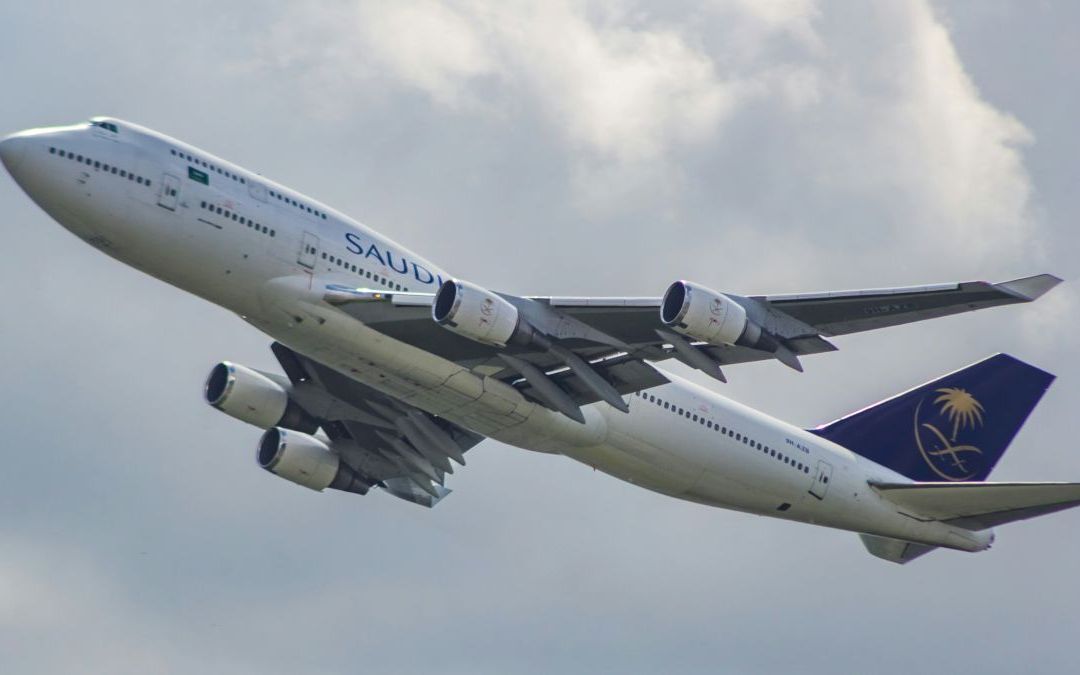
Saudia have selected aviation software and information services provider Veryon to support corrective action across their fleet.
Using AI and natural language processing, Veryon Defect Analysis can group related defect reports to highlight recurring maintenance problems and support proactive decision-making. As Saudi Arabia’s national carrier, Saudia has undergone significant expansion in recent years, aviation being a core component of the Kingdom’s Vision 2030 economic development strategy. Veryon’s solution will support its fleet of 160 aircraft, enabling continuous data analysis across the airline’s multiple business units.
Bethany Little, Chief Executive Officer at Veryon, said:
When an airline is scaling at the pace Saudia is, prescriptive health technology is a must-have and can dramatically improve reliability and an operation’s bottom line. Serving over 25% of the worldwide commercial fleet, Defect Analysis is the market-leading provider of prescriptive health maintenance solutions in the aviation technology market.
Veryon’s existing partners in the aviation industry include Airbus, Honeywell, and Lockheed Martin. The supply chain backlog shows no signs of clearing anytime soon, accelerating the adoption of prescriptive and predictive analytics. Having real-time data on hand can ensure airlines get the most out of ageing fleets. However, prioritising investment in these tools isn’t always easy, and must be matched by parallel investments in upskilling the digital skills of the workforce.
Join us at Aerospace Tech Week 2026 to discuss these issues.
For more like this, see:
by Elsie Clark | Feb 11, 2026 | MRO IT
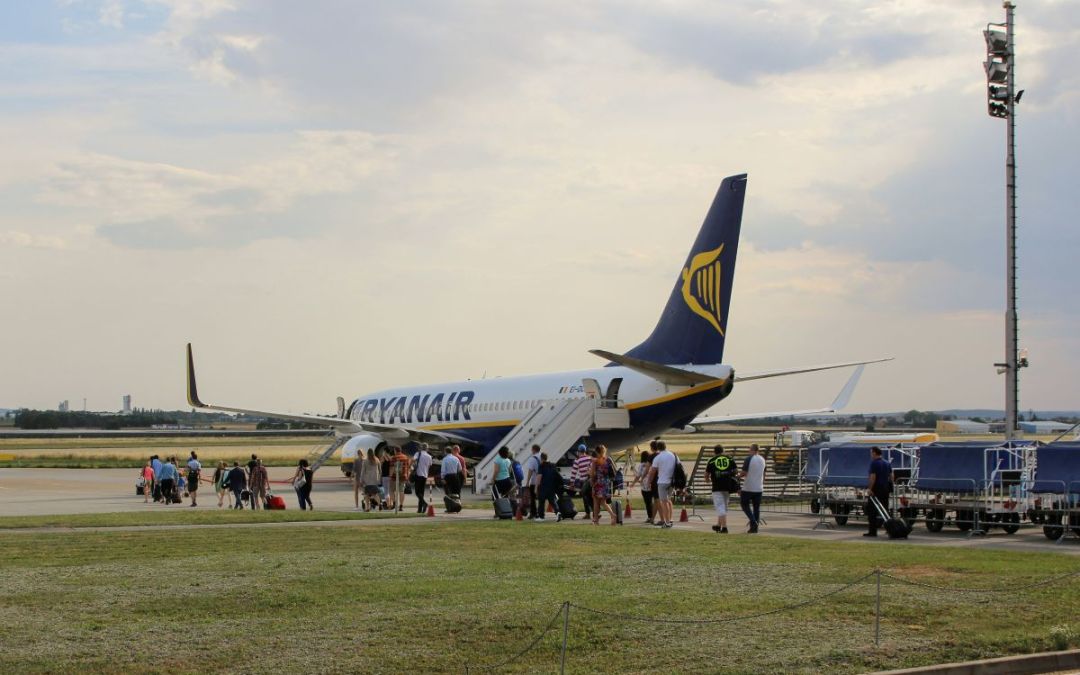
Irish low-cost carrier (LCC) Ryanair have signed a 15-year services agreement with engine manufacturer CFM to bring maintenance capabilities in-house.
The terms of the deal will see the airline buy US$1 billion in spare parts annually from CFM, a joint venture between Safran and GE Aerospace. Ultimately, by 2029 Ryanair plan to open two engine maintenance shops that will be responsible for maintaining their 2,000 CFM engines.
Ryanair Group CEO Michael O’Leary explained that the move will reduce costs and expedite maintenance timelines. Currently, the LCC outsources its maintenance to CFM, which leaves Ryanair vulnerable to extensive supply chain backlogs and disruption. The ability to control their own turnaround times would be a ‘huge benefit, O’Leary explained. He said:
[This] is the way we will be able to limit cost inflation. There is no doubt there is going to be significant cost inflation on new aircraft, engines and engine repair for the next decade, until the supply chains begin to smooth out.
H Lawrence Culp, junior chairman and CEO of GE Aerospace, added:
We value the opportunity to work with them on solutions to increase capacity and reduce turnaround time. This MoU demonstrates our commitment to an open MRO ecosystem that supports growing demand while reducing cost of ownership,
Other airlines in Europe do their own engine maintenance, including Air France and Lufthansa. However, Ryanair’s move is a significant departure from the typical budget airline model, where maintenance is outsourced.
Join us at Aerospace Tech Week 2026.
For more like this, see:
by Elsie Clark | Feb 10, 2026 | MRO IT
Under a long-term agreement, Embraer will equip Virgin Australia’s fleet of E2s with its AHEAD (Aircraft Health Analysis and Diagnosis) system. AHEAD is designed to help airlines begin a predictive maintenance programme, providing critical information for identifying problem areas before they escalate.
Collecting data inflight and on-the-ground, AHEAD facilitates real-time monitoring of essential aircraft structures. This includes APUs, avionics, flight controls, and hydraulics. Improved sustainable performance is another advantage, as AHEAD limits avoidable fuel burn due to maintenance issues. Overall, the predictive maintenance software can reduce downtime and optimise fleet availability.
Virgin Australia Regional Airlines Executive General Manager, Nathan Miller said:
Our E2 jets are a game-changer, delivering a more reliable, efficient and comfortable experience for our customers. The AHEAD tool will help us stay in front of maintenance issues, ensuring we are getting the very best out of our new aircraft and helping us strengthen operational performance across our network.
Virgin Australia already run two E2 jets and have placed firm orders for eight more. Carlos Naufel, President and CEO, Embraer Services & Support, added:
This agreement with Virgin Australia underscores Embraer’s commitment to driving digital innovation in aviation. By integrating the AHEAD platform into the E2 fleet, we are enabling predictive maintenance that reduces unscheduled downtime, optimizes operational efficiency, and lowers maintenance costs. These capabilities help Virgin Australia maximize fleet availability and improve overall operational performance.
Join us at Aerospace Tech Week 2026 to discuss the future of MRO.
For more like this, see:





You must be logged in to post a comment.